
BI pushes women as key to strengthening subsistence economy groups
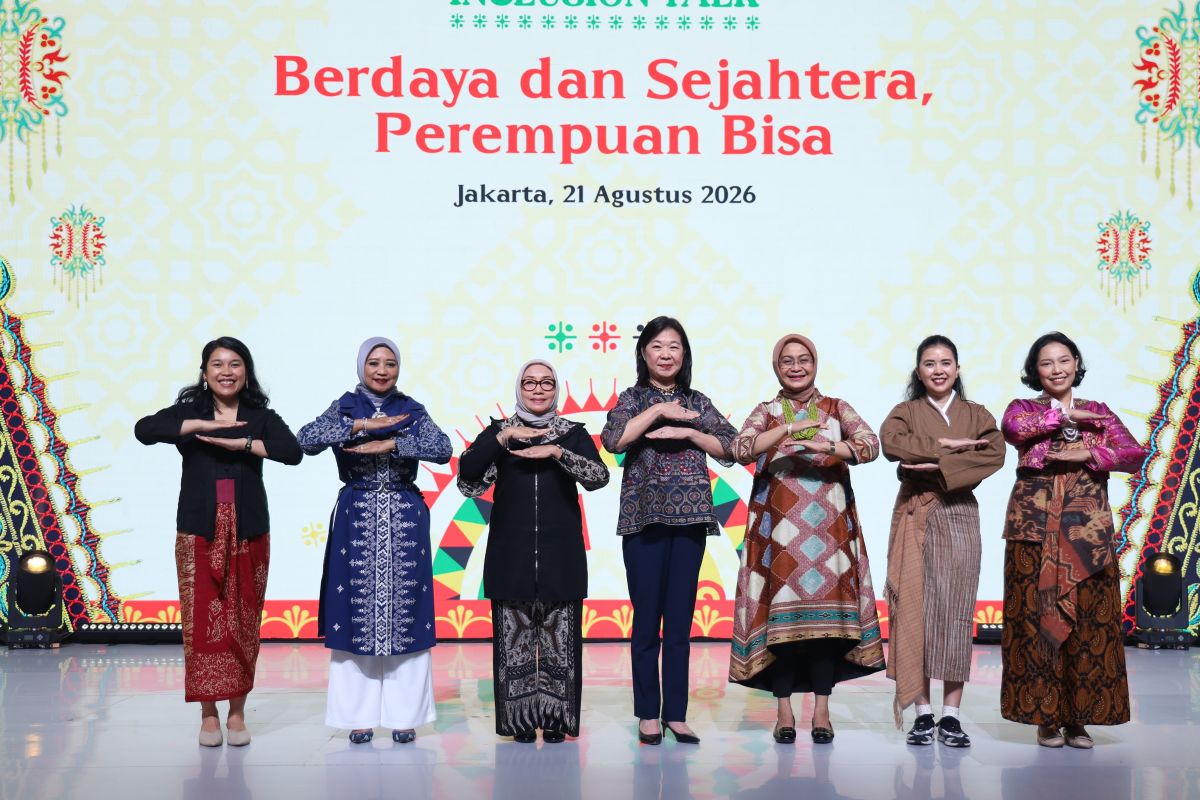
Bank Indonesia (BI) is encouraging the strengthening of women’s roles as drivers of subsistence business groups through an inclusive and gender-responsive business model to bolster the economic independence of women, who have long formed the majority of members in groups that are difficult to reach with formal financial services.
BI Deputy Governor Filianingsih Hendarta said the recommendation is contained in the study “Towards a Gender-Responsive Inclusive Business Model: Lessons from Subsistence Groups in Indonesia”, a collaboration between BI and Women’s World Banking in 2025.
“This programme is designed to reach community groups that have so far been difficult to reach with formal financial services, through a group approach that builds togetherness, trust, and independence,” Filianingsih said in a statement received in Jakarta on Monday.
The study recommends strengthening the Inclusive Economic and Financial Programme for Subsistence Groups, which BI has implemented since 2021. According to her, the programme has been replicated across all BI domestic representative offices. The study was conducted to examine how gender norms, group structure and leadership, and access to training and financial services affect the quality of participation and economic benefits received by micro business actors, particularly women.
Filianingsih said there are three main stages of empowerment recommended. First, the preparation stage uses the principles of equality of Access, Participation, Control, and Benefits as a basis for mapping conditions that affect women’s participation.
Second, the implementation stage encourages women’s representation and leadership to build solidarity and self-confidence. The use of digital technology also needs to be carried out adaptively and inclusively, taking into account the literacy gap between men and women.
Third, the monitoring and evaluation stage explicitly measures changes and programme impacts from a gender perspective.
Using a Women-Centred Design approach, the study was conducted on nine BI-assisted groups in DKI Jakarta, Bangka Belitung, Central Sulawesi, and Bali.
BI together with the Ministry of Women’s Empowerment and Child Protection (Kemen PPPA) also conducted a survey which found that gender norms still affect women’s space and time to participate actively in group activities and develop their businesses.
Women still spend more time than men on unpaid domestic and care work, such as caring for children, the elderly, sick family members, and people with disabilities.
The findings show that the success of women’s empowerment depends not only on programmes, but also on ecosystem support from families and the surrounding environment.
Minister of Women’s Empowerment and Child Protection Arifah Fauzi said women’s empowerment cannot be separated from national economic development.
“When women gain access to financing, knowledge, technology, markets, and space to make decisions, the benefits are felt not only by women themselves, but also by families, communities, and even the national economy,” Arifah said.
Senior Policy Strategist for Southeast Asia at Women’s World Banking Desi Vicianna said groups with more equal representation of women and men provide greater space for women to be involved in planning and decision-making, including business financial management.
According to her, leadership that encourages women’s representation, transparent business record-keeping, and connections with formal financial institutions are important factors in helping women develop their economic potential.
As a follow-up, BI and Women’s World Banking are refining the guidelines for Inclusive Economic and Financial Development Based on Subsistence Groups by strengthening the gender-responsive approach.
The guidelines are expected to serve as a reference for 46 BI domestic representative offices in designing interventions that suit the needs of women and men in various regions, including through training and mentoring.
Through strengthening the study and guidelines, BI and Women’s World Banking are encouraging the creation of an increasingly inclusive and gender-responsive economic empowerment ecosystem.
This approach is expected to increase the business capacity of subsistence groups while opening greater space for women to participate, make decisions, and obtain economic benefits from their business development.
Source: jawawa.id (https://jawawa.id/newsitem/bi-pushes-women-as-key-to-strengthening-subsistence-economy-groups-1787583227)
Originally published by Antara (Indonesian) (https://www.antaranews.com/berita/5709665/bi-dorong-perempuan-jadi-kunci-perkuat-ekonomi-kelompok-subsisten), translated from Indonesian