
BI: Public Optimistic About East Java's Strong Economy
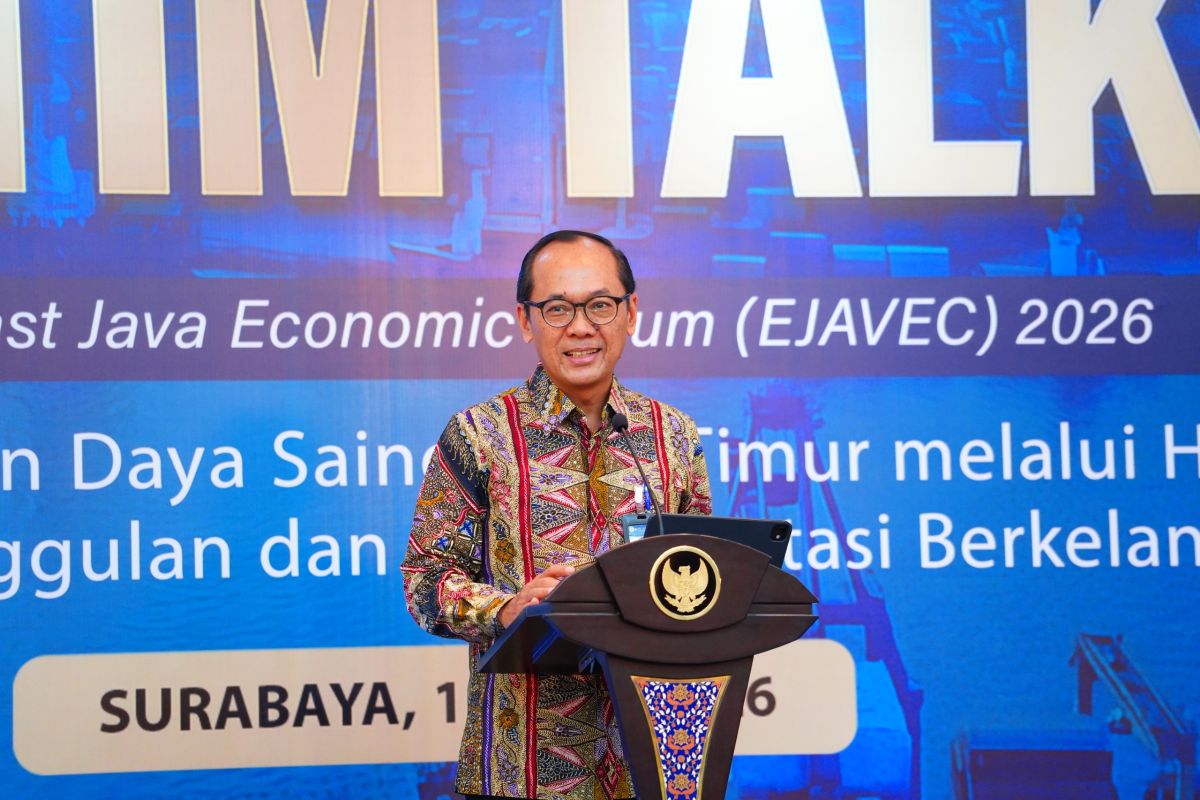
Surabaya, East Java (ANTARA) - Bank Indonesia has stated that the public remains optimistic regarding the economic strength of East Java amidst various global economic fluctuations and dynamics.
“This is reflected in Bank Indonesia’s Consumer Survey in East Java Province for May 2026, which indicates that public confidence in East Java’s economic conditions remains strong,” said the Head of the Bank Indonesia Representative Office for East Java, Ibrahim, in Surabaya on Wednesday.
Based on the survey, the Consumer Confidence Index (CCI) was recorded at 122.6 (an index >100), aligning with the national CCI, which also remains in the optimistic zone at 120.9.
This sustained consumer confidence is supported by perceptions of current economic conditions and expectations for the economic landscape over the next six months.
The Economic Activity Index (EAI) for May 2026 was bolstered by optimism across all its constituent components, namely the Current Income Index, the Job Availability Index, and the Durable Goods Purchasing Index.
These various components indicate healthy income levels, continued job opportunities, and maintained consumption activities for durable goods.
Meanwhile, the level of the Economic Expectation Index (EEI) remains stable, supported by the strength of its three constituent components: the Business Activity Expectation Index, the Income Expectation Index, and the Job Availability Expectation Index.
Nevertheless, Ibrahim warned that global economic dynamics, particularly the escalation of conflict in the Middle East, must be closely monitored as they have the potential to affect consumer optimism.
Spatially, all monitored cities and regencies in East Java—including Surabaya, Malang, Kediri, and Jember—recorded strong consumer confidence in line with the EAI and EEI levels.
Regarding household finances, the management of East Java’s public finances for consumption in May 2026 remained dominated by the largest portion, at 70.1 per cent.
Furthermore, the proportion for instalment payments and savings stood at 11.7 per cent and 18.1 per cent, respectively.