
BI Oversees Food Transformation From the Farm to Village Downstream Processing
Surabaya, VIVA – In the face of global uncertainty, climate change, and threats of volatile food prices, Indonesia’s agricultural and livestock sectors are facing increasingly complex challenges. Yet behind these challenges, various regions in East Java are showing how collaboration among government, Bank Indonesia, farmers, livestock breeders, cooperatives, and village communities can drive a food-based economic transformation that is more modern, sustainable, and of higher added value.
From strengthening strategic food production, developing village-level downstream processing, processing livestock waste, to organic farming education tourism, this transformation is part of a major effort to maintain price stability while strengthening national food security.
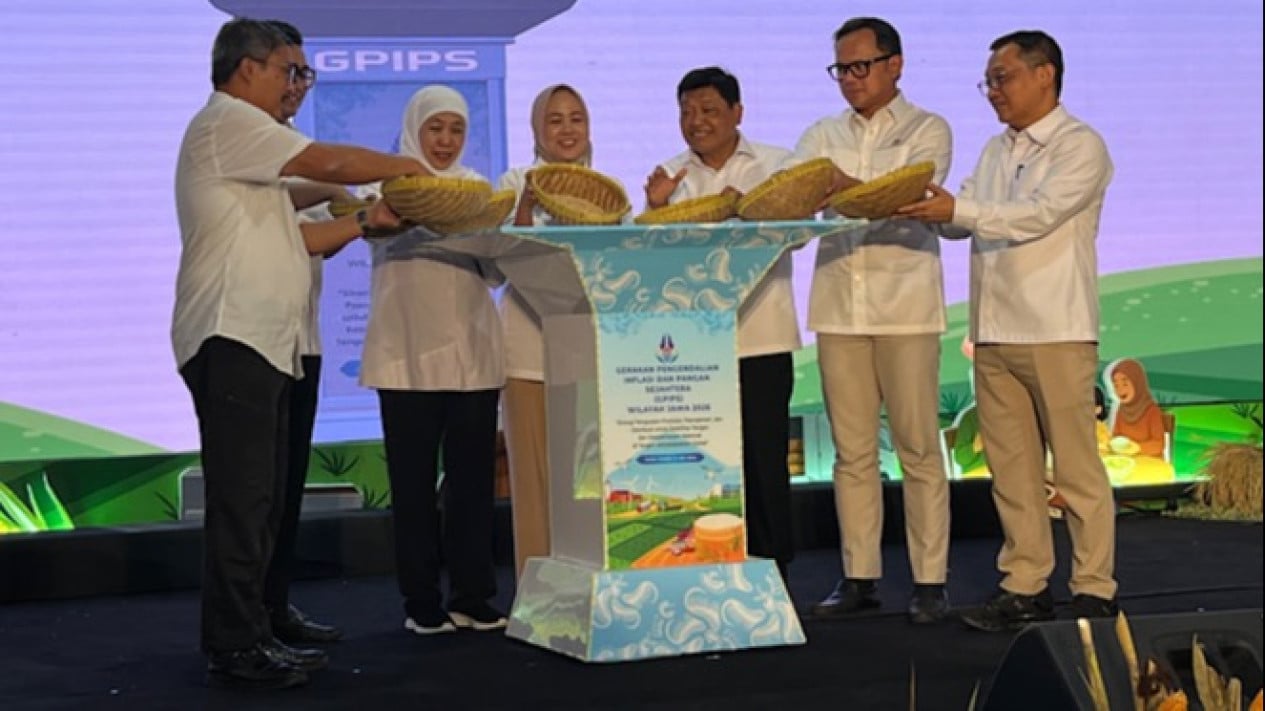
The commitment was marked by the launch of the Movement for Inflation Control and Prosperous Food (GPIPS) for the Java region in 2026 at the Bulog Warehouse in Sidoarjo, East Java, on Wednesday 13 May 2026. The programme is an evolution of the National Movement for Inflation Control of Food (GNPIP) with a more integrated upstream-to-downstream approach.
Deputy Governor of Bank Indonesia Aida S. Budiman said GPIPS is designed to address the increasingly complex challenges of food price stability. According to her, controlling food inflation now requires not only short-term market operations, but also strengthening the production and distribution sectors.
‘Through GPIPS, food inflation control is not only focused on short-term price stabilisation, but also on strengthening production, post-harvest, and distribution of food to support sustainable national food security,’ Aida said in Sidoarjo, East Java, on Wednesday.
GPIPS 2026 focuses on two main aspects: increasing productivity and ensuring smooth food distribution. The three national priority commodities are rice, chilli, and shallots.
‘GPIPS is stronger than the previous programme, particularly in three areas: first, alignment of programme with government priorities, especially in supporting increased production, strengthening distribution, and stabilising strategic food to support the Asta Cita agenda towards self-sufficiency in food,’ Aida said.
Bank Indonesia is optimistic that the measures will keep volatile food inflation within the 3-5% range throughout 2026. However challenges such as climate change, El Niño, post-harvest strengthening, and the aging-farmer phenomenon remain serious concerns.