
BI Optimises GPIPS and KLM Incentives to Safeguard Food Security and Inflation
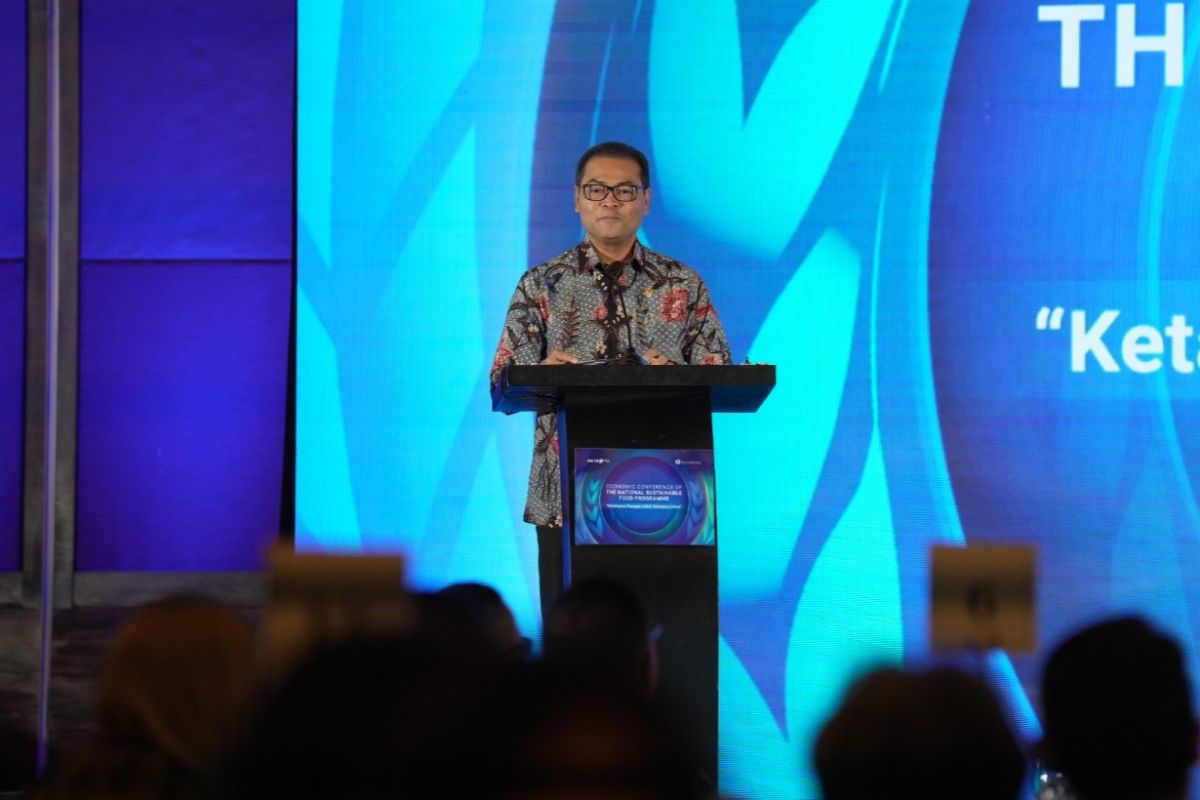
With price pressures remaining under control, public purchasing power can be protected and economic growth can be maintained. Bank Indonesia (BI) is optimising the Inflation Control and Prosperous Food Movement (GPIPS) programme and the Macroprudential Liquidity Incentive Policy (KLM) to safeguard food security and control inflation so that it remains within the target range of 1.5 to 3.5 percent. BI Deputy Governor Ricky P. Gozali stated that good food security, including maintaining stocks and food commodity prices, can dampen inflationary rises. “With price pressures remaining under control, public purchasing power can be protected and economic growth maintained,” Ricky P. Gozali said at a seminar entitled “Food Security for a Golden Indonesia” in Jakarta on Wednesday. He said the institution is encouraging productivity, smoothing distribution and maintaining food price stability through the implementation of GPIPS. Meanwhile, the KLM incentive is expected to increase financing distribution to the agricultural sector, processing industry and food downstreaming. Ricky said that global uncertainty poses challenges to national food supply, ranging from commodity price volatility and export restrictions to rising logistics and import costs. Pressure on the rupiah exchange rate has also contributed to rising prices of imported food and agricultural production inputs. This shows that controlling inflation and strengthening food security cannot be separated from efforts to maintain economic stability. On the same occasion, Head of the National Research and Innovation Agency (BRIN) Arif Satria said agricultural innovation from the upstream sector is needed to curb food price inflation, considering that volatile food commodities are highly susceptible to seasonal and weather changes. His agency has developed a number of superior rice varieties with productivity above 10 tonnes per hectare that are resistant to flooding, drought and saline land to support food self-sufficiency towards a Golden Indonesia 2045. “The availability of superior varieties resistant to extreme weather is expected to stabilise the supply of staple commodities and prevent price spikes,” said Arif Satria. Regarding supply management, Chair of the Food Supply Stabilisation Working Team at the National Food Agency (Bapanas) Yudhi Harsatriadi Sandyatma said that field interventions continue to be intensified through close synergy with BI under the coordination of the Central and Regional Inflation Control Teams (TPIP/D). Up to early June 2026, the Cheap Food Movement (GPM) has been held more than 5,200 times across 36 provinces. In addition, 2,890 Food Kiosks have been operated throughout Indonesia. Support for strengthening food security and controlling inflation has also come from the business world. Vice Chairman Coordinator for Food Affairs at the Indonesian Chamber of Commerce and Industry (Kadin) Mulyadi Jayabaya stated that his party is committed to pushing for the strengthening of domestic supply chains and the harmonisation of central-regional regulations, which have so far been seen as hampering investment in the food sector. “We come bringing solutions, investment and readiness to move together,” said Mulyadi Jayabaya.