
BI: MSME Loans Must Be Measured by Quality, Not Just Quantity
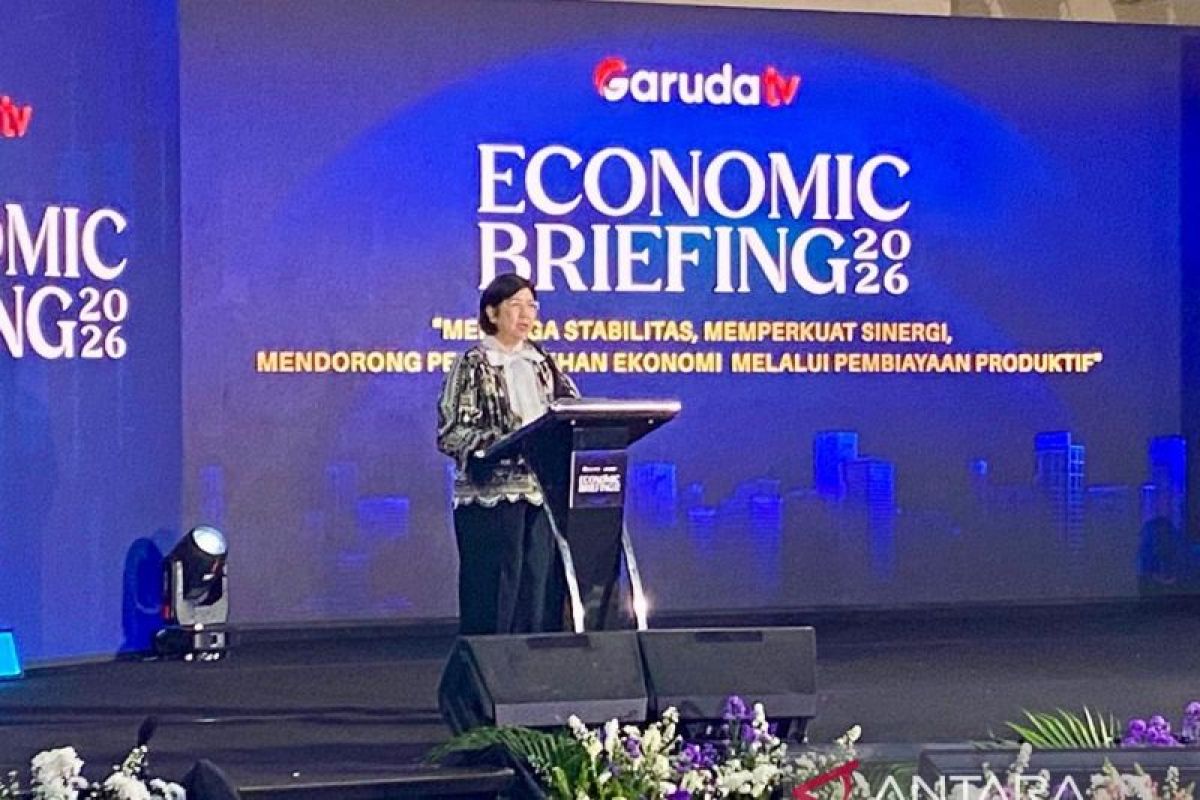
Senior Deputy Governor of Bank Indonesia (BI) Destry Damayanti has reminded that credit to the MSME segment needs to be measured not only by the size of its growth, but also by the quality of its distribution, so that it genuinely drives the productive sector and broadens access to financing.
“Whether that credit flows into productive sectors, and whether small businesses also enjoy growth and access from banks relatively equal to that of large companies,” said Destry at the Economic Briefing 2026 event in Jakarta on Friday.
According to data from the Financial Services Authority (OJK), MSME credit grew 0.60 per cent year on year (yoy) in May 2026.
That growth was driven by micro and medium business credit, which expanded 0.64 per cent (yoy) and 1.84 per cent (yoy) respectively, although small business credit contracted by 0.24 per cent (yoy).
While MSME credit performance has improved compared with last year, when it recorded negative growth, Destry believes improving financing access for MSMEs remains a collective homework.
In her view, MSME growth accompanied by quality financing will be one of the drivers of quality and inclusive economic growth.
To support this, BI has issued various incentives through macroprudential policy, including the macroprudential liquidity incentive (KLM), to encourage banks to channel financing to strategic sectors, including MSMEs.
Banks that meet the requirements can even receive incentives in the form of a reduction in minimum reserve requirements (GWM), giving them greater liquidity room to extend credit.
Beyond financing, BI is also continually expanding financial inclusion through the development of digital payment systems, one of which is QRIS, which makes transactions easier, cheaper, faster and more inclusive.
Destry revealed that the number of QRIS users has now reached 66 million, with 45 million merchants.
Around 90 per cent of those merchants are MSME players.
“So our goal is how we develop an inclusive payment system. Thank God, the results are starting to show. But we just have to keep improving it going forward,” said Destry.
She emphasised that strengthening MSMEs is vital, given that the sector is the backbone of the national economy.
Indonesia has around 64 million MSMEs contributing approximately 60 per cent of gross domestic product (GDP) and absorbing around 97 per cent of the workforce. In addition, around 60 per cent of MSME players are women.
Therefore, Destry asserted, paying attention to MSMEs means not only promoting inclusive economic growth, but also strengthening the resilience of the national economy.
“A country will have strong resilience if the majority source of growth receives attention,” said Destry.
She also affirmed that MSMEs are not merely contributors to economic growth, but the pulse or lifeblood of the Indonesian economy.
For that reason, strengthening this sector must be a shared concern of BI, OJK, the government and other relevant stakeholders.
On the other hand, Destry acknowledged that MSMEs still face various challenges, ranging from financing access and management capacity to digital adaptation and market access expansion.
Regarding market access, she noted that most MSMEs still face limitations in expanding their marketing reach, even to meet domestic market needs, let alone penetrate export markets.
“Currently, of the roughly 64 million MSMEs, only around 15 per cent are able to export, and even then only for certain types,” said Destry.
She cited the coffee industry as an example of MSMEs that have been relatively successful in expanding market access. Indonesian coffee is widely known in international markets for its diverse flavours.
“However, the number of certified baristas and coffee businesses meeting international standards remains limited. Yet, if we want to enter the global market, product quality and human resources must also continue to improve,” said Destry.