
BI Launches Yuan Clearing Bank: What It Means for the Rupiah
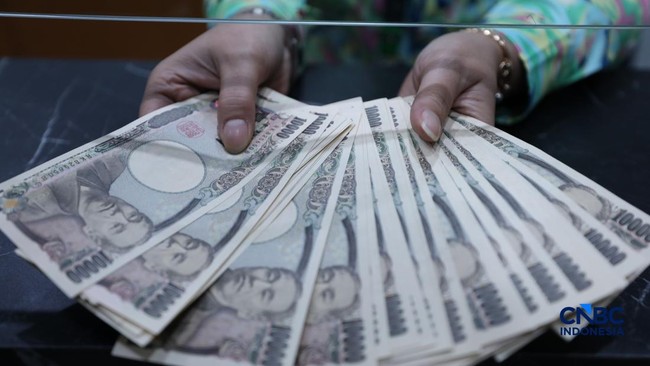
Jakarta, CNBC Indonesia — Bank Indonesia (BI) has implemented a Renminbi (RMB) clearing bank as an institution supporting the money and foreign-exchange market (PUVA), with the aim of strengthening Indonesia’s economic resilience.
The move is part of BI’s efforts to bolster economic and financial-system stability by developing the rupiah and Renminbi market ecosystem.
“Strengthening this ecosystem is part of our efforts to support rupiah stability and reinforce the resilience of Indonesia’s external sector,” BI Governor Destry Damayanti said at the launch of the Renminbi clearing bank, held during a high-level meeting on the development of the rupiah and Renminbi ecosystem at BI’s head office in Jakarta on Thursday (12 November 2026).
The clearing bank is also intended to widen access to RMB liquidity in the domestic market, make trade and investment transactions between Indonesia and China more efficient, and support the expansion of cross-border transactions using local currencies (Local Currency Transactions, or LCT).
The initiative is also a currency-diversification strategy for international transactions, intended to strengthen external resilience and support rupiah stability amid global volatility.
As global economic uncertainty rises, BI is continuing to deepen financial markets to meet growing foreign-exchange needs driven by international trade, expand the availability of hedging instruments and support rupiah stability.
The rupiah and Renminbi market ecosystem is being developed in an integrated way across three pillars: monetary operations, market development and international cooperation. This is expected to increase market liquidity and efficiency, while offering banks and businesses more competitive transaction alternatives.
Co-ordinating Minister for Economic Affairs Airlangga Hartarto said he hoped the expansion of LCT would help boost Indonesian exports to China, given that Indonesia currently runs a trade deficit with the country.
“To drive economic growth to 6%, we are strengthening the external sector through four steps. First, improving export and investment competitiveness through downstream processing, deregulation, simpler licensing and regulatory certainty. Second, maintaining rupiah stability through fiscal and monetary co-ordination and deeper financial markets. Third, optimising the placement of export proceeds (DHE) domestically to strengthen foreign-exchange reserves and liquidity. Fourth, expanding economic diplomacy by accelerating trade agreements with the European Union (IEU-CEPA) and the Eurasian Economic Union (I-EAEU FTA), continuing OECD accession, and leveraging membership of WAICO to attract investment,” Airlangga said.
People’s Bank of China (PBoC) Deputy Governor Tao Ling welcomed BI’s support for strengthening bilateral financial co-operation between Indonesia and China.
Tao said using local currencies in trade and investment between the two countries could improve transaction efficiency, reduce costs and limit foreign-exchange risk.
With its extensive international network, Bank of China can play an important role in ensuring liquidity and facilitating cross-border transactions through co-operation with domestic banks.
“The PBoC stands ready to continue strengthening co-ordination with BI to extend the benefits of financial co-operation to both countries,” Tao added.
Zhou Kan, chargé d’affaires ad interim at the Chinese Embassy in Indonesia, said he was confident that the comprehensive strategic partnership between Indonesia and China would continue to develop and deliver tangible benefits to people in both countries.
Given the considerable potential for trade and investment co-operation, Zhou said financial co-operation still had significant room to grow and support closer bilateral economic ties.
The implementation of the Renminbi clearing bank follows co-operation between BI and the PBoC, formalised in a memorandum of understanding signed on 11 June 2026. The PBoC subsequently appointed Bank of China (Hong Kong) Limited Jakarta Branch as Indonesia’s Renminbi clearing bank.
The clearing bank will support Renminbi liquidity, transaction clearing and settlement services, as well as deposit and financing instruments. At the launch, Bank of China (Hong Kong) Limited Jakarta Branch also signed commitments with 12 Appointed Cross Currency Dealer (ACCD) banks to support its services and the use of Indonesia-China LCT.
The 12 banks are Bank Mandiri, Bank Negara Indonesia (BNI), Bank Rakyat Indonesia (BRI), Bank CIMB Niaga, Bank Sinarmas, Bank OCBC NISP, Maybank Indonesia, China Construction Bank Indonesia (CCB Indonesia), Bank Central Asia (BCA), Bank Danamon, PermataBank and ICBC Indonesia.
Since its introduction in 2018, Indonesia’s LCT co-operation has expanded and now covers seven partner countries: Malaysia, Thailand, Japan, China, South Korea, the United Arab Emirates and Singapore. Eligible transactions have also diversified to include trade in goods and services, direct investment, and capital- and financial-market transactions. Developing the rupiah and Renminbi ecosystem is becoming increasingly relevant as use of Indonesia-China LCT grows.
Indonesia-China LCT transactions reached the equivalent of US$43.89 billion in January–September 2026, exceeding the full-year 2025 total of US$13.19 billion. The corridor accounted for the largest share of Indonesia’s total LCT transaction volume, at 83.49%, with an average of 5,951 users per month. Issuance of Panda bonds has also increased: the first issuance was CNY7 billion in July 2026, followed by CNY10 billion in November 2026. These developments point to the growing use of the rupiah and Renminbi in economic activity between the two countries.
BI will continue developing the money and foreign-exchange market ecosystem by improving products and price-setting mechanisms, widening market participation and strengthening financial-infrastructure connectivity. Working with relevant authorities, banks and businesses, BI says it is committed to ensuring the ecosystem develops sustainably and delivers tangible benefits to Indonesia’s economy.
Source: jawawa.id (https://jawawa.id/newsitem/bi-launches-yuan-clearing-bank-what-it-means-for-the-rupiah-1794484360)
Originally published by CNBC Indonesia (https://www.cnbcindonesia.com/news/20261112175129-4-784764/bi-resmikan-bank-kliring-yuan-ini-dampaknya-bagi-rupiah), translated from Indonesian