
BI Launches Integrated Entrepreneurship Programme for MSMEs and Pesantren
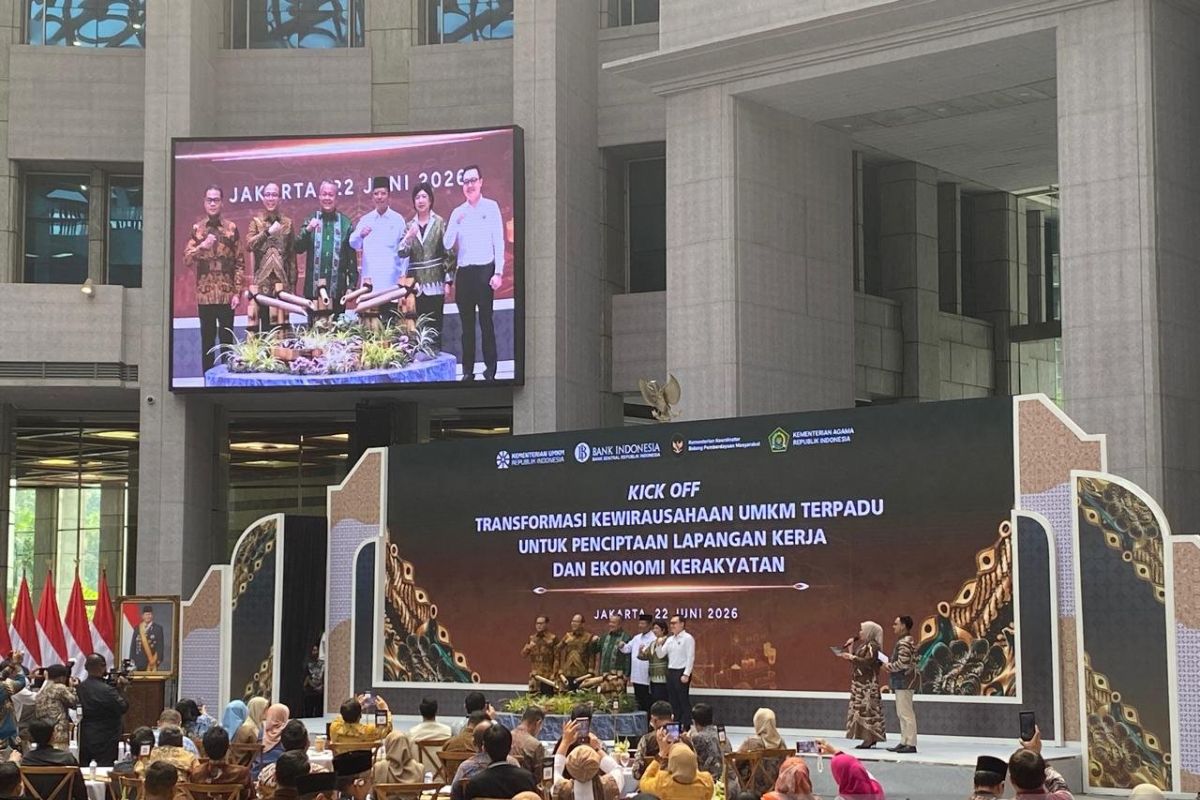
Bank Indonesia (BI) has introduced an Integrated Entrepreneurship Transformation Programme for micro, small, and medium enterprises (MSMEs) and pesantren, featuring training, internships, and business mentoring to cultivate entrepreneurs ready to build sustainable businesses.
“We start with 2.5 months of entrepreneurial competency training, then practice, followed by mentoring, and finally business development,” said BI Governor Perry Warjiyo at the programme’s kick-off event in Jakarta on Monday.
The programme is a synergy between BI, the Ministry of MSMEs, the Ministry of Religious Affairs, regional governments, and various associations to broaden the impact of MSME and pesantren economic empowerment initiatives that have been running across various institutions.
Perry noted that experience shows entrepreneurial ability is the most crucial factor in advancing MSMEs. Therefore, through this programme, participants will first be equipped with entrepreneurial competencies before receiving capital support.
“Entrepreneurship cannot just be taught in the classroom. How is it practised? And after practice, how is it tested for success? That is why this programme differs, as it will have three stages,” he said.
In the first stage, participants will undergo entrepreneurship education for approximately 2.5 months, covering technical competencies according to their business field and business skills. Participants who meet the standards will receive certification.
After that, participants enter the internship or field practice stage. In this stage, participants are placed in established MSMEs or pesantren-based businesses to test the application of the knowledge gained during training.
Participants who pass the internship evaluation will receive further certification before proceeding to the next stage.
After completing the entire process, participants receive mentoring to establish and develop their businesses, including access to capital support.
According to Perry, this approach is the main differentiator from other MSME development programmes because capital is provided after participants have gained competency and practical experience.
The Integrated Entrepreneurship Transformation Programme focuses on four business areas that have proven successful and have the potential for broad impact. Successful business actors in these fields will be involved as mentors in the coaching process.
Two areas target MSMEs, namely Cangkir Barista and Citra Nusantara. Through Cangkir Barista, BI aims to produce 400 internationally certified baristas each year to support the strengthening of the national coffee industry.
“Our programme, which has successfully educated baristas and developed their businesses, also has an obligation to help farmers select the best quality. So, an ecosystem is built from downstream to upstream,” Perry explained.
Meanwhile, Citra Nusantara is directed at encouraging product innovation in traditional textiles through mentoring by designers and creative industry players.
“We are targeting 50 new textile innovations by 2026. From the 500 participants we have already selected, we challenge them to develop 50 new innovations. We deploy designers from central and regional areas to become mentors to create works that are not only of good quality but also clearly sought after by consumers,” said Perry.
The other two areas are channelled through pesantren, namely Air Berkah Indonesia and Tani Berkah.
The Air Berkah Indonesia programme encourages the development of bottled drinking water businesses based on local resources within the pesantren environment, while Tani Berkah focuses on developing green farming and hydroponics that can be operated on relatively limited land.
“This is the commitment of Bank Indonesia, the government, and BI’s strategic partners to MSMEs as the foundation of a people’s economy, which is an important pillar of economic growth through integrated entrepreneurship training and the establishment of advanced MSMEs, as well as for job creation and the people’s economy,” Perry said.