
BI Governor's Resignation, Fiscal Dominance, and Risk Premium
Note: This article reflects the personal opinion of the author and does not represent the views of the CNBCIndonesia.com editorial team.
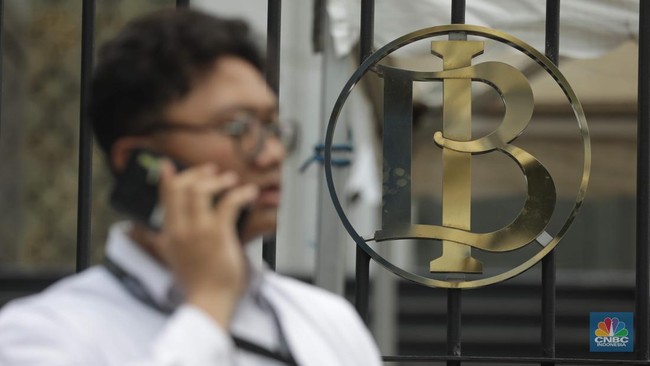
The national economy has entered a new phase of uncertainty. One trigger was the announcement of the resignation of Bank Indonesia Governor Perry Warjiyo on Monday, 27 July 2026.
The announcement was followed by pressure on a number of financial market indicators. The Jakarta Interbank Spot Dollar Rate (JISDOR) reference rate weakened from Rp17,973 per US dollar on Friday, 24 July 2026, to Rp18,088 per US dollar on Tuesday, 28 July 2026 — a depreciation of roughly 0.64 per cent over the period.
The Composite Stock Price Index (IHSG) also fell. After closing at 6,196.43 on Friday, 24 July 2026, the IHSG ended at 6,185.78 on Monday, 27 July 2026, down 10.65 points or 0.17 per cent.
At the opening of trade on Tuesday, 28 July 2026, the IHSG hovered around the 6,197 level on an intraday basis, lower than its close of 6,334.48 on Wednesday, 22 July 2026.
Meanwhile, Indonesia’s five-year credit default swap (CDS) spread rose to 94 basis points (bps) on Monday, 27 July 2026. The widening CDS spread indicates that investors are demanding higher compensation for elevated credit risk.
Perceptions of economic risk are also reflected in government bond (SBN) yields. At Monday’s close, 27 July 2026, the five-year SBN yield stood at 7.270 per cent, up 1 bps from the previous trading day and roughly 4.6 bps higher over the week. Rising yields were accompanied by falling bond prices in the secondary market.
The Issue of Fiscal Dominance
The resignation of the BI Governor could worsen concerns among domestic and global investors over Bank Indonesia’s independence and the possibility of fiscal dominance.
Fiscal dominance occurs when financing needs and fiscal sustainability constrain, or even subordinate, monetary policy.
Under such conditions, the central bank faces pressure to hold down its policy rate despite high inflation expectations or a depreciating exchange rate. Raising the policy rate would increase the cost of issuing new debt and refinancing maturing obligations.
However, higher interest rates do not immediately change the coupons on all outstanding fixed-rate SBN. The impact on the State Budget (APBN) depends on the debt maturity structure, debt composition, new issuance needs, and market conditions.
In line with the phenomenon of fiscal dominance, Brazil’s experience under President Dilma Rousseff in 2011-2016 offers an important lesson.
At the end of President Inacio Lula da Silva’s administration, the Brazilian economy grew 7.6 per cent in 2010, then slowed to 3.9 per cent in 2011, the start of Dilma’s presidency.
President Dilma believed Brazil’s actual growth remained far below its potential. The Brazilian government sought to push economic growth towards a long-term rate of 4.5-5.0 per cent.
To achieve that target, the Banco Central do Brasil (BCB) tended to hold or even cut its Selic policy rate. At the time, Brazilian inflation reached 6.5 per cent, exactly at the upper bound of the 4.5 per cent inflation target with a two per cent tolerance band.
Initially, the BCB raised the Selic from 10.75 per cent at end-2010 to 12.50 per cent in July 2011. But thereafter, the BCB began cutting it — to 12 per cent in August, 11.50 per cent in October, and 11 per cent in November 2011.
A working paper from the Bank for International Settlements (BIS) identifies the 2012-2015 period as one of fiscal dominance in Brazil, characterised by fiscal constraints on Brazilian monetary policy.
Brazil’s experience shows that weakening fiscal credibility can narrow monetary policy space and affect inflation expectations, Brazil’s real exchange rate, and the cost of new debt issuance.
Fiscal dominance over monetary policy was also evident in Egypt after 2011. In the early phase of that period, the International Monetary Fund (IMF) noted that Egypt’s government budget deficit was largely financed through the banking system.
About one-third of that banking financing came from the Central Bank of Egypt (CBE). This risked heightening inflationary pressure while reducing financing space for the private sector.
Over that period, Egypt’s government debt ratio rose from about 74.6 per cent of GDP in fiscal 2011/2012 to 103.2 per cent in 2016/2017, before falling to around 83.8 per cent in 2018/2019. Egypt’s fiscal deficit, which had been in the range of 10-13 per cent of GDP, also declined to roughly 8.1 per cent in 2018/2019.
These conditions left the CBE unable to freely adjust its policy rate instruments. The sacrifice was high inflation, an increasingly unstable exchange rate, hindered private investment, and eroded economic growth.
Indonesia’s Way Out
In Indonesia’s context, there are signs of a drift towards fiscal dominance. Indicators can be observed in BI’s policy rate decisions: changes in the BI-Rate have tended to depend on debt costs and the scale of government financing needs, disrupting BI’s independence.
This is consistent with the deterioration in government debt through end-2025, with the government debt ratio rising to 40.54 per cent of GDP while the APBN deficit reached 2.92 per cent of GDP — approaching the 3.0 per cent safe threshold.
Both indicators warrant vigilance, because large financing needs can heighten the budget’s sensitivity to changes in debt costs stemming from BI policy rate hikes, which in turn lift sovereign bond yields.
BI’s response to exchange rate pressure in early 2026 provides useful analysis. BI only raised the BI-Rate by 50 bps to 5.25 per cent when the rupiah spot rate touched around Rp17,745 per US dollar on 20 May 2026. Although BI subsequently delivered two additional hikes totalling 50 bps in June, bringing the BI-Rate to 5.75 per cent, it then held the rate in July 2026.
These hikes were viewed as too late, because BI tended to accommodate the APBN’s financing needs in pursuit of the 6.0-8.0 per cent economic growth target through 2029. The increasingly strong signal of fiscal dominance over monetary policy was marked by the BI Governor’s resignation, even if for personal reasons.
Before the Governor’s resignation, the international rating agency Fitch Ratings had revised Indonesia’s debt rating outlook from stable to negative on 4 March 2026, while maintaining the BBB rating — investment grade category.
However, following the resignation, Fitch stated it is monitoring developments and sees risks of additional external pressure arising from fragile investor sentiment, uncertainty over the direction of monetary policy, and negative perceptions of BI’s independence.
This indicates a heightened likelihood of a ratings change if the risks stemming from the BI Governor’s resignation cannot be managed.
Meanwhile, S&P Global Ratings on 28 July 2026 maintained Indonesia’s rating at BBB/A-2 with a stable outlook. S&P said the BI Governor’s resignation does not directly affect the rating, though it could add to monetary policy uncertainty.
So how can the risks of the BI Governor’s resignation be mitigated so as not to place sustained pressure on the rupiah, stock prices, and government bonds?
First, the government must affirm its commitment to safeguarding central bank independence. Price stability — that is, inflation and the exchange rate — must not be sacrificed in pursuit of the 6.0-8.0 per cent growth ambition through 2029.
Second, investor perceptions of fiscal dominance over monetary policy must be answered through concrete institutional action. Fiscal-monetary coordination must be transparent without diminishing BI’s mandate to safeguard price stability, namely inflation and the exchange rate.
At the same time, the government needs to manage the fiscal deficit as a share of GDP so it does not breach the 3.0 per cent safe limit. It should announce a credible debt management strategy that gradually restores a positive primary balance, as President Lula did in Brazil in 2003-2010.
Third, Indonesia should learn from the experiences of Brazil and Egypt. The main lesson is that large fiscal deficits and high debt carry the potential for fiscal dominance. Fiscal dominance over monetary policy can weaken macroeconomic governance credibility, raise inflation expectations, pressure the exchange rate, reduce private investment, and ultimately erode economic growth.
Fourth, to reduce monetary policy uncertainty, the president must promptly process and nominate a definitive candidate for BI Governor to the House of Representatives (DPR) of the Republic of Indonesia in accordance with prevailing legislation. The candidate must possess academic and professional credibility, macroeconomic experience, integrity, and a strong commitment to BI’s independence.
Finally, the most important quality in the new BI Governor is technocratic, market-calming policy communication skill — not the opposite: becoming a source of noise that could disrupt national financial market stability amid prolonged global uncertainty.