
BI Governor: We raised interest rates to attract 'inflow'
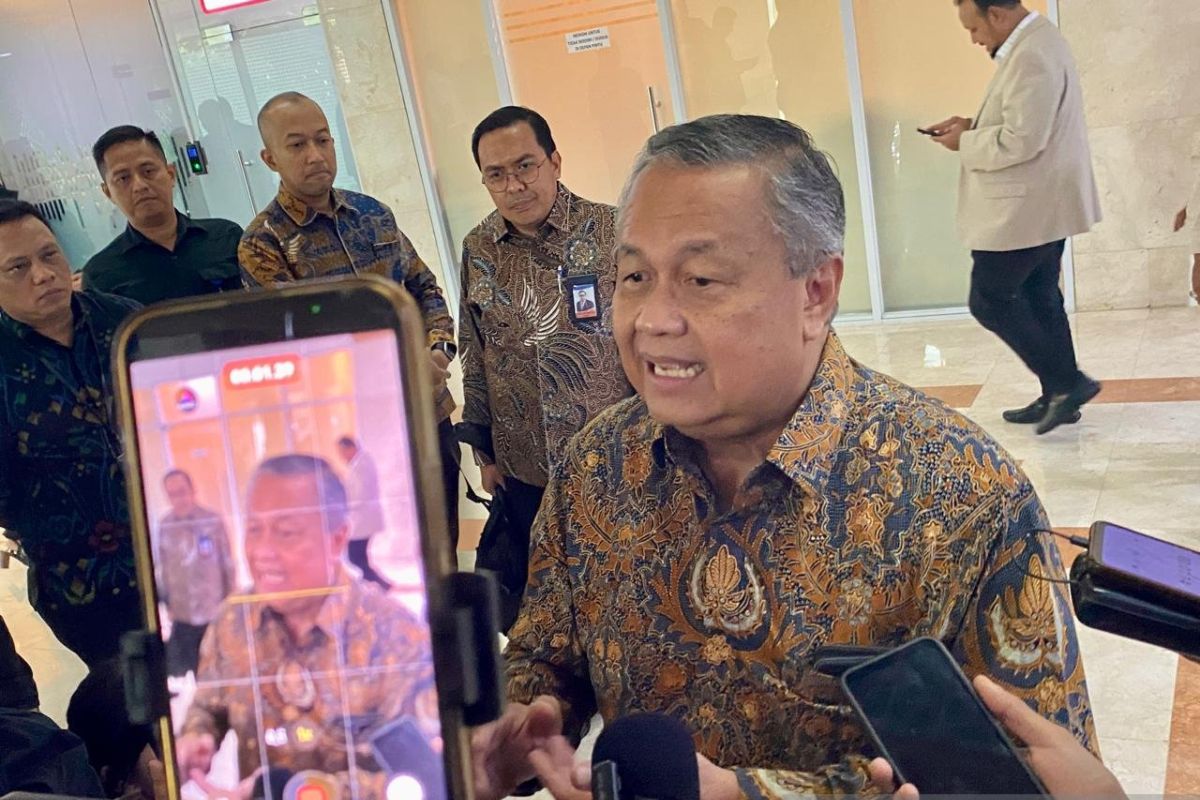
Bank Indonesia (BI) Governor Perry Warjula stated that while the Indonesian central bank is reluctant to raise the benchmark interest rate (BI-Rate), it has done so to attract foreign portfolio investment inflows into the country.
During a meeting with the Indonesian House of Representatives (DPR RI) Budget Committee on Tuesday, it was noted that through the Weekly Board of Governors Meeting, BI decided to raise the BI-Rate by 25 basis points (bps), bringing it to the 5.5 per cent level.
“Today we have raised it again to 5.5 per cent. We do not like raising interest rates, but to attract foreign portfolio investments that are currently abroad where interest rates are rising everywhere, we are adjusting to market mechanisms,” said Perry in Jakarta.
For context, BI recently raised the BI-Rate by 50 bps during the Monthly Board of Governors Meeting on 19-20 May 2026. The May 2026 increase was the first adjustment after the benchmark rate had been maintained at 4.75 per cent since September 2025. Throughout 2025, BI had previously cut the benchmark rate five times, totalling a reduction of 125 bps.
In addition to the interest rate adjustment, Perry explained other measures aimed at maintaining the stability of the rupiah exchange rate. This includes continuous foreign exchange interventions, both in the offshore Non-Deliverable Forward (NDF) market and through spot transactions and Domestic Non-Deliverable Forward (DNDF) in the domestic market.
Furthermore, BI is ensuring that foreign exchange reserves remain sufficient to maintain the stability of the rupiah. To increase foreign capital inflows, BI is also enhancing the interest rate structure of Bank Indonesia Rupiah Securities (SRBI). This is being conducted in coordination with the government to ensure that portfolio investment increases not only in SRBI instruments but also in Government Securities (SBN) and the stock market.
Perry also explained the coordination between fiscal and monetary policies to ensure that liquidity in the money and banking markets remains more than sufficient, particularly to ensure that the growth of Primary Money (M0) remains in double digits.
Additionally, BI has lowered the threshold for cash purchases of foreign exchange against the rupiah without underlying documentation to 25,000 US dollars per participant per month, effective from June 2026.
As part of efforts to strengthen the rupiah, BI is expanding the use of local currency transactions (LCT) for settling trade and investment transactions. BI is also strengthening supervision of banks and corporations with high US dollar purchasing activities through close coordination with the Financial Services Authority (OJK).