
BI Governor: Indonesian Economy Must Become More Self-Reliant Amid Global Turmoil
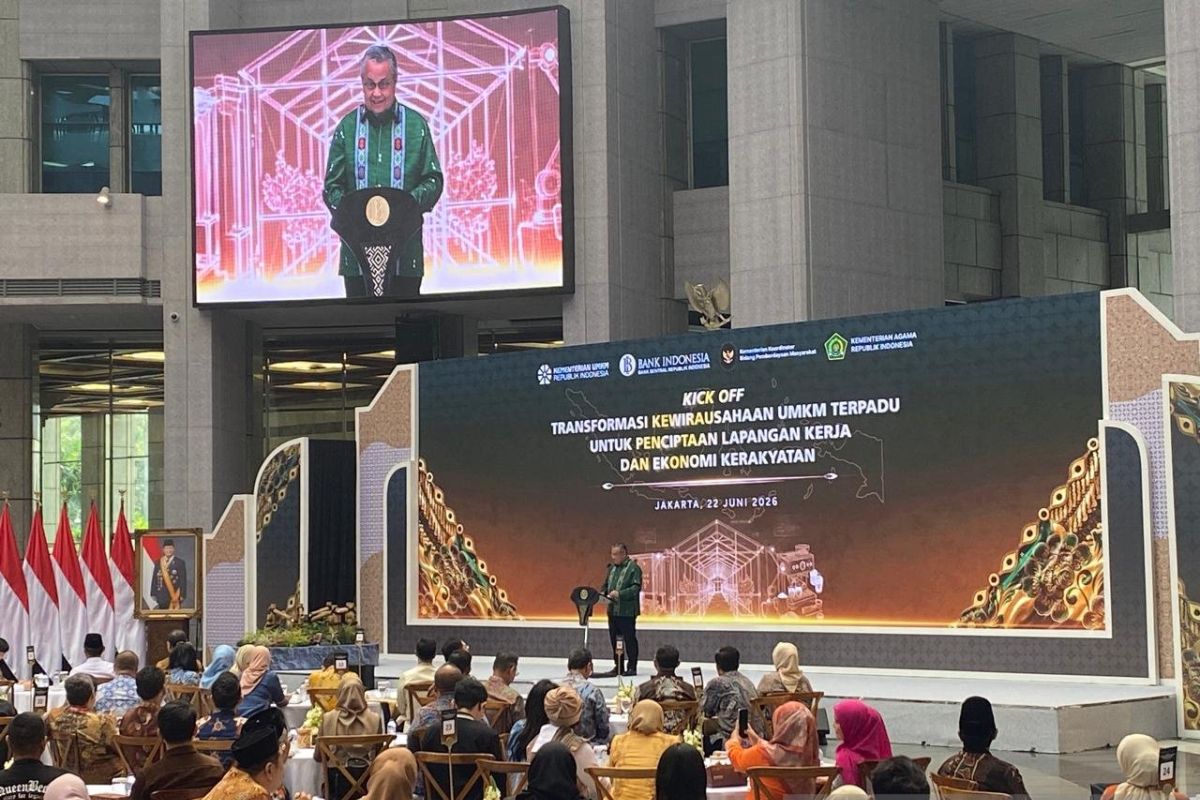
Bank Indonesia (BI) Governor Perry Warjiyo has stressed that the Indonesian economy must become increasingly self-reliant amid heightened global uncertainty caused by trade wars and the Middle East conflict, which has led to the closure of the Strait of Hormuz. “In such high uncertainty, we must be more self-reliant. We must be more self-reliant. Whatever happens globally, we have to move on,” Perry said at the launch of the Integrated MSME Entrepreneurship Transformation Programme in Jakarta on Monday. Perry cautioned that global turmoil is a factor beyond Indonesia’s control. Therefore, efforts must focus on strengthening the domestic economic foundation so it can continue to grow despite external challenges. “If the global situation is volatile, we cannot control it. What we can control is ourselves. Let us strengthen our own capabilities,” he said. He noted that this was one of the key reasons behind the launch of the programme on Monday. The initiative is expected to bolster national economic resilience through MSME development. In addition to reinforcing economic self-reliance, Perry said the programme is crucial because MSMEs play a strategic role in the national economy. There are currently more than 65 million MSMEs in Indonesia, the majority of which are small-scale and serve as major job absorbers. Perry also highlighted the significant contribution of women to MSME development. He argued that advancing MSMEs means driving economic growth, creating jobs, improving public welfare, and supporting the sustainability of future generations. “MSMEs are truly a vital pillar for growth, welfare, and the impetus for future generations,” he said. Perry further stated that the Integrated MSME Entrepreneurship Transformation Programme aligns with the national development agenda outlined in the National Medium-Term Development Plan (RPJMN) and forms part of President Prabowo Subianto’s Asta Cita mission, particularly in strengthening the people’s economy. “Let us make this programme an integral part of the Asta Cita for a people’s economy,” he urged. Perry emphasised that MSME development cannot be undertaken by a single institution alone, but requires collaboration between the government, Bank Indonesia, and various other stakeholders. The programme is therefore described as a tangible form of shared commitment to strengthening MSMEs as the foundation of the people’s economy and a driver of national economic growth. It also represents the commitment of BI, the government, and strategic partners to enhance MSME capacity through integrated entrepreneurship training and more advanced MSME development. These efforts are expected to expand job creation while simultaneously reinforcing the people’s economy. “This programme is a tangible manifestation of our shared commitment. Our shared commitment: united we stand firm, united we advance, and become ever more successful,” Perry said.