
BI: Global Economic Outlook Remains Weak, Uncertainty Still High
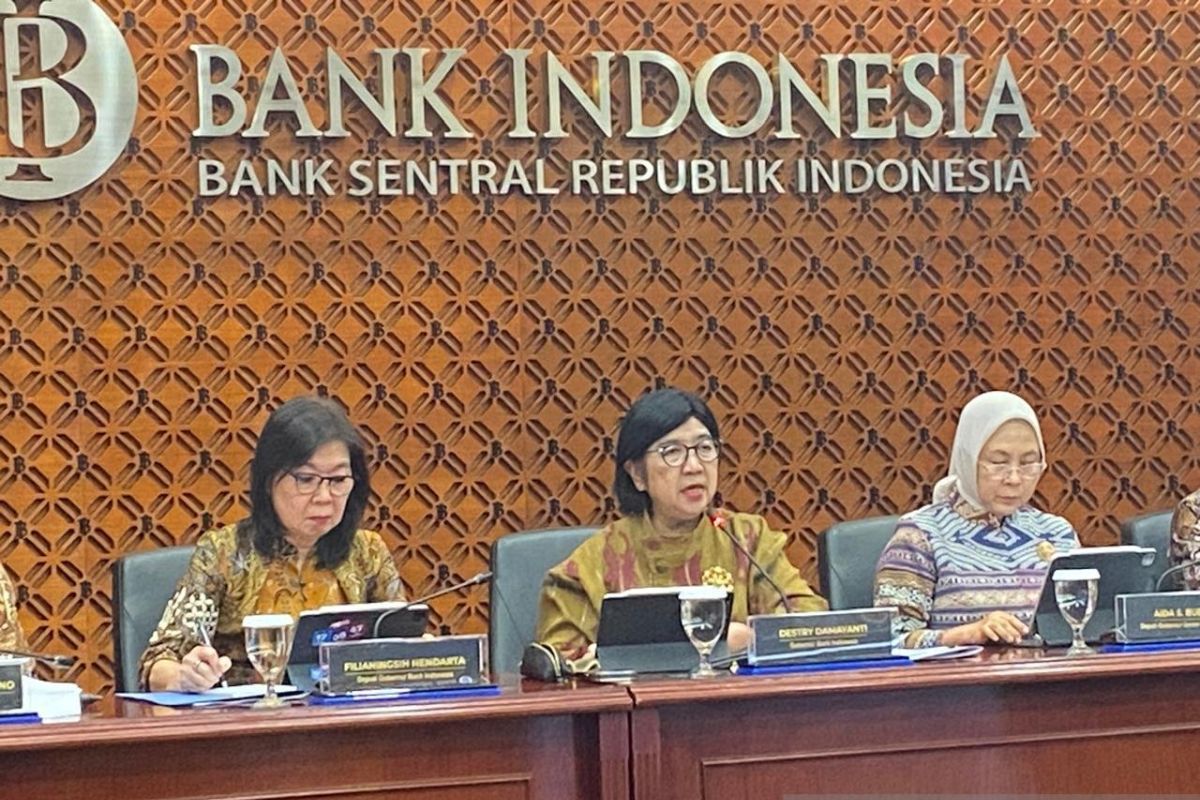
Bank Indonesia (BI) believes the global economic outlook remains weak, accompanied by persistently high financial-market uncertainty.
“This is influenced by the intensification of tensions in the Middle East, which is keeping oil and various global commodity prices high,” BI Governor Destry Damayanti said at a press conference on the results of BI’s Board of Governors Meeting in Jakarta on Wednesday.
Destry said global economic growth in 2026 was expected to remain weak, at around 3 per cent, while inflationary pressures would stay high at about 4.6 per cent.
Tight global monetary policy is expected to persist for longer (“higher for longer”), including a substantial possibility of a further increase in the United States’ policy interest rate, the federal funds rate (FFR).
US Treasury yields are also expected to remain high, in line with stronger expectations about the future direction of US monetary policy and the widening US government budget deficit.
In global financial markets, investor appetite for portfolio assets in emerging markets remains limited, keeping the US dollar index (DXY) strong against both developed- and developing-country currencies.
“This situation calls for a stronger response and closer fiscal and monetary policy coordination to bolster external resilience, maintain stability and support domestic economic growth,” Destry said.
Meanwhile, Destry added, Indonesia’s economic growth remains resilient and should continue to be supported by strengthening its various sources of growth.
Recent developments show that household consumption has been sustained, supported by ongoing government fiscal stimulus and stronger consumer expectations.
Investment has also continued to grow positively, driven particularly by government investment and an emerging stronger contribution from private investment, in line with producer confidence reflected in an expansionary manufacturing Purchasing Managers’ Index (PMI).
On the external front, non-oil and gas exports have increased, although further efforts are needed to capitalise on the momentum from higher export commodity prices.
Destry said Indonesia’s economic growth was expected to remain solid, supported by continued government stimulus, improving expectations among economic players and stronger sources of growth.
“Bank Indonesia expects Indonesia’s economic growth in 2026 to be in the range of 4.9–5.7 per cent,” Destry said.