
BI: Geopolitical turmoil not affecting economic growth in Malang
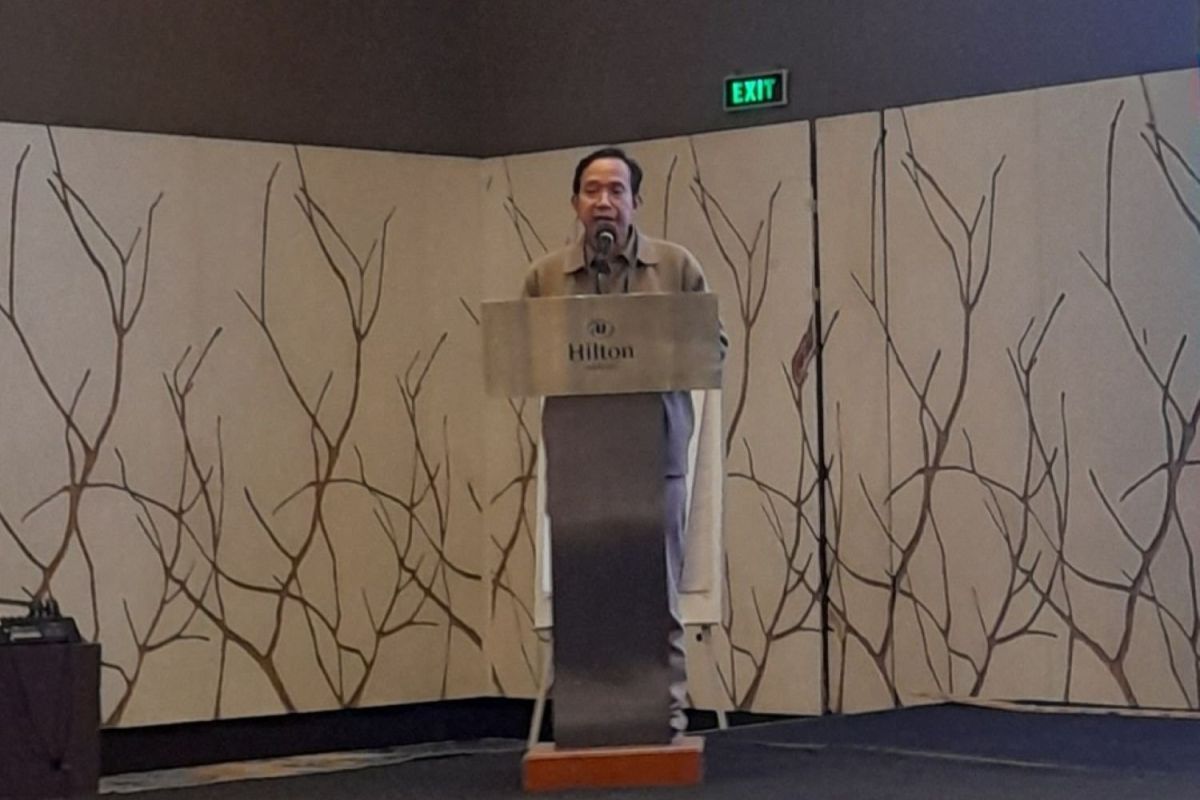
Despite global economic uncertainty caused by geopolitical turmoil, including the conflict in the Middle East, the economy in the working area of Bank Indonesia’s Malang Representative Office (KPwBI Malang) recorded significant growth of 6.36 percent in the first quarter of 2026.
Head of the Bank Indonesia Representative Office (KPwBI) in Malang, East Java, Indra Kuspriyadi, said that the world’s geopolitical turmoil, which continues to overshadow the global economy, has not affected the pace of economic growth in the region.
Amid this global uncertainty, Indra said, Bank Indonesia is present not only to maintain economic stability but also to ensure that stability so the economy continues to grow and remain sustainable.
“Despite global economic uncertainty caused by geopolitical turmoil, including the conflict in the Middle East, the economy in the KPwBI Malang working area recorded quite significant growth, namely 6.36 percent in the first quarter of 2026,” Indra said in Malang on Wednesday.
This achievement is above the average economic growth of East Java Province and the national level. At the same time, the regional inflation rate also remains under control within the target range of 2.5 ± 1 percent.
To strengthen and maintain this positive momentum, KPwBI Malang is promoting two mutually supporting strategic measures. The first is the utilisation of digitalisation acceleration. Digital technology integration has now become a necessity, no longer merely an option.
“This step is taken to create new sources of income for the community and regional government,” he said.
Secondly, he continued, is the development of new sources of economic growth. BI Malang is boosting efficiency in existing business sectors while simultaneously fostering a creative economy sector based on digital technology.
Synergy between Bank Indonesia and regional governments is the main key. New economic potential must be explored without burdening the community.
“This positive growth must be maintained together by optimising technology and creative industries so that it provides concrete and sustainable impacts for economic progress in the region,” he said.
At the national level, the resilience of the domestic economy is also showing a positive trend. National economic growth in the second quarter of 2026 was able to reach 5.29 percent.
He said that strengthening the regional economy in the future can be achieved through the use of digital technology and the development of new sources of economic growth. Digitalisation is considered capable of opening new sources of income for the community and regional governments.
Meanwhile, efficiency in existing economic sectors needs to be followed by the development of creative industries based on digital technology.
At the national level, the Indonesian economy recorded growth of 5.29 percent in the second quarter of 2026. This growth was supported by the trade, accommodation and culinary business sectors, as well as household consumption, government consumption through various strategic programmes, and investment.
Meanwhile, Head of the Policy Implementation and Payment System Supervision Unit of BI Malang, Shomita F. Insany, said that Bank Indonesia’s role in the economy is not only related to price and exchange rate stability in accordance with BI’s mandate under the Financial Sector Development and Strengthening Law (UU P2SK), which includes contributing to economic growth and job creation.
To carry out this mandate, BI implements a policy mix that includes monetary, macroprudential and payment system policies.
From the monetary side, BI maintains the BI-Rate at 5.75 percent. This policy is intended to maintain rupiah exchange rate stability while preserving investment attractiveness.
The KPwBI Malang working area covers seven regencies and cities, namely Malang City, Malang Regency, Batu City, Pasuruan Regency, Pasuruan City, Probolinggo City and Probolinggo Regency, which recorded economic growth above the East Java and national averages during the period. Meanwhile, regional inflation remains within the target range of 2.5±1 percent.