
BI: Foreign Capital Inflows into Government Bonds and SRBI Reach Rp160.7 Trillion
Foreign capital inflows into domestic financial instruments continue to show strengthening trends. Senior Deputy Governor of Bank Indonesia (BI), Destry Damayanti, revealed that as of 26 June 2026, cumulative foreign inflows into the Government Securities (SBN) and Bank Indonesia Rupiah Securities (SRBI) portfolios since the beginning of the year have reached approximately US$9 billion, or the equivalent of Rp160.7 trillion (assuming an exchange rate of Rp17,857).
Destry stated that the heavy influx of capital was driven by the repricing of instruments issued by both the government and Bank Indonesia. Additionally, increasing foreign investor confidence in Indonesia’s economic prospects remains a primary factor.
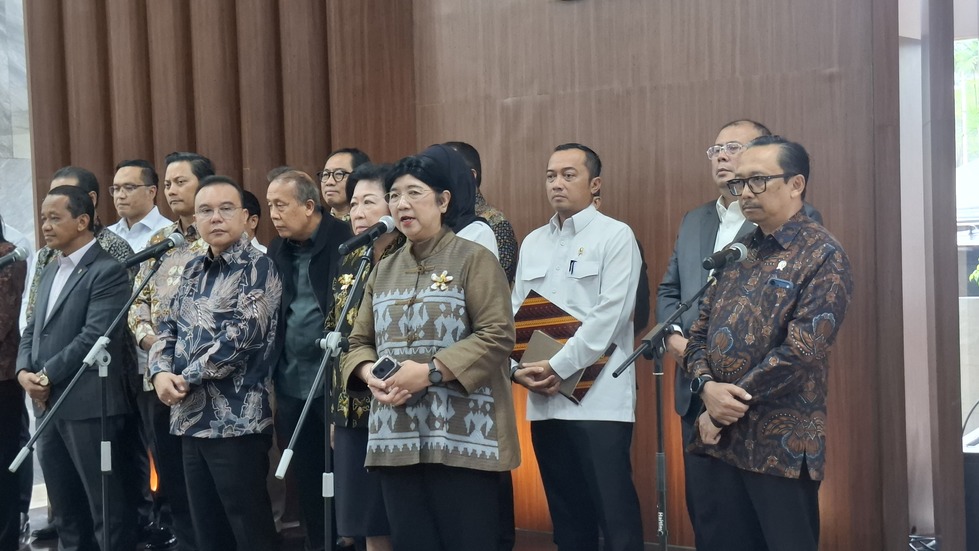
“From January until the end of June on the 26th, the inflow into our SBN and SRBI portfolios has reached about US$9 billion,” said Destry at the Senayan Complex, Jakarta, on Monday (29/6).
According to her, the rising interest from foreign investors reflects confidence in Indonesia’s economic stability. This confidence is expected to further strengthen the optimism of domestic economic actors.
“Firstly, there is certainly confidence from offshore, which will also be reflected in the confidence of our people in Indonesia,” she added.
On the other hand, BI also continues to maintain adequate liquidity in the financial market through various monetary operation instruments. As of the end of June 2026, BI has increased liquidity expansion to approximately Rp1,000 trillion, up from around Rp600 trillion at the end of May 2026.
“Specifically, this is to maintain liquidity so that there are no price fluctuations in our money and foreign exchange markets,” said Destry.
In the same opportunity, Deputy Finance Minister Juda Agung stated that Indonesia’s fiscal condition remains well-maintained. As of May 2026, the budget deficit was recorded at approximately 0.7% of Gross Domestic Product (GDP) and is expected to remain below the 3% limit until the end of the year. Meanwhile, tax revenue grew by 19.1% and the realisation of state expenditure has exceeded 30%.
Juda also emphasised the importance of coordination between members of the Financial System Stability Committee (KSSK), particularly between the Ministry of Finance and Bank Indonesia, in maintaining financial system stability.
“Particularly regarding the placement of government funds in the banking sector,” said Juda.
Following the KSSK evaluation, it was decided that the placement of government funds in state-owned banks (Himbara) amounting to Rp281 trillion will be extended until December 2026. Furthermore, the government is also preparing an additional contingency fund of Rp100 trillion if needed, bringing the total funds prepared in Himbara to Rp381 trillion.
According to Juda, this step is taken to maintain banking liquidity amidst relatively high credit demand, ensuring that banks still have the room to provide financing to the real sector.
“Liquidity needs to be maintained so that banks can support credit growth,” said Juda.
He added that banking credit growth in May 2026 was recorded at approximately 11.5% and is expected to continue growing at a double-digit level in the coming months. Therefore, adequate liquidity in the banking sector is a crucial factor in supporting sustainable credit distribution.
Source: jawawa.id (https://jawawa.id/newsitem/bi-foreign-capital-inflows-into-government-bonds-and-srbi-reach-rp160-7-trillion-1782719426)
Originally published by Media Indonesia (https://mediaindonesia.com/ekonomi/905422/bi-arus-modal-asing-ke-sbn-dan-srbi-sentuh-rp1607-triliun), translated from Indonesian