
BI Explains the Difference Between Producer and Consumer Inflation
Jakarta, CNBC Indonesia — Bank Indonesia (BI) has explained that producer inflation rising to around 7% will not necessarily be passed on to consumers. The goods included in producer and consumer inflation calculations differ, as do the factors influencing their price movements.
According to Statistics Indonesia (BPS) data, the Wholesale Price Index (IHPB) and Producer Price Index (IHP) recorded annual inflation of 7% and 6.94%, respectively.
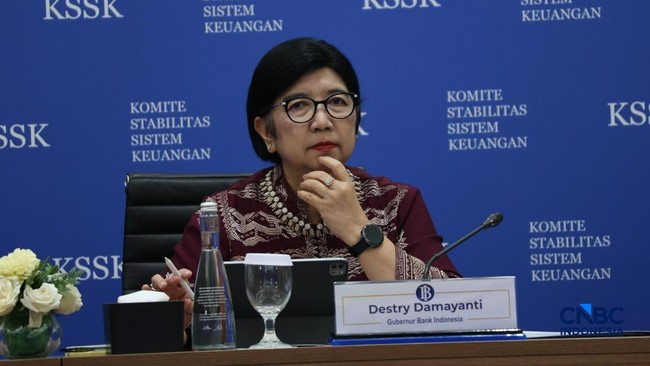
BI Deputy Governor Destry Damayanti said consumer inflation is the measure generally monitored by the public and monetary authorities. Producer inflation, meanwhile, reflects price developments at the producer level and comprises a different basket of goods.
“So one thing we need to distinguish is producer and consumer inflation. We usually use consumer inflation. The producer basket is different, and the factors affecting producers and consumers are also different,” Destry said at a press conference following the third-quarter 2026 Financial System Stability Committee (KSSK) meeting in Jakarta on Tuesday (3 November 2026).
Destry said that even if producer inflation rises to 7%, this does not automatically mean consumer inflation will increase by the same amount.
This is reflected in Indonesia’s consumer inflation, which stood at 3.23% year on year in October 2026.
According to Destry, the difference arises because the goods consumed by the public are not always the same as those included in the producer inflation calculation. As a result, rising prices at the producer level do not have to be immediately reflected in the prices of goods and services bought by consumers.
BI is nevertheless monitoring the possibility that higher producer prices could feed through to consumer inflation. If the increases persist in the medium to long term, particularly when the goods included in the two measures are relatively similar, the situation could warrant concern.
“If the question is whether it is worrying: if this continues over the long term — the medium to long term — and we also see that the composition of the goods may be similar, then of course it is something we need to pay attention to,” she said.
Destry said the transmission of higher prices from producers to consumers can still be contained for a time. However, the impact on consumers needs to be anticipated if price pressures last long enough.
She added that responses to inflation must also take into account its source.
If inflation is caused by supply factors, such as limited availability of goods, the response should focus on improving supply.
Conversely, if inflation is driven by strong demand, such as excessive growth in public consumption, policy should aim to curb that demand.
“If it is on the supply side — inflation rises because goods are unavailable — it must be addressed on the supply side, not through demand. If it is demand, with high demand and high consumption, it must be addressed by restraining consumption. The policy response will therefore differ depending on the source of inflation,” Destry said.
Source: jawawa.id (https://jawawa.id/newsitem/bi-explains-the-difference-between-producer-and-consumer-inflation-1793706760)
Originally published by CNBC Indonesia (https://www.cnbcindonesia.com/market/20261103175920-17-782013/bi-ungkap-beda-inflasi-produsen-dan-konsumen-ini-penjelasannya), translated from Indonesian