
BI Enhances Digital Economic Connectivity, QRIS Payments Now Available in South Korea
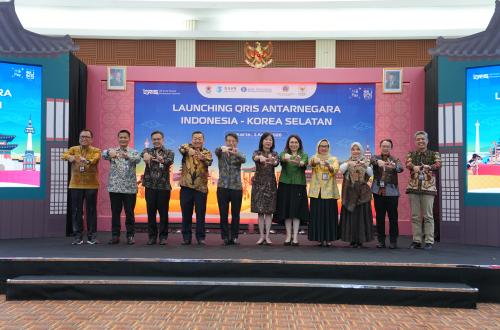
Bank Indonesia (BI) has inaugurated the Quick Response Code Indonesian Standard (QRIS) cross-border with South Korea on 1 April 2026. Consequently, Indonesians can now use QRIS in five countries: Singapore, Malaysia, Thailand, Japan, and South Korea.
“Today’s historic event reflects our shared vision of an integrated, efficient, and inclusive payment ecosystem as the strong backbone of seamless digital economic connectivity between Indonesia and South Korea. Now, people in both countries can conduct cross-border transactions via domestic QR applications, making payments faster, easier, cheaper, and more reliable,” said BI Governor Perry Warjiyo, who attended virtually at the QRIS Cross Border Indonesia-South Korea Launch held at the BI Complex in Central Jakarta on Wednesday (1/4/2026).
Perry explained that the cooperation strengthens innovation and offers new opportunities for businesses, particularly in the digital economy sector. Thus, it can contribute more to inclusive economic growth.
“Looking ahead, we aim to deepen this cooperation further by expanding participation, enhancing interoperability, and improving user experience. Together, we are not only connecting payments but also connecting people, businesses, and cross-border opportunities,” he stated.
BI Deputy Governor Filianingsih Hendarta explained that the implementation of QRIS cross-border between Indonesia and South Korea is the result of solid cooperation with various parties in both countries, from the design stage, development, to implementation carried out on Wednesday (1/4/2026). This cooperation is the fastest compared to previous QRIS cross-border implementations with other countries.
“This QRIS with Korea is the fastest among others, in less than a year. This close collaboration ensures that the innovation we build is not only strong in concept but also ready for use to provide real benefits,” said Fili.
She explained that the implementation of QRIS cross-border between Indonesia and South Korea is a concrete step in realising the Blueprint for Indonesia’s Payment System (BSPI) 2030 agenda. This is a strategic step to encourage digital transformation that not only focuses on digitalisation but also on sovereignty, efficiency, and global connectivity.
“The implementation of QRIS between countries between Indonesia and South Korea does not only facilitate transactions. We know, many Indonesians go to South Korea, visiting cafes, watching K-dramas, and also Koreans who come to Indonesia, this can be realised. This opens opportunities for the tourism sector and trade sector, as well as SMEs,” she clarified.
Thus, Indonesia can be more connected to a wider global market. Fili emphasised that Indonesia can continue to strengthen its role in building efficient, inclusive cross-country payment connectivity oriented towards national interests.
Furthermore, cross-border QRIS transactions show very positive developments. Data indicates that inbound transaction volume (foreigners to Indonesia) has recorded 5.9 million transactions, while outbound transactions (Indonesians abroad) amount to 1.7 million.
“This achievement reflects that cross-country QRIS is a relevant solution needed by the public. With the presence of South Korea as a new partner, we are further strengthening the payment connectivity network that supports digital economic and financial connectivity in the region. So now we have embraced Asia Plus Three, namely Japan, South Korea, and hopefully next month we can connect with China as well,” she explained.