
BI emphasises three aspects to strengthen online fraud prevention
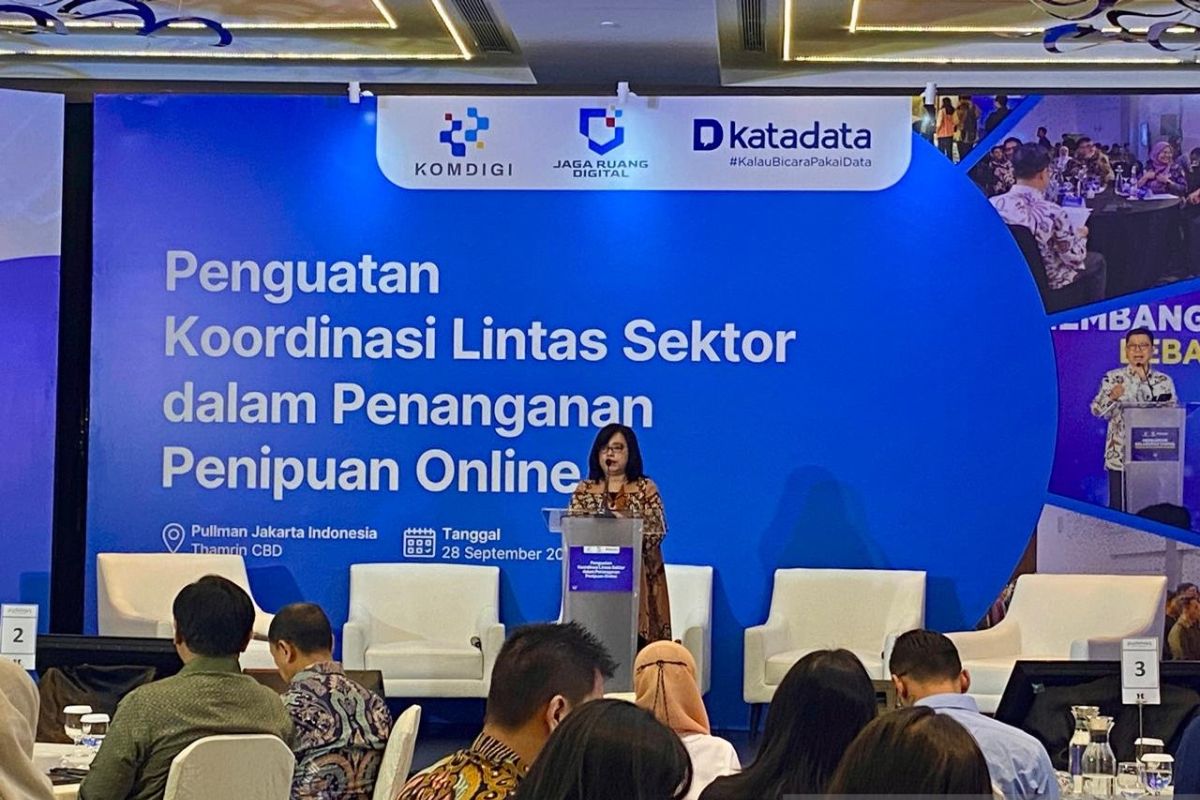
Jakarta (ANTARA) - Bank Indonesia (BI) believes that stakeholders must strengthen three key aspects in handling online fraud: information connectivity, response to incident escalation, and clarity of roles and accountability.
Sally M. Hutapea, Head of the Payment System Surveillance and Consumer Protection Department at BI, stated during a Focus Group Discussion (FGD) in Jakarta on Monday that challenges in coordinating online fraud incident responses still persist in practice. Although task forces and coordination channels exist, the mechanism for effective information exchange during sudden incidents still needs reinforcement.
“In practice, we sometimes still face confusion. Even though we have task forces or coordination channels, when an incident or fraud is suddenly reported, we need to determine how to coordinate effectively,” said Sally.
According to her, the coordination mechanism should not involve all parties being preoccupied with sending information from their respective institutions to the task force or coordination channel. Instead, the most effective information exchange mechanism must be established for use when incidents occur.
Furthermore, the response to incident escalation during implementation also needs strengthening. When indications of a scam are found, Sally emphasised that operational procedures must clearly define who contacts whom, the minimum information required, the channels to be used, and which party is responsible for taking action.
“We believe this can be strengthened, particularly as scams or fraud often occur during weekends,” said Sally.
She noted that weekends pose a challenge because incidents occurring during this time require rapid cross-agency coordination. Sally provided an example: if an initial indication is found by the Financial Services Authority (OJK) and leads to the payment system, OJK must immediately coordinate with BI to trace the fund flows and determine the next steps.
Thus, coordination should not stop at information sharing but must also include a rapid escalation mechanism to take action, such as blocking and halting fund transfers.
Additionally, BI believes that the roles and accountability of each party need to be clarified. Inter-agency coordination, according to Sally, does not mean blurring the respective authorities held by each institution.
She also noted that the strengthening of coordination has gained momentum through the Law on the Development and Strengthening of the Financial Sector (UU P2SK), including the formation of cross-authority and ministerial task forces to protect public interests.
“Ultimately, what matters is not the number of coordination mechanisms, forums, or task forces, but how effectively that coordination works when consumers or the public become victims,” said Sally.
As a regulator in the payment system sector and a supervisor, BI views several challenges that must be addressed in handling fraud and scams.
First, fraud and scams move extremely quickly. Based on BI’s experience in handling various incidents, Sally stated that transactions can be performed repeatedly in a relatively short period after a breach of systems, credentials, or data occurs. Scams can originate from phone calls, text messages, social media, digital platforms, social engineering, identity theft, or data theft. Once fraud occurs, the impact can spread to both the financial and payment systems.
Sally also warned that funds can move from one account to another and from one platform to another in a very short time. Fund flows can even move from payment gateway providers to banks and then to digital financial asset platforms or crypto traders.
The situation becomes even more difficult if customers do not immediately report the incident to the bank because they are still searching for information regarding where and how to report. Therefore, Sally emphasised that speed of detection must be followed by speed of response. The longer the gap between fraud detection, reporting, and follow-up, the smaller the chance that funds can be secured.
She also emphasised that no single institution can monitor the entire journey of a scam independently, given that payment systems are increasingly integrated across industries, sectors, and platforms.
Second, BI considers that weaknesses in fraud cases do not always lie with the consumer or customer. According to Sally, reported incidents can also stem from weaknesses on the side of providers or the industry. These weaknesses can occur in banks or non-bank institutions, including in aspects of security, inter-institutional relations, Application Programming Interfaces (API), or Fraud Detection Systems (FDS).
Third, BI believes that fraud detection systems must become increasingly integrated from end-to-end. To achieve this, coordination between agencies such as BI, OJK, the Ministry of Communication and Digital (Komdigi), the Financial Transaction Reports and Analysis Centre (PPATK), the Coordinating Ministry for Political and Security Affairs, and other ministries/agencies must be further strengthened. This coordination also needs to involve industry associations, such as the Indonesian Payment System Association (ASPI), the Indonesian Fintech Association (AFTECH), and other relevant organisations.
Source: jawawa.id (https://jawawa.id/newsitem/bi-emphasises-three-aspects-to-strengthen-online-fraud-prevention-1790582820)
Originally published by Antara (Indonesian) (https://www.antaranews.com/berita/5761428/bi-tekankan-tiga-aspek-untuk-perkuat-penanganan-penipuan-online), translated from Indonesian