
BI: Ecosystem Approach Needed for MSME Development
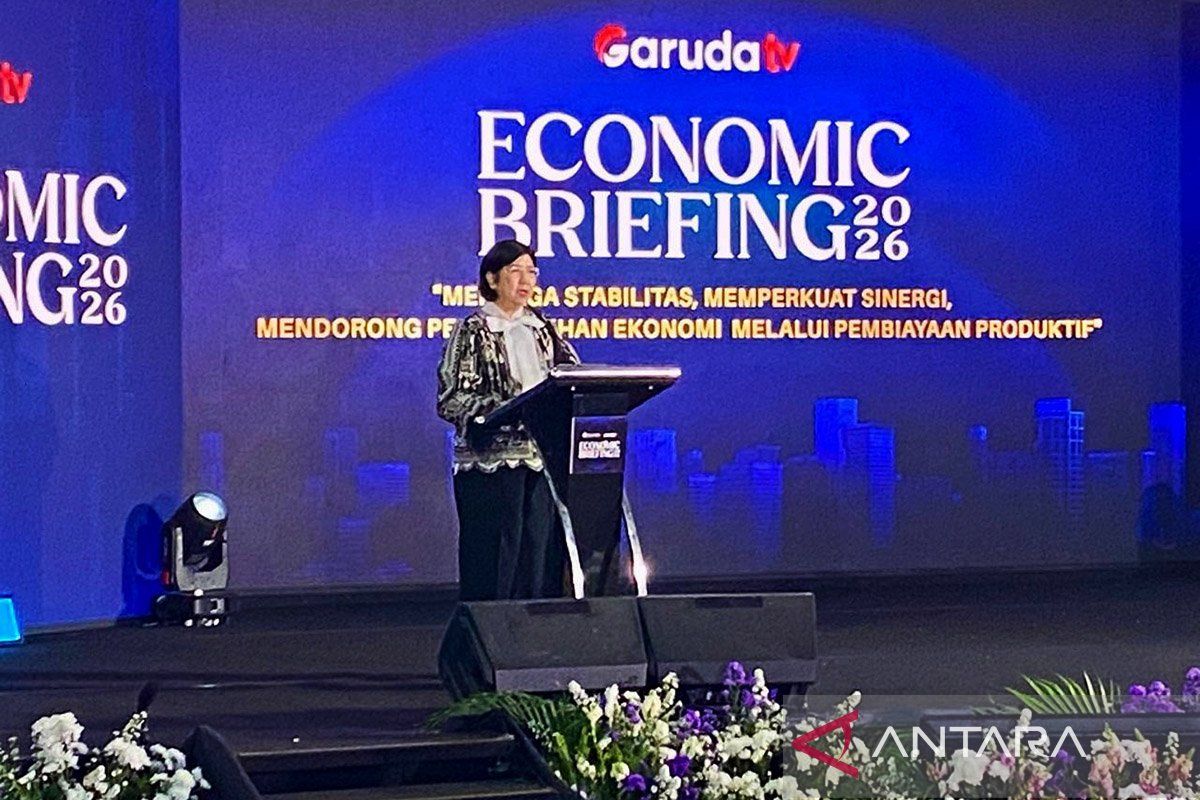
Jakarta (ANTARA) - Bank Indonesia (BI) believes an ecosystem-based approach needs to be applied to the development and financing of micro, small and medium enterprises (MSMEs), with the hope that large corporations will eventually involve MSMEs as part of their supply chains.
“So we should not only look at a single unit, but rather at the ecosystem of these MSMEs,” said BI Senior Deputy Governor Destry Damayanti at the 2026 Economic Briefing event in Jakarta on Friday.
Destry cited the significant potential of MSMEs driven by women’s groups in various regions, noting that around 64 per cent of MSME players are women.
According to her, an ecosystem approach accompanied by improvements in MSME quality is expected to foster quality and inclusive economic growth.
Meanwhile, Head of BI’s Macroprudential Policy Department Solikin M. Juhro explained that the experience of various countries shows that large industries in developed nations grow because they are supported by MSMEs and medium-sized industries that form part of their supply chains.
He cited Japan, Germany and China as countries that built their large industries by strengthening the MSME ecosystem.
In Japan and Germany, MSMEs and medium-sized industries are an important part of the manufacturing supply chain, while China complements this with the strengthening of digital ecosystems and vocational education.
According to Solikin, MSMEs can be divided into three levels. First, MSMEs that already perform well but have yet to gain access to wider marketing channels. This group needs support not only through financing incentives but also by bridging market access.
Second, developing MSMEs that need improvement in business management, financial reporting and other aspects. Third, MSMEs that remain weak in various areas and therefore require intensive mentoring.
“That is our challenge. If we speak of the essence, the answer is the ecosystem. Experience in various countries shows that what is built is the ecosystem. We cannot develop MSMEs in isolation. What is needed is an end-to-end ecosystem,” Solikin explained.
As for BI itself, Solikin added, it has a number of policies to support MSMEs, including macroprudential policies such as the Macroprudential Liquidity Incentive Policy (KLM) and the Macroprudential Inclusive Financing Ratio (RPIM).
“Both policies are in line with BI’s efforts that are pro-growth, but also of high quality,” said Solikin.
Beyond policy, BI also has around 3,000 MSMEs under its guidance, with around 20 per cent of these being export-oriented.
In addition, BI runs the Intermediation Programme for Accelerating Indonesia (PINISI), which opens opportunities for businesses from both the demand and supply sides, whether through policy dialogue, business matching or other regular activities.