
BI East Nusa Tenggara: KARSA NUSA 2026 Produces Recommendations for Economic Transformation
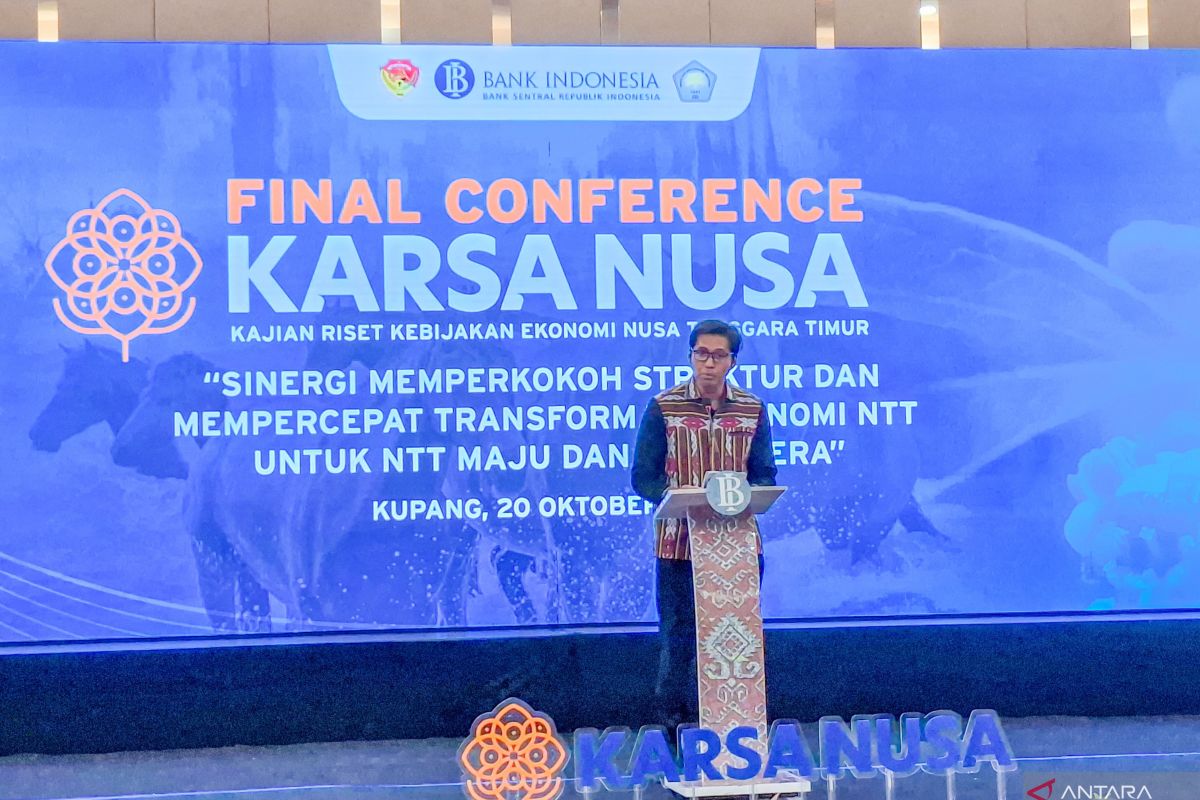
Kupang, East Nusa Tenggara (ANTARA) — Bank Indonesia’s East Nusa Tenggara Representative Office is encouraging the use of research from KARSA NUSA 2026 as a strategic policy recommendation to accelerate economic transformation and improve the welfare of people in the province.
“We hope the research and studies from KARSA NUSA 2026 can be followed up and used as a basis for decision-making on policies and programmes that are measurable and support economic progress and the welfare of people in East Nusa Tenggara,” said Adidoyo Prakoso, head of the office, in Kupang on Tuesday.
The 2026 East Nusa Tenggara Economic Policy Study and Research Programme (KARSA NUSA) is a collaboration between Bank Indonesia, the East Nusa Tenggara provincial government and the East Nusa Tenggara branch of the Indonesian Economists Association (ISEI). It aims to produce inclusive and sustainable policy recommendations to help make the province prosperous and developed.
KARSA NUSA 2026 is themed “Synergy to Strengthen the Structure and Accelerate the Economic Transformation of East Nusa Tenggara for a Developed and Prosperous Province”.
For its inaugural edition, the programme received 251 scientific papers from student and general categories: 191 by national authors, 57 by authors from East Nusa Tenggara and three by international authors.
After assessment, 10 papers were selected from the 25 that reached the final evaluation stage. The studies put forward various ideas to support the province’s economic development.
Adidoyo said the research highlighted the importance of connecting East Nusa Tenggara’s leading potential with processing, logistics, financing and market access in order to increase the added value of local products.
Strengthening governance, making use of production outputs and building resilience to climate change were also identified as priorities.
Separately, Bank Indonesia’s East Nusa Tenggara office and Nusa Cendana University have conducted research into a Regional Trade Zone (RTZ) in the province to develop cross-border trade potential.
The study identified Belu regency and Atambua city as priority areas for developing a free-trade zone, with Kupang and Malaka serving as supporting areas for raw materials and logistics supplies.
“The recommended development model gradually combines a logistics hub and cross-border trade with food agro-industry through stronger governance, institutions and infrastructure,” Adidoyo said.
The involvement of farmers, micro, small and medium-sized enterprises (MSMEs) and local workers is considered important to ensure that market opportunities in Timor-Leste and Australia benefit the welfare of East Nusa Tenggara residents.
He added that the province’s economic development also requires stronger investment and productive financing, higher productivity and added value, and greater energy resilience.
Making use of social capital and local cultural strengths is also necessary to ensure the economic transformation reflects the characteristics and readiness of local communities.
He said Bank Indonesia’s East Nusa Tenggara office would continue to support regional economic research, coordination forums and economic development programmes within the scope of the central bank’s duties and authority.
Source: jawawa.id (https://jawawa.id/newsitem/bi-east-nusa-tenggara-karsa-nusa-2026-produces-recommendations-for-economic-transformation-1792486430)
Originally published by Antara (Indonesian) (https://www.antaranews.com/berita/5798913/bi-ntt-karsa-nusa-2026-hasilkan-rekomendasi-transformasi-ekonomi), translated from Indonesian