
BI Eases Reserve Requirements, Adding Rp190 Trillion to Bank Liquidity
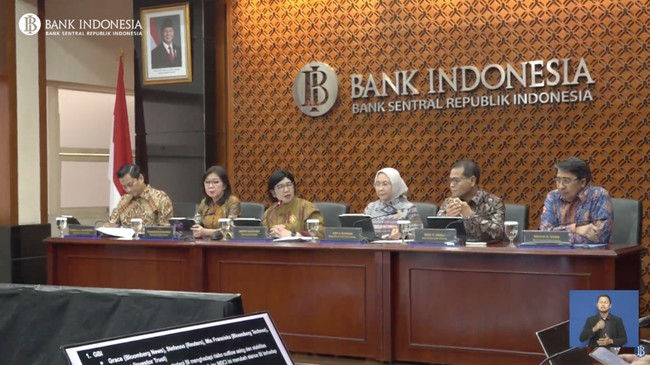
Jakarta, CNBC Indonesia — Bank Indonesia (BI) is easing banking liquidity policy by gradually lowering the reserve requirement (Giro Wajib Minimum, GWM) for conventional commercial banks (BUK), as well as Islamic commercial banks (BUS) and Islamic business units (UUS). The policy is expected to add up to Rp190 trillion to banking liquidity.
BI Governor Destry Damayanti said the additional liquidity was expected to give banks greater scope to extend credit and support economic growth.
“Our calculations indicate that there will be additional liquidity of around Rp190 trillion,” Destry said at a press conference at BI headquarters in Jakarta on Wednesday (21 October 2026).
BI has set a phased reduction in the GWM for conventional commercial banks from 9% to 7%. In the first phase, it will fall by one percentage point to 8% from 1 November 2026. It will then be reduced by a further percentage point to 7% from 1 December 2026.
For Islamic commercial banks and Islamic business units, the GWM will be lowered from 7.5% to 5.5%. The reduction will also take place in two stages: to 6.5% from 1 November 2026, and then to 5.5% from 1 December 2026.
In addition to lowering the GWM, BI is adjusting its Macroprudential Liquidity Incentive (KLM) policy. From 1 December 2026, the maximum KLM incentive will be changed from 6% to 5% of banks’ third-party funds (DPK).
Destry said the adjustment also covers the proportion of banks’ average rupiah GWM obligation that qualifies for remuneration.
“The maximum proportion of the average rupiah GWM obligation that receives remuneration will be 5% of the average rupiah GWM, effective from 1 December 2026,” Destry said.
BI is also adjusting the KLM incentive component provided through bank lending or financing (the financing channel). The maximum incentive for this component will be reduced from 4% to 3% of DPK.
However, the incentive will be extended to bank loans or financing for business sectors that support job creation.
Meanwhile, the incentive for money market deepening (PPU) will remain capped at 2% of DPK. This component will be strengthened to encourage liquidity redistribution and reinforce banking intermediation.
Through the liquidity easing, BI hopes banks will have greater scope to expand lending, including to sectors beyond those that have so far been targeted by KLM incentives.
BI Deputy Governor Solikin M. Juhro said easing the GWM was one of the central bank’s measures to strengthen banking liquidity so that lending could reach a wider range of economic sectors.
“One of the things we are discussing here is strengthening liquidity. On the monetary side, the GWM is being eased further,” Solikin said at the same press conference.
The priority sectors covered by the KLM policy include agriculture, industry and downstream processing; services, including the creative industries; construction, real estate and housing; as well as micro, small and medium-sized enterprises (MSMEs), cooperatives, financial inclusion and sustainable sectors.
With the additional liquidity expected to reach Rp190 trillion, BI hopes banks can increase their intermediation role and support economic growth momentum while maintaining financial system stability.
Source: jawawa.id (https://jawawa.id/newsitem/bi-eases-reserve-requirements-adding-rp190-trillion-to-bank-liquidity-1792630240)
Originally published by CNBC Indonesia (https://www.cnbcindonesia.com/market/20261022060030-17-778405/bi-longgarkan-gwm-likuiditas-bank-bakal-bertambah-rp190-t), translated from Indonesian