
BI Deputy Governor: Regional Islamic Economy Development Needs Three Strategies
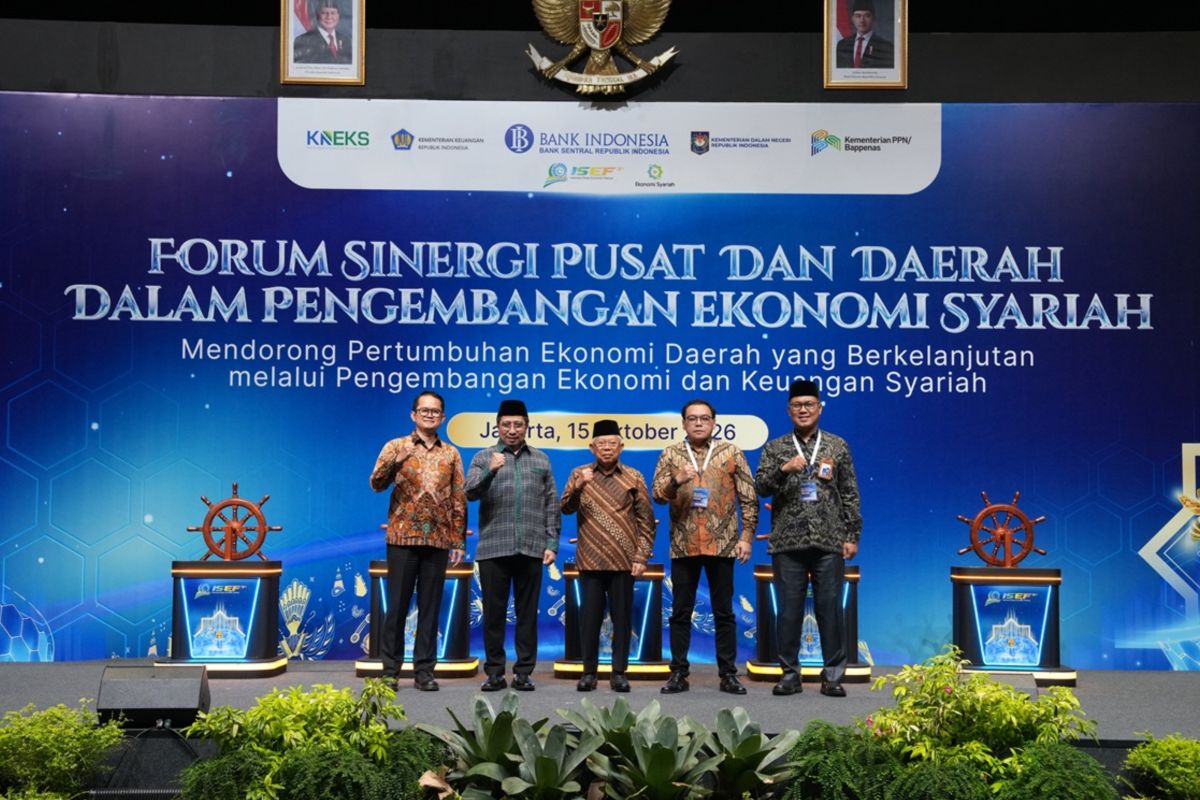
Bank Indonesia (BI) believes businesses’ financing needs should be matched with suitable sources, including Islamic banks and commercial financial institutions as well as zakat and waqf institutions.
Jakarta (ANTARA) – Bank Indonesia Deputy Governor Solikin M Juhro stressed that regional Islamic economic development needs the support of three main strategies.
These are strengthening the role of Regional Islamic Economy and Finance Committees (KDEKS) in aligning programmes across stakeholders, developing halal value chains from upstream to downstream, and widening access to Islamic financing.
“Synergy cannot be built through occasional meetings alone. We need a structured institutional mechanism, a clear division of roles and consistent monitoring,” Solikin said in an official statement in Jakarta on Thursday.
To widen access to financing, BI believes businesses’ needs should be matched with suitable funding sources, including Islamic banks and commercial financial institutions as well as zakat and waqf institutions.
The integration of Islamic commercial and social finance, or blended finance, is seen as a way to create opportunities for businesses that do not yet fully meet banking requirements to grow gradually.
To turn the strategies into concrete action, BI is promoting the “3SP” approach: productive synergy, financing synergy and participatory synergy.
This approach involves developing productive sectors in line with regional potential and connecting business needs with appropriate sources of finance.
BI is also continuing to improve literacy and inclusion in the Islamic economy so that the public makes greater use of Islamic services and business opportunities.
By integrating these three aspects, micro, small and medium-sized enterprises (MSMEs) are expected to improve their competitiveness, expand their markets and develop sustainably.
Indonesia’s 13th Vice-President Ma’ruf Amin said the Islamic economy and finance should not merely serve as a supplement, but should become a new mainstream and grow alongside the commercial economy.
In this way, Islamic economy and finance can help drive a resilient, inclusive Indonesian economy that improves public welfare.
He said their development must rest on three important foundations: strong institutions, clear regulations, and a mutually supportive Islamic economy and finance ecosystem.
Ma’ruf Amin also called for stronger cooperation between central and regional governments in developing Islamic economy and finance.
Clear planning direction from the National Development Planning Agency (Bappenas), strong support from BI, and coordination between the National Committee for Islamic Economy and Finance (KNEKS) at the centre and KDEKS in the regions must work together to accelerate the development of Islamic economy and finance as a new strength for Indonesia’s economy.
This year, KNEKS, the Ministry of National Development Planning/Bappenas and the Ministry of Home Affairs, with BI’s support, updated the Guidelines for Cross-Area Collaboration in Regional Government for Islamic Economic Development to align them with regional development nomenclature.
The guidelines serve as a reference for local governments seeking to integrate the Islamic economy into development planning.
At present, 27 provinces have included Islamic economic development in their Regional Long-Term Development Plans (RPJPD) and Regional Medium-Term Development Plans (RPJMD), while 23 provinces have included Islamic economy indicators in their RPJMD.
Source: jawawa.id (https://jawawa.id/newsitem/bi-deputy-governor-regional-islamic-economy-development-needs-three-strategies-1792076067)
Originally published by Antara (Indonesian) (https://www.antaranews.com/berita/5789717/deputi-gubernur-bi-pengembangan-eksyar-daerah-perlu-tiga-strategi), translated from Indonesian