
BI Declines to Follow the Fed’s Rate Hike, Yet Foreign Funds Pour In US$8 Billion
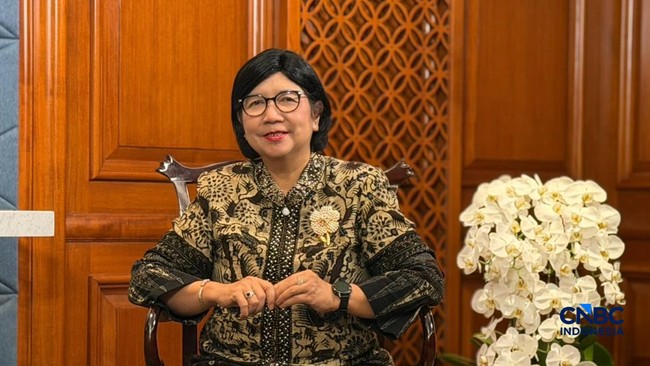
Jakarta, CNBC Indonesia — Bank Indonesia (BI) has outlined its next steps after the US Federal Reserve (the Fed) decided to raise its benchmark interest rate at its September 2026 meeting.
BI Governor Destry Damayanti said the central bank had chosen to hold its policy rate (BI Rate), rather than follow the Fed’s increasingly hawkish stance. BI was considering the overall impact of an interest-rate rise, not just its role in maintaining rupiah stability.
“We look at it holistically: an interest-rate increase will have a broader impact and affect all segments. We also raised rates at the May–June 2026 Board of Governors’ meetings, so we believe that is still sufficient to keep inflation in check and the rupiah relatively stable,” Destry said in an exclusive interview with CNBC Indonesia’s Central Banking programme on Friday (9 October 2026).
Destry said BI had anticipated the Fed’s rate increase, which was why a forward-looking policy approach remained necessary. BI had therefore raised its benchmark rate ahead of the Fed.
“We raised rates in May and June 2026 as a precautionary measure. We were looking ahead to the more difficult conditions we would face,” Destry said.
She explained that BI preferred to use other measures, including incentives, rather than raise the BI Rate again. One such measure was providing incentives for hedging costs.
“We also considered how to attract foreign funds. In June 2026, we began offering incentives for hedging costs to make it easier for foreign funds to enter,” Destry said.
At its September Board of Governors’ meeting, BI increased the incentives by reducing the premium rate to attract foreign capital. The premium was set at 30% for the Domestic Non-Deliverable Forward (DNDF) market and 25% for swap transactions.
“In September, we increased the incentive, taking it to 30% for DNDF. Why 30%? Because we want to encourage foreign investors to convert their funds. They come in and hedge through DNDF, while selling their dollars in the spot market, adding to the supply of foreign currency in our market,” Destry said.
The hedging-cost incentives brought US$8 billion in foreign inflows to Indonesia. The country also received a “windfall” of 200 million yen after the incentives were introduced.
Domestically, alongside the foreign inflows, the rupiah was relatively stable and at one point strengthened to around the psychological level of Rp17,500 in September 2026.
In addition to the hedging-cost incentives, BI is implementing its Macroprudential Liquidity Incentive (KLM) policy. This includes reducing banks’ reserve requirement by up to 2%, provided they do not hold excessive funds in securities and continue lending to the public.
“Another measure is KLM. We are strengthening our macroprudential liquidity policy by offering a reduction in the reserve requirement of up to 2% to banks that do not place excessive funds in securities and continue lending,” Destry said.
Source: jawawa.id (https://jawawa.id/newsitem/bi-declines-to-follow-the-feds-rate-hike-yet-foreign-funds-pour-in-us-8-billion-1791532304)
Originally published by CNBC Indonesia (https://www.cnbcindonesia.com/market/20261009125250-17-774721/bi-tak-ikut-the-fed-naikkan-bunga-asing-malah-masuk-us-8-miliar), translated from Indonesian