
BI: Cross-border trade offers NTT opportunities for economic growth
Kupang (ANTARA) — Bank Indonesia’s (BI) East Nusa Tenggara (NTT) Representative Office believes cross-border trade with Timor-Leste and Australia could expand markets for the province’s leading products and spur economic growth by improving distribution efficiency and developing processing industries.
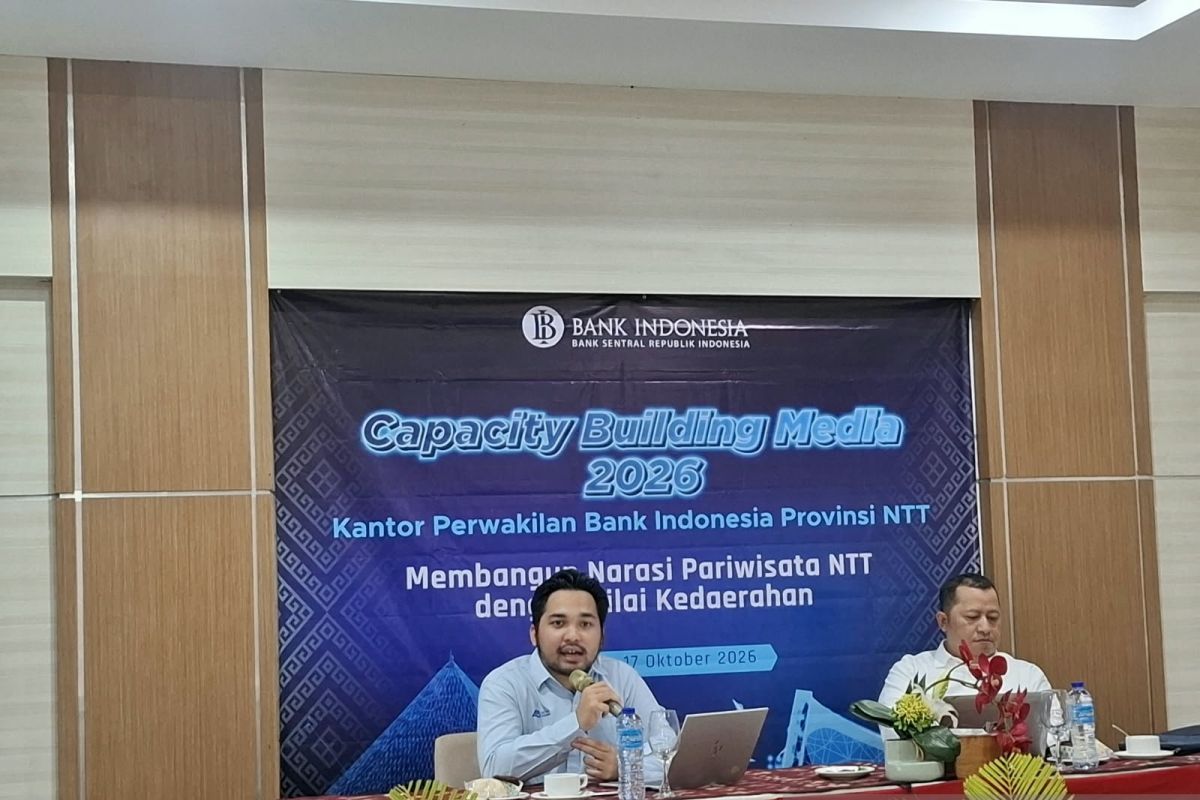
Junior economist Ahmad Akhirul Fatoni of BI’s NTT Representative Office said in Alor on Thursday that NTT’s geographical position, sharing a border with Timor-Leste and relatively close to Australia, gives it an advantage in expanding regional trade.
“NTT has considerable potential, both in natural resources and tourism. This potential needs to be supported by connectivity, market access and the development of processing industries so that it can generate added value for the regional economy,” Fatoni said. He was speaking on regional gross domestic product (GDP), inflation and financial system stability at the 2026 Media Capacity Building event in Kalabahi, Alor Regency.
He explained that goods from NTT are still largely distributed through trade routes passing through other parts of Indonesia. Developing direct access to regional markets should therefore be explored to improve distribution efficiency and expand sales of the province’s leading products.
One option that could be considered, Fatoni said, is the development of a free trade zone (FTZ). However, the proposal would require in-depth study, preparation and a policy process involving various stakeholders before it could be implemented.
Cross-border trade opportunities would also need to be supported by the development of processing industries, so that NTT’s leading commodities are not sold only as raw materials.
He said commodities including seaweed, coconut, porang and salt could be turned into higher-value processed products and sold in wider markets.
Seaweed, for example, can be processed into raw materials for the food and cosmetics industries, while coconuts can be made into a range of products, from soap to charcoal made from coconut shells.
Limited processing capacity means that some of NTT’s leading commodities are currently sent outside the province as raw materials for further processing. As a result, local communities do not fully benefit from the potential added value.
Strengthening downstream processing would allow NTT to extend its economic value chains, create jobs and increase people’s incomes through businesses based on local commodities, he said.
Alongside market access, the availability of energy is an important factor in supporting the development of processing industries in NTT.
Fatoni said NTT has potential for renewable energy, including solar, wind and geothermal power, as well as marine energy resources that require further study.
Reliable clean energy could meet industrial needs while making the province more attractive to investors. Links between the energy sector, processing industries and trade could therefore provide a basis for strengthening the regional economy.
Tourism also has significant potential to drive economic growth in NTT. Destinations are spread across the province, from Labuan Bajo and the Flores region to Alor, Timor and Sumba.
Fatoni said tourism development needs better connectivity, infrastructure, promotion and service quality to attract more visitors and stimulate the local economy.
Tourism activity is linked to a range of sectors, including transport, accommodation, food services, trade and micro, small and medium-sized enterprises (MSMEs).
He said links between tourist destinations and local products should be strengthened so that increased visitor numbers also create business opportunities for communities around tourism areas.
Source: jawawa.id (https://jawawa.id/newsitem/bi-cross-border-trade-offers-ntt-opportunities-for-economic-growth-1792076083)
Originally published by Antara (Indonesian) (https://www.antaranews.com/berita/5789765/bi-perdagangan-perbatasan-buka-peluang-pertumbuhan-ekonomi-ntt), translated from Indonesian