
BI continues to monitor capital market risks after MSCI reclassification proposal
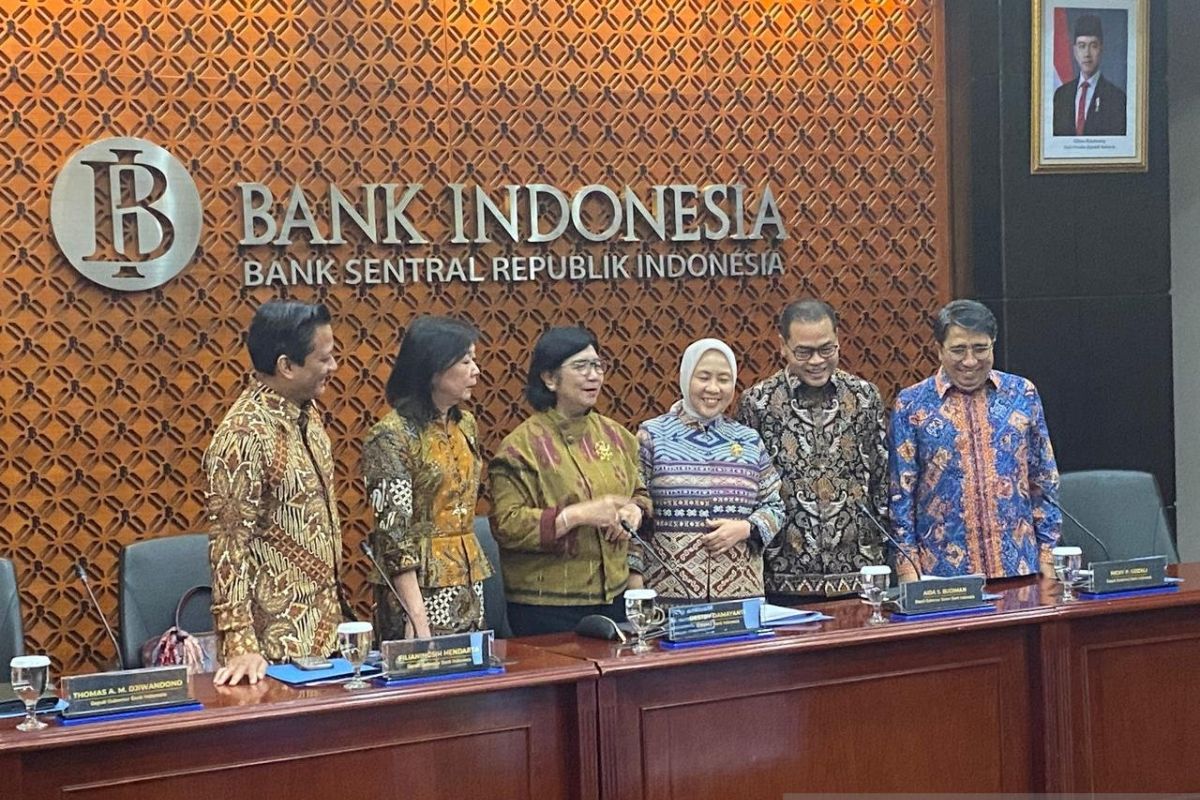
Jakarta (ANTARA) — Bank Indonesia (BI) says it is continuing to monitor risks in the domestic equity market, including the possibility of foreign capital outflows, following MSCI’s announcement of a proposed change to the classification of Indonesia’s capital market.
“We continue to monitor what is happening in our capital market. We are also monitoring the outflows during market movements following the MSCI announcement,” BI Governor Destry Damayanti said at a press conference in Jakarta on Wednesday.
Destry said the MSCI announcement was a concern for the central bank, particularly as it had put pressure on the rupiah on Friday (16 October) and Monday (19 October). According to the Jakarta Interbank Spot Dollar Rate (JISDOR), the rupiah stood at Rp18,052 per US dollar on Friday and Rp18,050 per US dollar on Monday.
BI has assessed the risks associated with MSCI, Destry said. The central bank considers the pressure on the rupiah to be within a relatively normal range, given that regional conditions were also unfavourable at the time.
“For the past two days, we have held very intensive discussions about how to respond to this,” she said.
The rupiah subsequently strengthened to Rp18,006 per US dollar on Tuesday (20 October) and Rp17,986 per US dollar on Wednesday (21 October), based on JISDOR rates.
Destry said BI was pursuing more targeted policies to attract foreign capital inflows while maintaining rupiah stability. She stressed that safeguarding stability remained the central bank’s priority.
“We know that outflows have occurred. What does that mean? If outflows occur, we have to try to attract inflows,” she said.
At its October Board of Governors Meeting, BI announced larger hedging incentives through the Domestic Non-Deliverable Forward (DNDF) instrument for hedging with BI in connection with underlying foreign funding transactions. These include portfolio inflows, foreign borrowing by banks and foreign direct investment.
Under the instrument, the premium reduction has been raised to 40 per cent for a six-month tenor, from 25 per cent, and to 45 per cent for a 12-month tenor, from 30 per cent.
BI is also continuing incentives for conventional hedging through buy-swap transactions with the central bank, as well as incentives for Local Currency Transaction (LCT) transactions with partner countries.
Destry said the hedging incentives, introduced in June 2026 and refined several times since, were producing results, with foreign capital inflows totalling US$9.9 billion as of 20 October 2026.
She said she hoped the increased incentives would prompt a repricing of domestic assets, making their spreads against overseas assets such as US Treasuries more attractive.
“We have also seen that the cumulative 100-basis-point increase in the BI Rate in May–June 2026 has already led to repricing in parts of our financial markets,” she said.
At its 20–21 October 2026 meeting, BI decided to hold the BI Rate at 5.75 per cent and the lending facility rate at 6.50 per cent. It raised the deposit facility rate to 5.00 per cent.
On Friday (16 October), MSCI announced that it would consult market participants on a proposal to reclassify Indonesia’s capital market from Emerging Market to Standalone Market status. MSCI will announce its final decision by the end of June 2027 at the latest, and may provide interim updates on market feedback during the consultation period.
In response, the Indonesia Stock Exchange (IDX) announced two new initiatives to improve the transparency and integrity of Indonesia’s capital market, following a meeting with MSCI on Monday (19 October). The initiatives are to add disclosure of share affiliations for holdings of 1 per cent and to exclude all shares with high shareholding concentration (HSC) from the Jakarta Composite Index (JCI).
The Financial Services Authority (OJK) has also imposed sanctions and administrative fines totalling Rp2.1 trillion on three listed companies — PT Dian Swastatika Sentosa Tbk (DSSA), PT Barito Renewables Energy Tbk (BREN) and PT Petrindo Jaya Kreasi Tbk (CUAN) — following an investigation into suspected violations in Indonesia’s capital market.
Source: jawawa.id (https://jawawa.id/newsitem/bi-continues-to-monitor-capital-market-risks-after-msci-reclassification-proposal-1792580024)
Originally published by Antara (Indonesian) (https://www.antaranews.com/berita/5802189/bi-terus-waspadai-risiko-di-pasar-modal-usai-usulan-reklasifikasi-msci), translated from Indonesian