
BI Confident Indonesia's 2027 Growth Will Exceed Upper Bound of 5.1-5.9 Pct Range
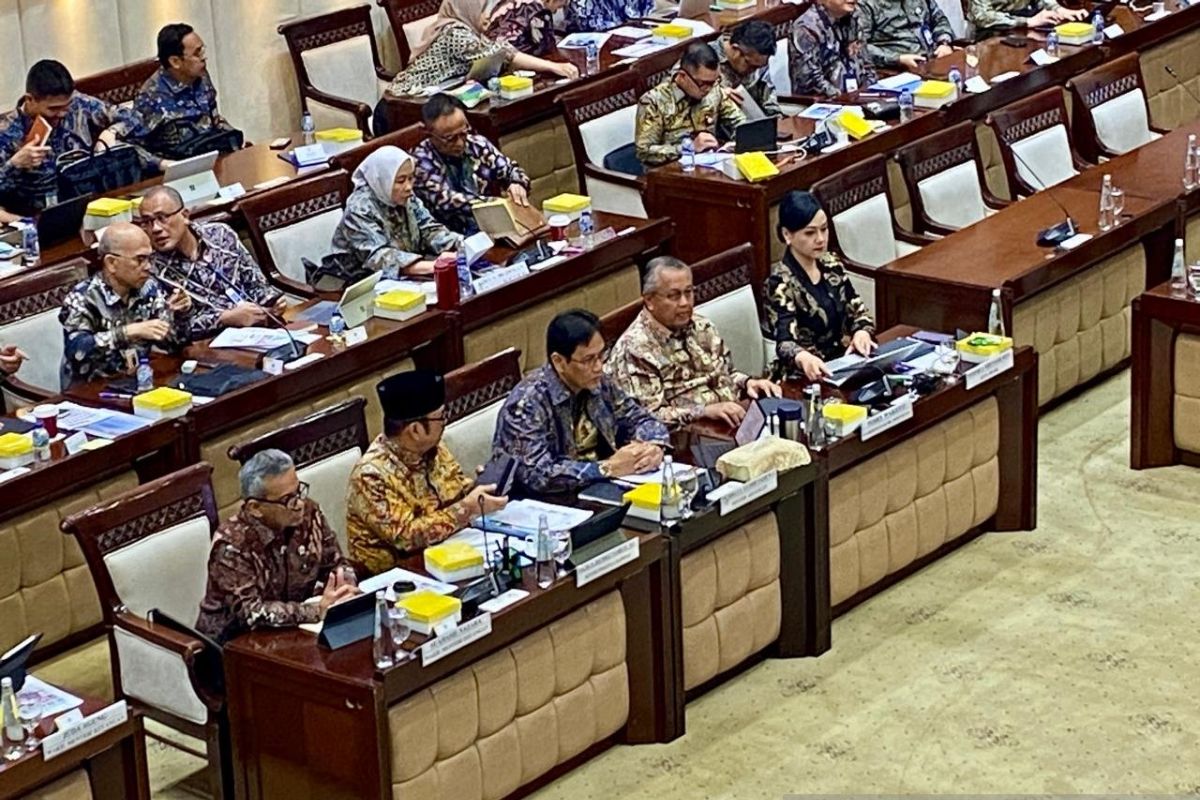
Bank Indonesia (BI) is confident that Indonesia’s economic growth in 2027 can reach the upper bound of the 5.1 to 5.9 per cent projection range, partly supported by strong domestic demand. BI Governor Perry Warjiyo stated during a working meeting with Commission XI of the House of Representatives (DPR) in Jakarta on Wednesday that domestic economic growth next year will also be supported by various measures to encourage investment as well as an improvement in Indonesia’s export performance. This aligns with an improving global economy, where growth is estimated to increase from 3 per cent in 2026 to 3.1 per cent in 2027.
Perry mentioned three main factors underlying this optimism. First, the government’s fiscal policy remains prudent, with a low and controlled deficit, accompanied by more efficient and productive budget reallocation that supports public welfare. “Pro-growth and pro-welfare policies will support economic growth,” said Perry.
Second, the well-orchestrated implementation of national priority programmes, ranging from food security and energy security to downstreaming and industrialisation programmes for natural resources. Third, strengthened coordination between BI and the government to support sustainable economic growth.
While monetary policy remains directed at maintaining stability, BI stated that macroprudential and payment system policies will continue to be optimised to support national economic growth. To bolster economic growth, BI has prepared five measures through its macroprudential and payment system policies.
First, purchasing Government Securities (SBN) in the secondary market to strengthen fiscal and monetary coordination. Up to 9 June 2026, BI has purchased SBN worth Rp156.5 trillion, after realising purchases of Rp332.14 trillion throughout 2025.
Second, increasing macroprudential liquidity incentives (KLM) by lowering the minimum reserve requirement from 9 per cent to 3.5 per cent to encourage bank lending to the government’s priority sectors. As of the first week of May 2026, KLM realisation reached Rp424.7 trillion. “If banks distribute credit to the government’s priority sectors, we will of course provide liquidity incentives. We also encourage banks to improve efficiency so that lending rates can be lower,” said Perry.
Third, loosening various macroprudential policy instruments and accelerating credit distribution through the Indonesia Intermediation Acceleration Programme (Pinisi) in cooperation with the Financial Services Authority (OJK), related ministries, the banking sector and the business community.
Fourth, accelerating the digitalisation of the payment system to increase productivity, efficiency and strengthen the grassroots economy. These efforts are carried out through expanding the use of QRIS, electronifying government transactions, developing cross-border QRIS, implementing local currency transactions (LCT), and developing micro digital entrepreneurship innovation through the Indonesia Digital Innovation Centre (PIDI). “We will continue to expand QRIS. After Japan, China and Korea, we seek blessings to expand it with Saudi Arabia for Umrah and Hajj pilgrims, and also with India for tourists from India,” said Perry.
Finally, the fifth measure is expanding the development of MSMEs and an inclusive financial economy, both conventional and sharia, through BI’s 46 representative offices. These programmes cover the development of traditional textiles (wastra), coffee commodities, and strengthening economic self-reliance in Islamic boarding schools.