
BI Confident 5.25% Benchmark Rate Hike Won't Burden MSME Borrowers, Explained
Bank Indonesia is confident that a 50 basis point (bps) increase in the benchmark rate to 5.25% will not burden micro, small, and medium enterprise (MSME) borrowers, provided banking liquidity remains stable under macroprudential policies.
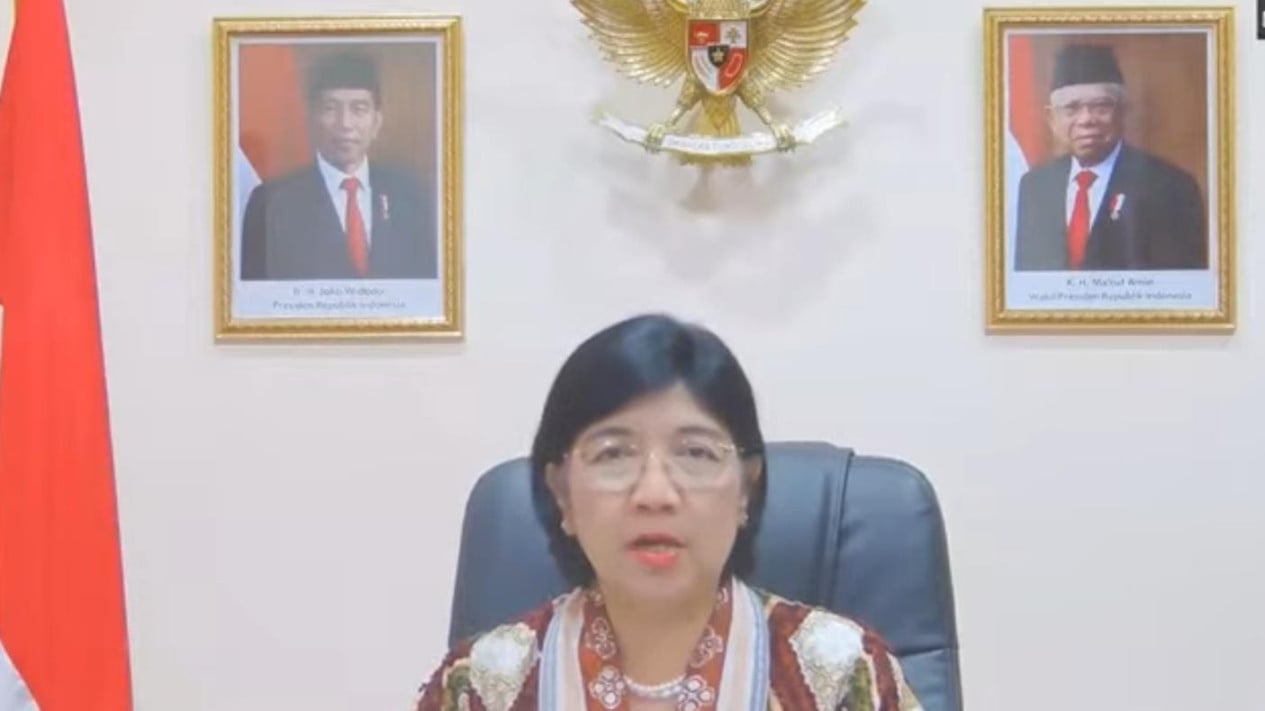
Senior Deputy Governor Destry Damayanti stated that support for MSMEs continues alongside government incentives and stimuli for MSMEs and low-income groups.
‘If interest rates rise but liquidity is maintained, the increase shouldn’t further burden MSME operators,’ Destry said at the National Conference on Regional Economic Development (KNPED) in Jakarta on Monday, 25 May 2026.
She explained that the central bank has macroprudential policies offering incentives through reduced mandatory reserve requirements (GWM) for banks lending to specific sectors, including MSMEs. Under the Macroprudential Liquidity Incentive Policy (KLM), banks have received incentives worth Rp424.7 trillion up to the first week of May 2026.
This incentive is reinforced post-rate hike, particularly through the spread between the BI Rate and loan interest rates to control credit rate movements.
‘Banks were required to hold around Rp400 trillion in mandatory reserves, but BI has returned this to them as it’s not needed. Thus, banks still have ample liquidity,’ Destry added.
Adequate banking liquidity is reflected in the liquidity ratio (AL/DPK) of 25.39% as of April 2026, with third-party funds (DPK) growing 11.39% year-on-year.
Destry noted that BI must raise the BI Rate due to global conditions of ‘higher for longer’, with rising US Treasury yields, persistent inflation, and a strengthening US dollar index (DXY) against most global currencies.
In this context, she stressed that exchange rate stability is crucial; without policy adjustments, rupiah pressure would intensify, particularly from portfolio capital flows.