
BI Claims Money Market Liquidity is Improving, SRBI Shrinks and IndONIA Falls
Bank Indonesia (BI) has confirmed that liquidity conditions in the domestic money market remain stable amidst global financial market uncertainty. Various liquidity easing measures implemented by the central bank are beginning to show results, reflected in the decline of the Indonesia Overnight Index Average (IndONIA) and the reduction in the outstanding amount of Bank Indonesia Rupiah Securities (SRBI).
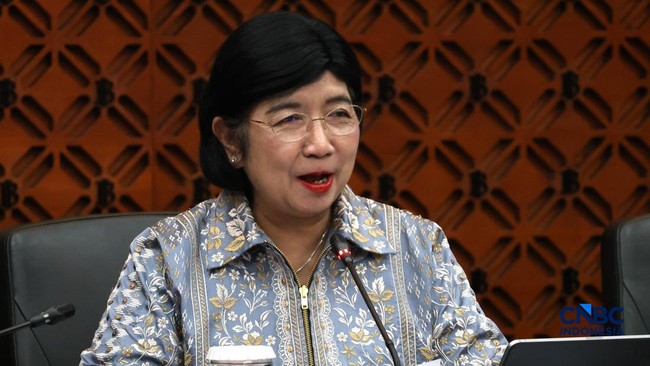
BI Senior Deputy Governor Destry Damayanti stated that, macroeconomically, current liquidity remains controlled. One indicator is the movement of IndONIA, which has fallen from its peak in June.
“Looking macroeconomically, liquidity is quite controlled. The interbank interest rate, or IndONIA, which reached a high of 6.61% in June, has now decreased to 5.91%,” Destry said during a working meeting with Commission XI of the Indonesian House of Representatives (DPR RI) on Monday (28/09/2026).
According to Destry, the improvement in liquidity conditions is inseparable from BI’s ongoing liquidity expansion policies. Additionally, BI has gradually lowered SRBI yields, reducing the instrument’s attractiveness to allow greater liquidity space within the financial sector.
She explained that the 12-month SRBI yield is now around 6.7%, down from its previous level of 7.7%. In line with this, SRBI outstanding has decreased from Rp1,096 trillion to Rp1,013 trillion.
“With the continuous decrease in SRBI outstanding, the liquidity space in the economy is becoming larger,” she noted.
BI is also strengthening liquidity expansion through swap and repo instruments. Throughout this year, additional liquidity distributed through these two instruments has reached Rp387 trillion.
On the other hand, to mitigate capital outflow pressures from the domestic financial market, BI has launched hedging incentive policies through swap instruments and Domestic Non-Deliverable Forwards (DNDF).
Destry stated that the incentives provided range between 10% and 30% and are expected to increase foreign investor interest in placing capital in Indonesia.
“We have introduced new policies in the form of hedging incentives through both swaps and DNDF. To date, foreign capital inflows have reached US$6 billion,” said Destry.
Furthermore, BI continues to optimise macroprudential liquidity policies to support bank credit distribution. As of the first week of September 2026, the value of macroprudential liquidity incentives (KLM) distributed has reached Rp461 trillion.
The central bank has also issued new regulations to increase the effectiveness of credit distribution. Under this policy, banks that allocate more than 19% of their funds into securities, such as Government Securities (SBN) and SRBI, will not receive additional liquidity incentives beyond a 4% financing incentive.
Conversely, banks with a securities ownership proportion below 19% that are actively distributing credit will receive an additional 2% incentive. This allows them to obtain a total incentive of up to 6% from the KLM policy.
Moving forward, BI affirmed it will continue to optimise the policy mix of monetary, macroprudential, and payment systems to maintain financial market stability while supporting national economic growth through strengthened liquidity and bank credit distribution.
Source: jawawa.id (https://jawawa.id/newsitem/bi-claims-money-market-liquidity-is-improving-srbi-shrinks-and-indonia-falls-1790578569)
Originally published by CNBC Indonesia (https://www.cnbcindonesia.com/market/20260928123628-17-771428/bi-klaim-likuiditas-pasar-uang-membaik-srbi-susut-indonia-turun), translated from Indonesian