
BI: Bali Needs Railway Connectivity to Strengthen Investment Diversification
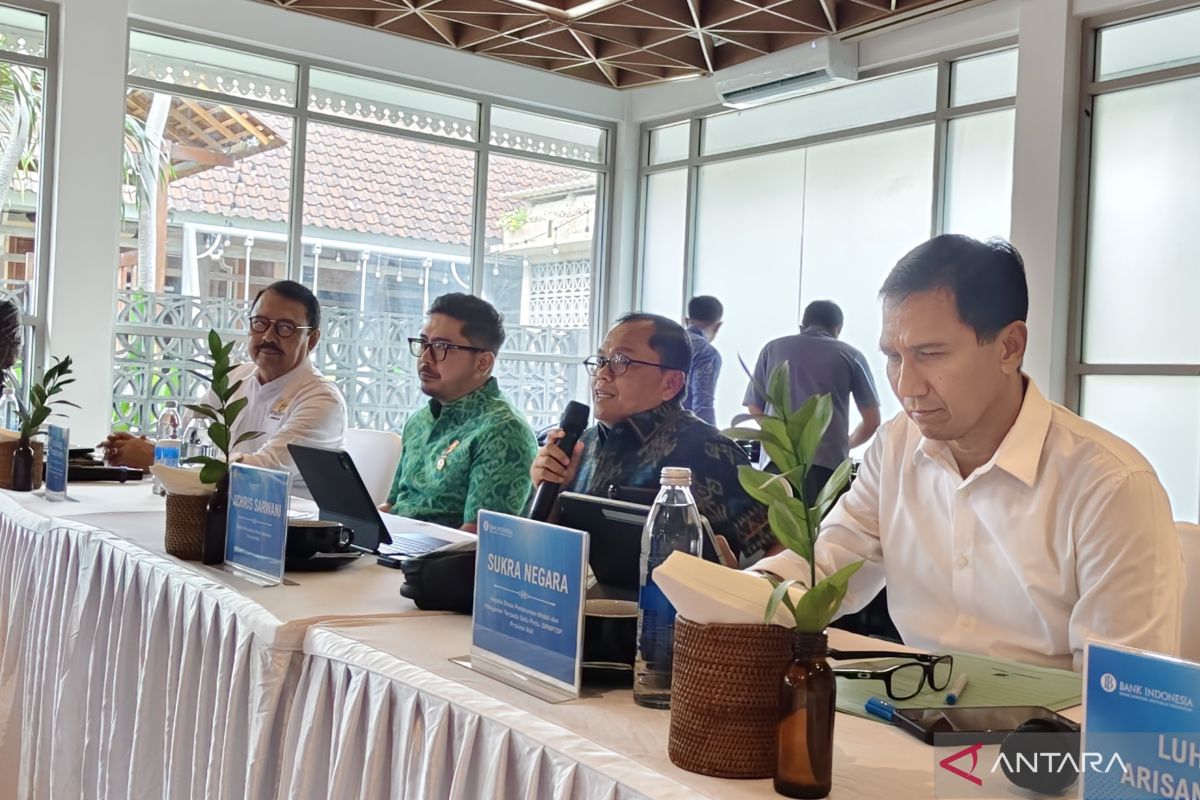
Bank Indonesia (BI) has stated that Bali Province requires enhanced connectivity, specifically through mass rail transport, to strengthen the diversification of investment in a more even and sustainable manner across the island.
“We see that this connectivity remains a task to be completed to ensure better economic growth,” said the Head of Bank Indonesia Bali, Achris Sarwani, during a discussion regarding investment and infrastructure in Denpasar on Wednesday.
According to him, the regulatory framework for this is already outlined in Regional Regulation (Perda) Number 2 of 2023 concerning the Bali Provincial Spatial Plan for 2023-2043. Article 20 of this regulation specifies a railway network system, including tracks and stations.
He explained that such connectivity would open wider investment opportunities outside of South Bali and beyond the tourism sector. Achris added that currently, 98.56 per cent of investment is concentrated in the tertiary sector, including hotels, restaurants, housing, industrial areas, and offices.
Furthermore, capital investment is heavily concentrated in tourism areas, with 6 ม64 per cent in Badung Regency, 15 per cent in Gianyar, and 10 per cent in Denpasar City. The remainder is split among the other six regencies in Bali, each holding a small share of less than three per cent.
Despite being included in regulations, this mass transport system has yet to be realised. Funding remains one of the greatest challenges in supporting the connectivity required to drive economic equality.
During the same event, the Head of the Bali Investment and One-Stop Integrated Services Agency (DPMPTSP), I Ketut Sukra Negara, explained that as of the first quarter of 2026, investment realisation in Bali reached Rp13.31 trillion of a target of nearly Rp48 trillion. The breakdown includes domestic investment of Rp9.04 trillion and foreign investment of Rp4.27 trillion.
While various financing options exist—such as green financing initiatives and Public-Private Partnership (PPP) innovations—economic observer Trisno Nugroho explained that financing instruments from the State Budget (APBN) still play a vital role. He noted that Bali contributes Rp176 trillion to national tourism foreign exchange in 2025, out of a national total of nearly Rp320 trillion.
“If Bali could secure 3-5 per cent of that foreign exchange, Bali could potentially receive around Rp5-7 trillion annually from the State Budget,” he said.
Meanwhile, Bali Regional Regulation Number 2 of 2023 outlines a railway network within the Denpasar, Badung, Gianyar, and Tabanan (Sarbagita) urban area, covering routes such as I Gusti Ngurah Rai Airport–Kuta, Kuta–Mengwi, Kuta–Nusa Dua, Kuta–Benoa–Sanur–Niti Mandala Renon–Kuta, and Sanur–Ubud.
The regulation also mentions a South Bali–North Bali corridor, including the Mengwi–Singapadu–Ubud–Kubutambahan–Singaraja route. Additionally, a circular railway network is proposed to encircle the island, featuring routes such as Gilimanuk–Denpasar via Mengwi; Denpasar–Padangbai via Singapadu–Bali Central Cultural Area; Padangbai–Singaraja via Amed; and Gilimanuk–Singaraja via Seririt.
Source: jawawa.id (https://jawawa.id/newsitem/bi-bali-needs-railway-connectivity-to-strengthen-investment-diversification-1783501021)
Originally published by Antara (Indonesian) (https://www.antaranews.com/berita/5640537/bi-bali-butuh-konektivitas-kereta-api-perkuat-diversifikasi-investasi), translated from Indonesian