
BI and Government Strengthen Inflation Control Programme to Face El Niño
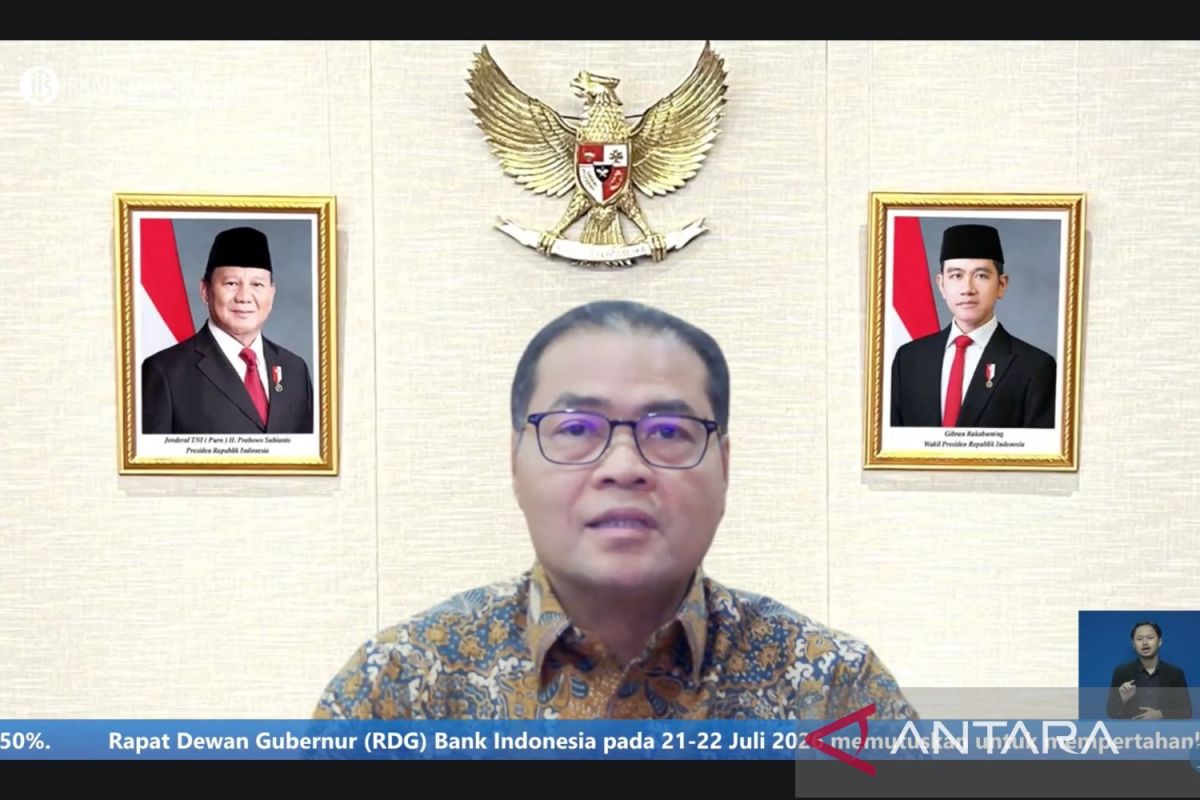
Through GPIPS, Bank Indonesia, together with central and regional governments, will always be present alongside communities in order to maintain price stability.
Jakarta (ANTARA) — Bank Indonesia (BI) and the Government are strengthening inflation control efforts through the Inflation Control and Affordable Food Movement (Gerakan Pengendalian Inflasi dan Pangan Sejahtera, GPIPS), directed at safeguarding food supply availability and smooth distribution to anticipate the impact of El Nino.
BI Deputy Governor Ricky P. Gozali, speaking at a press conference on the results of BI’s Board of Governors Meeting held online in Jakarta on Wednesday, explained that GPIPS is being implemented through a number of regional programmes.
These programmes include the adoption of good agricultural practices such as the provision of irrigation facilities, digital farming, strengthening of post-harvest handling including the provision of cold storage, and downstream food processing, particularly for horticultural commodities.
In addition, BI and the Government are expanding inter-regional cooperation (Kerja sama antardaerah, KAD) using a business-to-business (B2B) scheme based on mapping surplus and deficit regions, so that food distribution becomes more effective.
Further efforts are being made through the optimisation of food distribution facilitation (Fasilitasi Distribusi Pangan, FDP) on a forward-looking basis, as well as the provision of transport cost subsidies so that product prices become more affordable.
Finally, GPIPS is also being strengthened through the expansion of the Cheap Food Movement or market operations, carried out with greater precision in terms of commodities, locations and timing.
“We hope all of these strategies can keep prices in the market stable. We are also seeing volatile food inflation beginning to improve and ease, and we will continue these efforts to anticipate conditions through to the end of the year,” Ricky explained.
The GPIPS programme has been launched in Sumatra and Java. It is next scheduled to be launched in the Bali-Nusa Tenggara region on 27 July 2026, followed by Kalimantan as well as Sulawesi, Maluku and Papua (Sulampua).
According to Ricky, GPIPS aims not only to maintain price stability, but also to ensure food availability, protect people’s purchasing power and improve welfare.
Programme implementation is tailored to the challenges in each region, so a one-size-fits-all approach is not applied across all areas.
“Through GPIPS, Bank Indonesia, together with central and regional governments, will always stand alongside communities in order to maintain price stability,” Ricky said.
For context, Consumer Price Index (CPI) inflation in June 2026 was recorded at 3.34 per cent annually (year-on-year/yoy), rising slightly from 3.08 per cent (yoy) in May, but remaining within the inflation target range.
Meanwhile, volatile food inflation remains relatively high at 5.58 per cent (yoy), driven mainly by rising prices of shallots, garlic and rice, in line with declining production in key producing regions, higher transport costs, and the end of the main harvest season.
Ricky explained that, based on BI’s monitoring, inflation pressure is spatially concentrated in Sumatra, Sulampua and Kalimantan.
The highest volatile food inflation pressure occurred in Sumatra and Sulampua, mainly due to weather factors, particularly El Nino, which brought the harvest season to an end and disrupted food supply and distribution.
“To respond to this situation, BI is coordinating with the government through 46 regional offices. We are also running GPIPS using the 4K strategy for regional price control, namely price affordability, supply availability, smooth distribution, and effective communication,” Ricky said.