
BI and DKI Provincial Government Strengthen Digital Ecosystem in 20 Markets
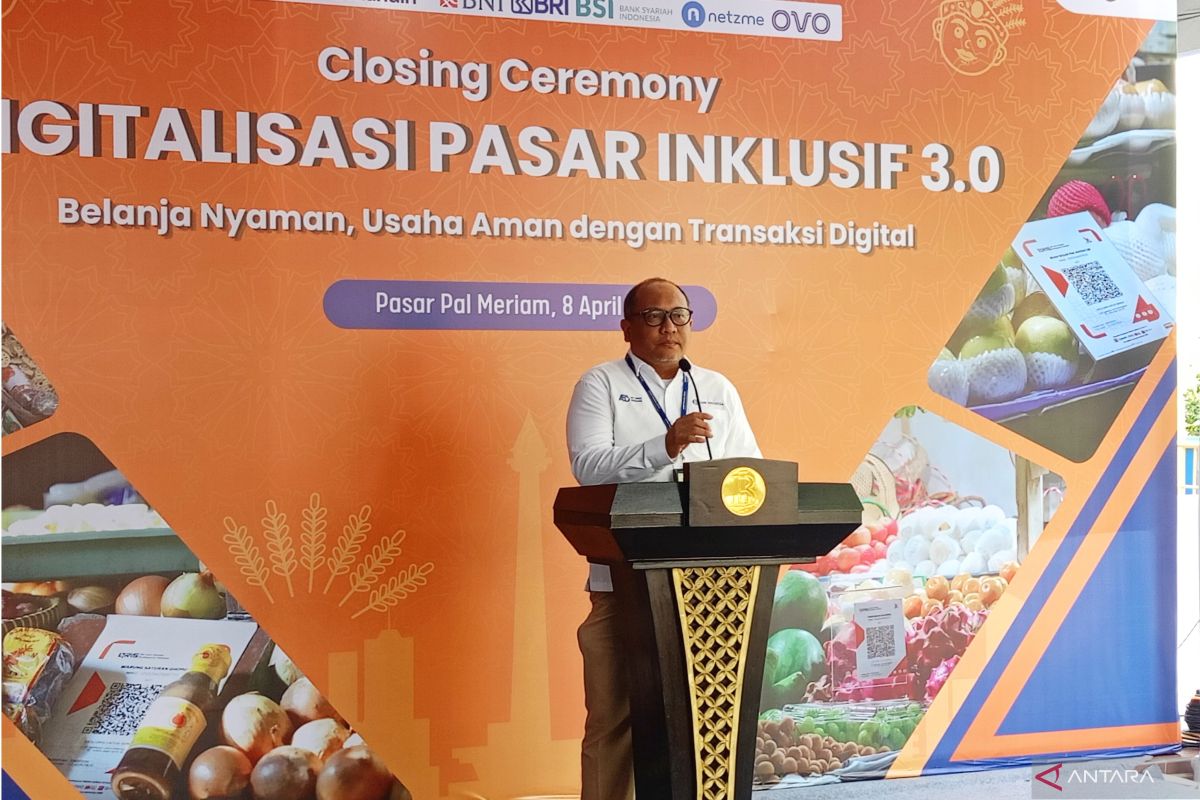
Jakarta (ANTARA) - Bank Indonesia (BI) and the DKI Jakarta Provincial Government are continuing to strengthen the digital economic and financial ecosystem through a market digitalisation programme in 20 traditional markets managed by the regional public company Perumda Pasar Jaya.
“The Inclusive Market Digitalisation Programme Phase 3 is a tangible manifestation of synergy among various parties in creating a more modern, efficient, and integrated market ecosystem,” said Deputy Head of the Bank Indonesia Representative Office for DKI Jakarta Province, Lily Mochamad Sadeli, at the closing of the Phase 3 Market Digitalisation Programme at Pasar Pal Meriam, Matraman, East Jakarta, on Wednesday.
This programme, a collaboration with the Jabodebek Financial Services Authority (OJK) and Payment Service Providers (PJP), both banks and non-banks, was officially launched on 13 February 2026 and ran for one month.
“The programme is expected to serve as a flagship initiative in driving the economy of DKI Jakarta,” she stated.
According to Lily, this initiative is part of strategic efforts to accelerate digital economy and finance while strengthening Jakarta’s position as a global city.
Furthermore, market digitalisation is one of the keys to driving people-based economic transformation that is inclusive and sustainable.
To that end, Bank Indonesia DKI Jakarta is expanding participant involvement by partnering with more Payment Service Providers (PJP) from both banking and non-banking sectors.
This step aims to bring diverse payment service innovations that are not only fast and easy but also affordable, secure, and reliable.
“With broader access to digital payment services, it is hoped that transactions in markets will become more efficient while accelerating financial inclusion in society,” she explained.
According to Lily, the implementation of the programme over one month showed significant achievements. This is evident from the increase in the number of new business actors (merchants) using QRIS in traditional markets, as well as the surge in the volume and value of digital transactions.
Not only in buying and selling transactions, digitalisation is also beginning to extend to the market’s supporting ecosystem, such as parking payment systems and other services.
This situation indicates that traditional markets are transforming into a broader and more integrated digital economic ecosystem.
“This development serves as a gateway to realising markets as flagship drivers of sustainable regional economy,” said Lily.
In addition to strengthening payment infrastructure, the programme also emphasises educational aspects.
“This education is important so that traders can not only use digital payment technology but also understand its benefits in business management, such as neater transaction recording and access to formal financial services,” she said.
Lily hopes that the synergy between Bank Indonesia and the DKI Jakarta Provincial Government will be a key factor in the programme’s success.
“Support from local government, both in terms of policy and on-the-ground facilitation, accelerates digital adoption among traditional market business actors,” she said.
Looking ahead, Bank Indonesia together with the DKI Jakarta Provincial Government is committed to continuing to expand the scope of market digitalisation to cover all traditional markets in the capital region.
Collaboration will also continue to be strengthened with OJK, Perumda Pasar Jaya, and payment service providers.
These efforts are not only focused on increasing digital transactions but also on strengthening financial literacy and inclusion so that the formed digital ecosystem can operate sustainably and provide real benefits to society.
With the strengthening of the digital ecosystem in traditional markets, Lily hopes that Jakarta can accelerate transformation towards an inclusive digital economy while enhancing its competitiveness as a global city.