
BI Affirms Commitment to Supporting Economic Growth
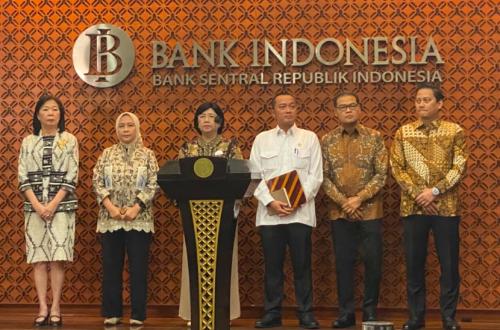
Bank Indonesia (BI) has affirmed its commitment to supporting economic growth through a strategic mix of monetary policies. The central bank is ensuring it continues to maintain rupiah exchange rate stability amidst geo-economic and geopolitical uncertainties.
“Bank Indonesia remains committed to maintaining stability as a key prerequisite for supporting sustainable economic growth. Amidst high global uncertainty, rupiah exchange rate stabilisation is being continuously strengthened to consistently support the achievement of the inflation target and boost economic activity,” said Erwin Gunawan Hutapea, Senior Executive Director, Head of the Monetary and Securities Asset Management Department at Bank Indonesia, in a statement to reporters on Wednesday (29/7/2026).
Erwin stressed that efforts to optimise the monetary policy mix to maintain rupiah exchange rate stability are being enhanced. Beyond relying on the policy interest rate, various other monetary instruments are also being sharpened.
Various instruments continue to be optimised, including triple intervention in the foreign exchange market, covering spot, Non-Deliverable Forward (NDF), and Domestic Non-Deliverable Forward (DNDF), as well as the optimisation of monetary instruments such as Bank Indonesia Rupiah Securities (SRBI) supported by swap incentive facilities and DNDF hedging. The use of these instruments is expected to maintain exchange rate stability while supporting foreign capital inflows.
“The strategy for maintaining money market and banking liquidity adequacy is being strengthened. The SRBI position is on a more controlled trend. Going forward, SRBI issuance will continue to be directed to align with liquidity management needs and support foreign capital inflows to strengthen rupiah exchange rate stability,” he said.
Erwin added that BI is also continuing to optimise various policy instruments to support economic growth. The implementation of the Macroprudential Liquidity Incentive Policy (KLM) will be further strengthened to encourage financing for priority sectors, including reinforcing the liquidity redistribution mechanism in the financial sector to make financing transmission more effective. In addition, the digitalisation policy of the payment system is also being accelerated to further drive economic growth.