
BGN Overhauls Free Nutritious Meal Programme, SPPG Under Scrutiny
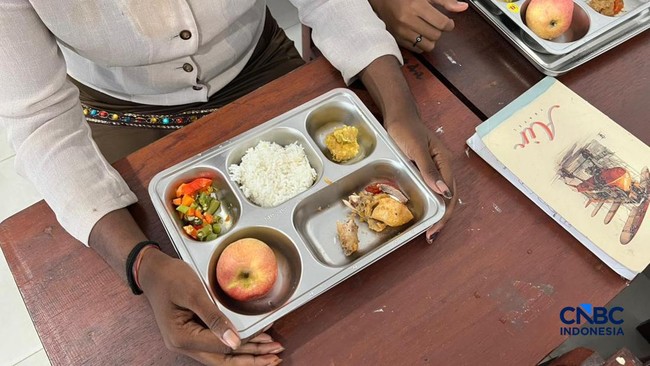
The National Nutrition Agency (BGN) has affirmed its commitment to enhancing the effectiveness of the Free Nutritious Meal (MBG) Programme by strengthening governance, improving budget efficiency, sharpening the targeting of beneficiaries, and optimising the use of available resources. These measures aim to ensure the programme operates with greater precision, is sustainable, and delivers maximum benefits to the public.
This was conveyed by the Head of the National Nutrition Agency, Nanik S. Deyang, during a BGN press conference held at the BGN Head Office on Thursday (4/6/2026). The event served as an initial moment of consolidation for the agency’s new leadership in formulating policy directions and strategic steps for the programme’s future implementation.
According to Nanik, the BGN’s current primary focus is ensuring that every budget allocation and resource used generates an optimal impact for the community groups most in need of nutritional intervention. “Our current focus is ensuring the Free Nutritious Meal Programme operates more effectively, is well-targeted, and provides optimal benefits for the community. Therefore, we are reorganising the programme’s implementation so that service quality can be continuously improved,” said Nanik.
As part of these efforts, the BGN is restructuring various aspects of the programme’s implementation. The steps taken include refocusing beneficiaries so that nutritional interventions are more directed at priority groups, imposing a temporary moratorium on the construction of new kitchens, and optimising already operational kitchens to ensure they are utilised to their maximum potential.
Furthermore, the BGN is strengthening the guidance and standardisation of the Nutrition Fulfilment Service Units (SPPG) to ensure all kitchens meet established standards for food safety, service quality, and human resource capacity. Through these measures, the BGN aims to ensure every meal distributed to beneficiaries meets sound nutritional and safety standards.
Nanik explained that the restructuring of programme implementation also addresses the challenge of uneven service distribution across various regions. “Currently, there remains a high concentration of kitchens in agglomeration areas, while a number of underdeveloped, frontier, and outermost (3T) regions still require service strengthening. For this reason, we are carrying out this restructuring so that the benefits of the programme can truly be felt evenly by all Indonesian children,” she stated.
To broaden its service reach, the BGN is preparing various more adaptive MBG implementation schemes for the 3T regions. The approach is not solely through the construction of new facilities, but also by optimising existing infrastructure, such as school canteens, communal kitchens, and community facilities that meet the programme’s operational requirements.
The BGN is also opening up opportunities for collaboration with various stakeholders, including state-owned enterprises, the private sector through corporate social responsibility programmes, foundations, and other parties wishing to participate in supporting the expansion of MBG services in regions that need them.
On the same occasion, Nanik stressed that service quality remains the top priority in the consolidation process currently being undertaken by the BGN. “We want to ensure every kitchen produces food that is safe, healthy, and nutritious. Therefore, improving operational standards, enhancing human resource capacity, and strengthening supervision are our main agendas,” she said.
Meanwhile, BGN Deputy Head Agustina Arumsari stated that governance strengthening will be carried out through improvements to the internal control system, data integration, information validation, and the development of a more structured and measurable system. According to her, good governance must be built through a robust system so that programme implementation can proceed accountably, transparently, and sustainably.
“We will strengthen data integration and information systems so that every policy can be supported by valid data. In addition, various recommendations from oversight bodies will become part of our ongoing efforts to refine governance,” she said.
In sharpening the programme’s targets, the BGN is also reinforcing interventions for the 3B group—pregnant women, breastfeeding mothers, and toddlers—as a strategic group in efforts to prevent stunting and improve the quality of human resources from an early age.