
BGN: Free Nutritious Meals Programme a strategic instrument to build Golden Generation 2045
Jakarta (ANTARA) - The National Nutrition Agency (BGN) has stated that the Free Nutritious Meal (MBG) programme serves not only to meet the food needs of the community but also acts as a strategic instrument for nation-building to create a healthy, intelligent, productive, and competitive Indonesian generation towards Golden Indonesia 2045.
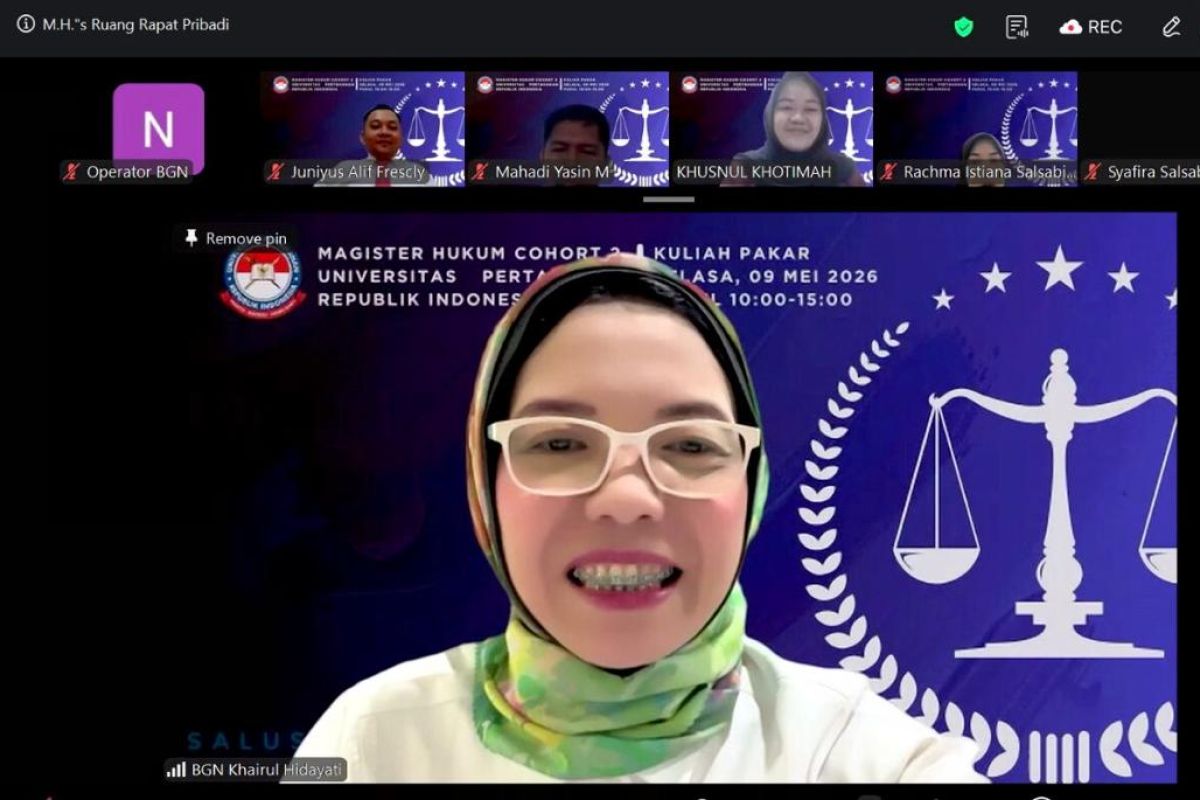
“The MBG programme is not merely a food distribution programme, but a long-term state investment to build superior human resources. Through this programme, we aim to produce a generation that is healthy, intelligent, disciplined, productive, and ready to face future challenges,” said the Head of the Legal and Public Relations Bureau of BGN, Khairul Hidayati, during an expert lecture at the Master of Law Programme, Faculty of National Security, Defence University of the Republic of Indonesia (Unhan RI) in Jakarta on Tuesday.
Hidayati emphasised that nation-building is determined not only by economic and defence strength but also by the quality of a country’s human resources; therefore, investing in nutritional fulfilment is a strategic step in preparing the nation’s future generations.
According to her, various studies show that good nutritional fulfilment from an early age has a significant impact on physical development, cognitive abilities, educational achievement, and an individual’s future productivity. Consequently, nutritional fulfilment policies must be viewed as an essential part of a sustainable national development strategy.
Hidayati also stated that the MBG programme is designed to reach priority target groups, such as students, toddlers, pregnant women, and breastfeeding mothers. In addition to supporting the prevention of stunting and other nutritional issues, the programme also contributes to improving learning concentration, immune resistance, and the quality of education for Indonesia’s younger generation.
“When nutritional needs are well-met, Indonesian children will have a greater opportunity to grow optimally, achieve success, and become human resources capable of competing on a global level. This is the primary foundation towards Golden Indonesia 2045,” she explained.
She noted that the success of the MBG programme should not only be measured by the number of beneficiaries but also by its impact on strengthening national character and improving the quality of human resources. Therefore, its implementation requires a governance system that prioritises accountability, food safety, nutritional quality, and continuous supervision.
Hidayati added that the MBG programme also holds strategic value in strengthening national resilience as the nation’s primary capital in facing various global challenges, ranging from economic competition and technological developments to threats affecting national stability.
“Building a strong nation must begin with building its people. Through the MBG programme, the government is preparing the foundation for the birth of a superior generation that will drive development, guard national resilience, and determine the future of Indonesia,” she concluded.