
BGN focuses SPPG development on high-stunting areas
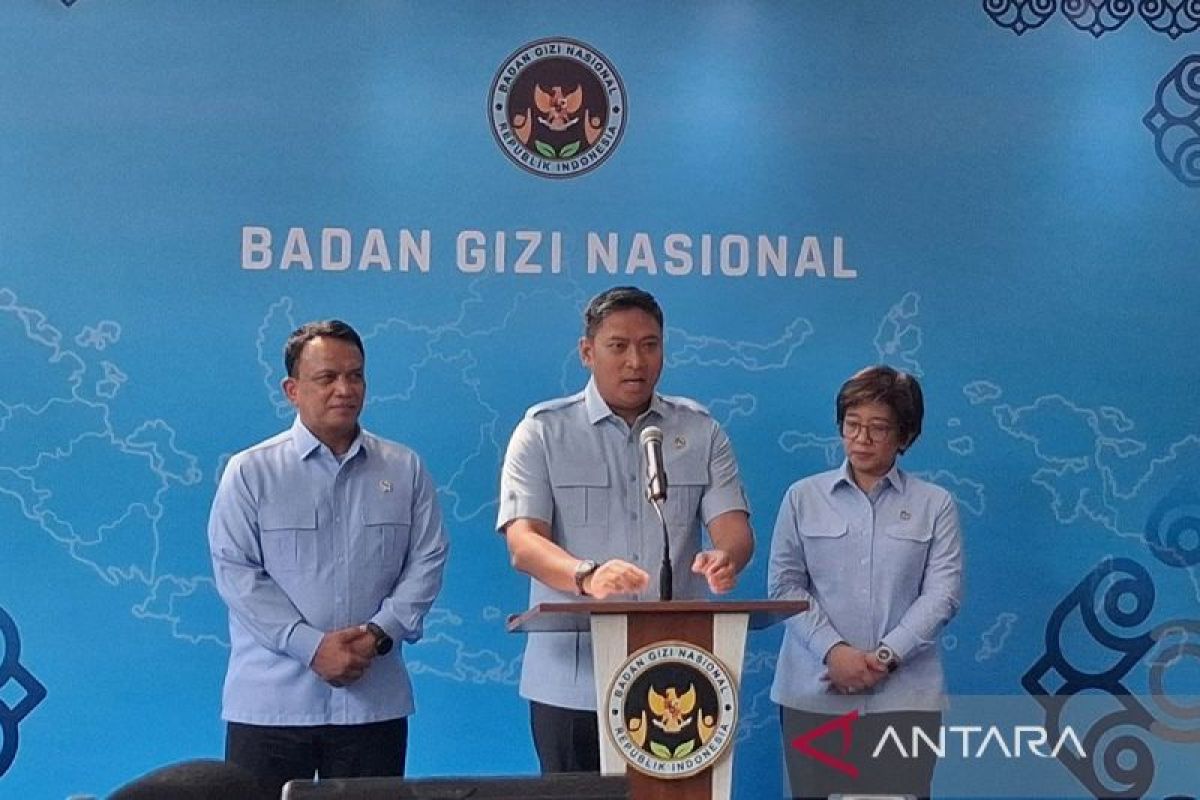
The National Nutrition Agency (BGN) is focusing the development of Nutrition Fulfilment Service Units (SPPG) to serve the Free Nutritious Meals (MBG) programme in areas with high stunting rates.
BGN Head Sudaryono stated during a press conference in Jakarta on Wednesday that, based on data from the Ministry of Health, 40 per cent of Indonesia’s population in the first and second quintiles—the lowest economic status groups—are below the health line, meaning they suffer from calorie and protein deficiency.
Based on this data, Sudaryono noted that around 116 million people are undernourished or hungry because their daily intake is less than their daily activity requires, making intervention through MBG essential for regions with the highest stunting levels.
“So later, we will look at some of these MBG kitchens or SPPG in areas with high and very high stunting. We will check if a kitchen already exists there; if so, we will activate it immediately. If not, we will focus on that area first while organising those that are already good. We will continue the good ones and improve the others,” he said.
“This is just a map; of course, if clicked in detail, we can see specific data on which province, district, sub-district, or village. Therefore, besides improving existing SPPG, we are also preparing to intervene directly by providing appropriate nutrition, especially in areas with high and very high stunting rates,” he explained.
Sudaryono further explained that the government already possesses data based on names and addresses, or ‘by name by address’, linked to the National Identity Number (NIK). This data will serve as a reference for the government to integrate information across agencies for more targeted distribution of MBG.
“So, through the NIK, we can know and check, for instance, whether a toddler is receiving MBG or not, whether they are stunted or not. The data is with the Ministry of Health, and we cross-integrate this data between institutions so we can know where elementary, junior high, and senior high school students, toddlers, and pregnant women are located, what their health conditions are, whether they receive MBG or not, and whether their condition improves after receiving MBG,” Sudaryono said.
“There is a free health check-up programme. For toddlers, pregnant women, and school children, we propose that this free health check be conducted more than once, so the programme consistently yields outputs, outcomes, and impacts. If the output is good food, in the right amount, with good nutritional content and complete nutrients, we hope it will produce a good outcome. Children who were stunted become non-stunted, those who were sick become healthy, and those who were underweight can become normal,” Sudaryono concluded.