
BGN Explains Reasons for Deploying Police and Military at Start of MBG Programme
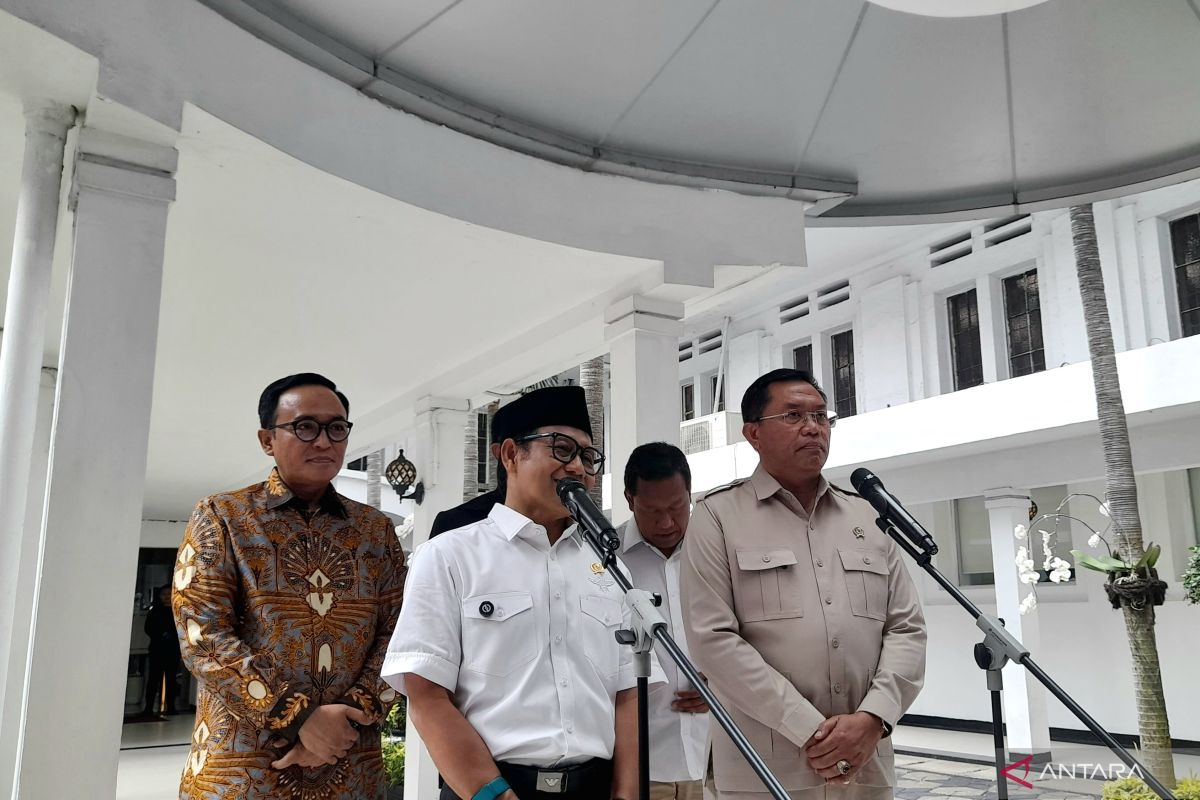
Jakarta (ANTARA) - The National Nutrition Agency (BGN) has explained the reasons for deploying the Indonesian National Police (Polri), the Indonesian National Armed Forces (TNI), and the Indonesian Chamber of Commerce and Industry (Kadin) at the outset of the Free Nutritious Meals (MBG) programme.
Deputy Head of BGN for Operational Nutrition Fulfilment, Sony Sonjaya, stated during the one-year MBG programme event for community empowerment in Jakarta on Thursday that at the beginning of the MBG programme’s implementation, BGN could not immediately build Nutrition Fulfilment Service Units (SPPG) using the standard goods and services procurement scheme.
He assessed that Polri, TNI, and Kadin were selected because these institutions already possess strong forces across all regions of Indonesia, which can strengthen community empowerment. This was because, at the start of the MBG programme, President Prabowo Subianto ordered acceleration.
“In 2025, we are not certain whether this programme will truly be supported by the community or how those involved in its implementation will respond, so it was planned to be built using APBN 1.542 (SPPG), namely in 514 regencies/cities, with three per regency/city. What was ordered (to build SPPG for acceleration) was Polri 1,000, TNI 1,000, Kadin 1,000, that was the directive at the time,” Sony said.
According to him, with this scheme, the government can achieve acceleration because it is impossible to build all SPPG using the goods and services procurement process, which would undoubtedly take a considerable amount of time.
“Therefore, if now (someone asks) ‘Why Polri gets 1,000? Why TNI 1,000?’ That’s the story. So, if now people come and ask ‘Why Polri 1,000? TNI 1,000?’ Don’t blame them, because the history was that acceleration was needed at that time, so they were appointed,” he said.
The Head of the BGN Verification Team also stated that MBG is targeted to be one of the programmes that can produce a multiplier effect for community economic empowerment at the local level. Therefore, the acceleration of SPPG construction becomes one of the important aspects to achieve that target.
“That’s community empowerment, this is the government’s cleverness, because if 26,663 SPPG were built using the goods and services procurement (PBJ) process, how many working groups (pokja) would need to be established? How many days would the PBJ process take to determine one service winner? Alhamdulillah, with this mechanism, 26,663 have already been built, and last night I saw that more than 27,000 have been built,” he explained.
Sony continued that to date, the MBG beneficiaries have reached 62.35 million people, including 49.64 million students and 12.7 million non-students.
“Now, MBG has empowered communities from suppliers (providers) who deliver the necessary materials to SPPG, with 116,465 suppliers. This is how the MBG programme creates a multiplier effect, one of which is empowering the community. As I mentioned earlier, the 26,000 SPPG are all community participation,” he said.
Sony also stated that in the operations of each SPPG, the MBG programme has involved micro, small, and medium enterprises (UMKM), Village-Owned Enterprises (BUMDes), cooperatives, and traditional markets.
“Currently, there are 116,465 suppliers, consisting of cooperatives (11,430), BUMDes (1,180), UMKM (48,000), and other suppliers (54,000),” Sony said.