
BGN: Budget Cuts for Free Nutritious Meals Programme to Sharpen Beneficiary Targeting
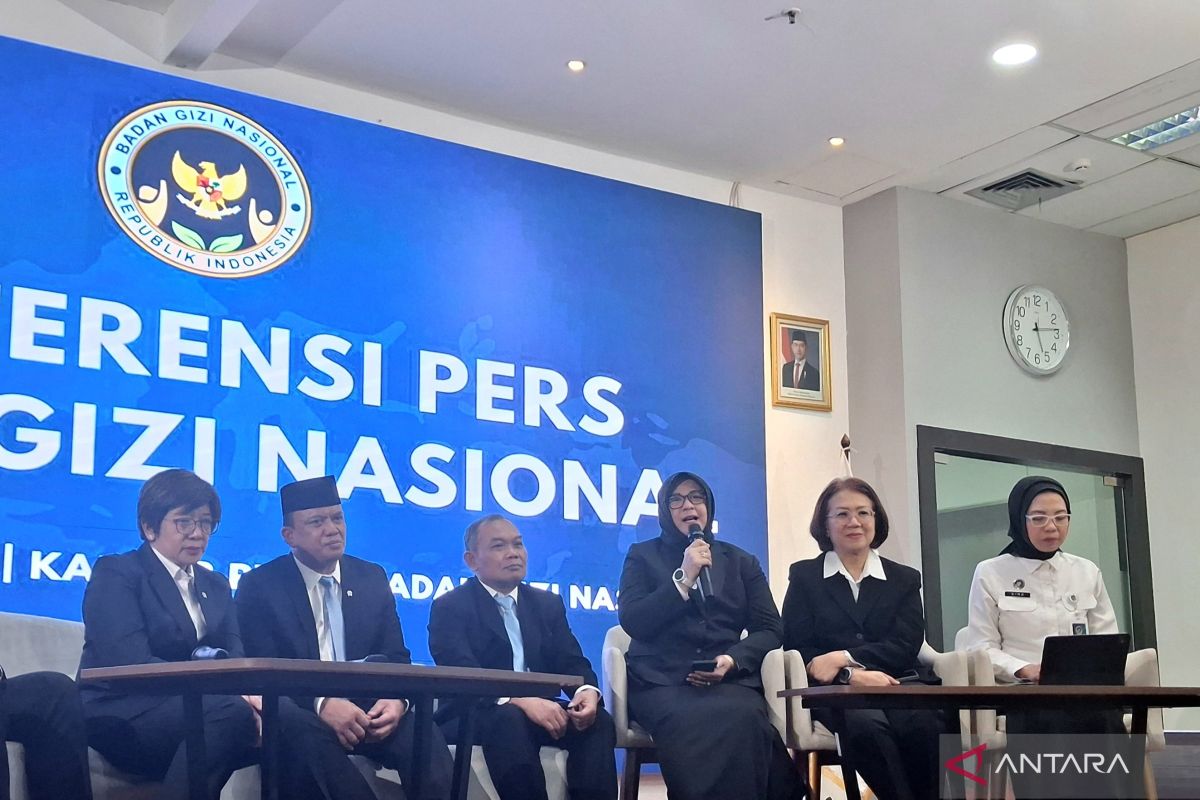
Jakarta (ANTARA) - The National Nutrition Agency (BGN) stated that the reduction of the Free Nutritious Meal (MBG) programme budget for 2026 will focus on sharpening the beneficiary list in order to prioritise quality, in line with President Prabowo Subianto’s instructions.
BGN Deputy for Administration Lili Khamiliyah said that for 2026, the agency has so far carried out budget efficiency from Rp268 trillion to Rp229 trillion.
“But that was before a re-screening of the budget refocusing and governance changes. So this is what we are working on to determine what will be affected, so that the state budget can be run effectively, efficiently and transparently. This is a provisional figure—it could be streamlined further,” he said at a press conference in Jakarta on Tuesday.
BGN Deputy Head Agustina Arumsari said the sharpened beneficiary count currently stands at 62.7 million, down from the President’s earlier target of 82.9 million MBG recipients.
“The President has given us more time to refine the governance—one month. So, after further screening of the 62.7 million, I am confident the number will follow automatically; there is already a picture of it. It will come down, and the final figure will await the President’s decision,” she said.
She stressed that budget synchronisation with the Ministry of Finance and Bappenas is still ongoing. The final budget figure will follow the President’s financial memorandum.
“The main focus at present is improving governance in line with the President’s instructions. Service quality is prioritised over chasing beneficiary numbers, and there is no specific target number that must be reached in the near term,” she said.
To improve beneficiary data in schools, the data will be matched with the education core data system (dapodik) to prevent duplication and ensure the number of recipients truly reflects real conditions.
“We found in one region that a single school was served by two different Nutrition Service Fulfilment Units (SPPG)—part by SPPG A, part by SPPG B. Going forward, this data will be reconciled so similar incidents do not recur,” Agustina said.