
BGN Announces Five New Officials, Here is the List
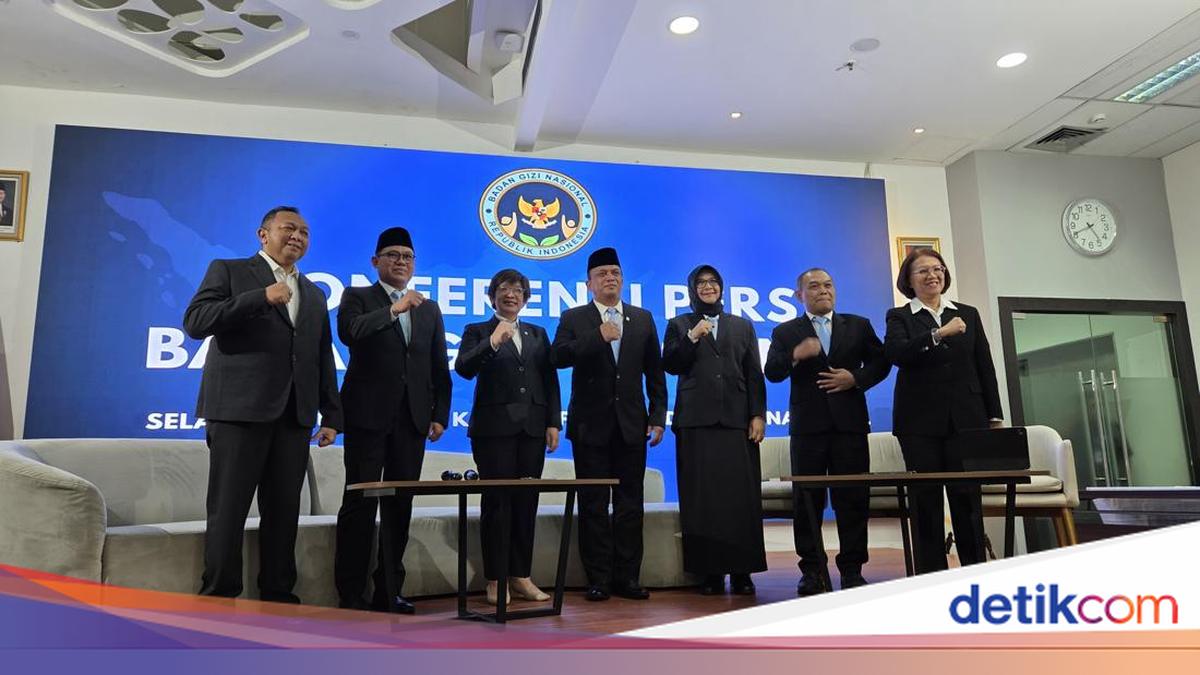
The National Nutrition Agency (BGN) has announced five new officials, ranging from Secretary-General to Deputy for Monitoring and Supervision.
The five are replacements for previous officeholders. They were introduced by BGN Deputy Head Agustina Arumsari alongside Trenggono at the BGN office in Central Jakarta, as reported by detikNews on Tuesday (21/6).
Agustina said that the most important element of the organisation for the free nutritious meal programme (MBG) is human resources. The new BGN officials were appointed on the basis of a Presidential Decree issued by Prabowo Subianto and were inaugurated earlier in the afternoon.
“Yesterday afternoon we received the presidential decree appointing these officials, all mid-level senior officials,” Agustina said at a press conference.
“We need a team to fix BGN and the free nutritious meal programme,” she continued.
Here is the list of officials introduced:
Lili Khamiliyah as Secretary-General
Prima Yosephine Berliana Tumiur Hutapea as Deputy for Systems and Governance
Zainuri as Deputy for Provision and Distribution
Mariman Darto as Deputy for Promotion and Cooperation
Ketut Sumedana as Deputy for Monitoring and Supervision
On the occasion, Agustina mentioned that the evaluation of the MBG programme will focus on two main aspects. One of them is the validation of beneficiary data.
“So the first thing we will fix: is that 63 million figure real? That comes first. If that is the number, how many should we actually be serving? Which regions, which children, should genuinely be prioritised? That is our task now,” Agustina told reporters at the State Palace in Jakarta on Monday (20/7).
In addition to data validation, BGN is also evaluating the incentive scheme for SPPG (nutritious meal service providers). To date, incentive amounts have been applied uniformly even though each SPPG’s service capacity differs.
She also noted that some SPPGs serve only 1,000 beneficiaries within a relatively short range, while others serve far more beneficiaries across wider areas.
According to her, this situation needs to be accommodated with a proportionate scheme.
“That is why we will create a fairer incentive scheme. For example, it wouldn’t make sense for an SPPG operating within 200 metres serving only, say, 1,000 people to receive the same incentive,” she said.
“Nor would it make sense for one covering 300, 400 or even 500 metres — some are better — to receive a flat 6 million? That’s not fair. Those are the schemes we will be fixing,” she continued.