
BGN and JICA develop 'shokuiku' to enrich Free Nutritious Meal experience
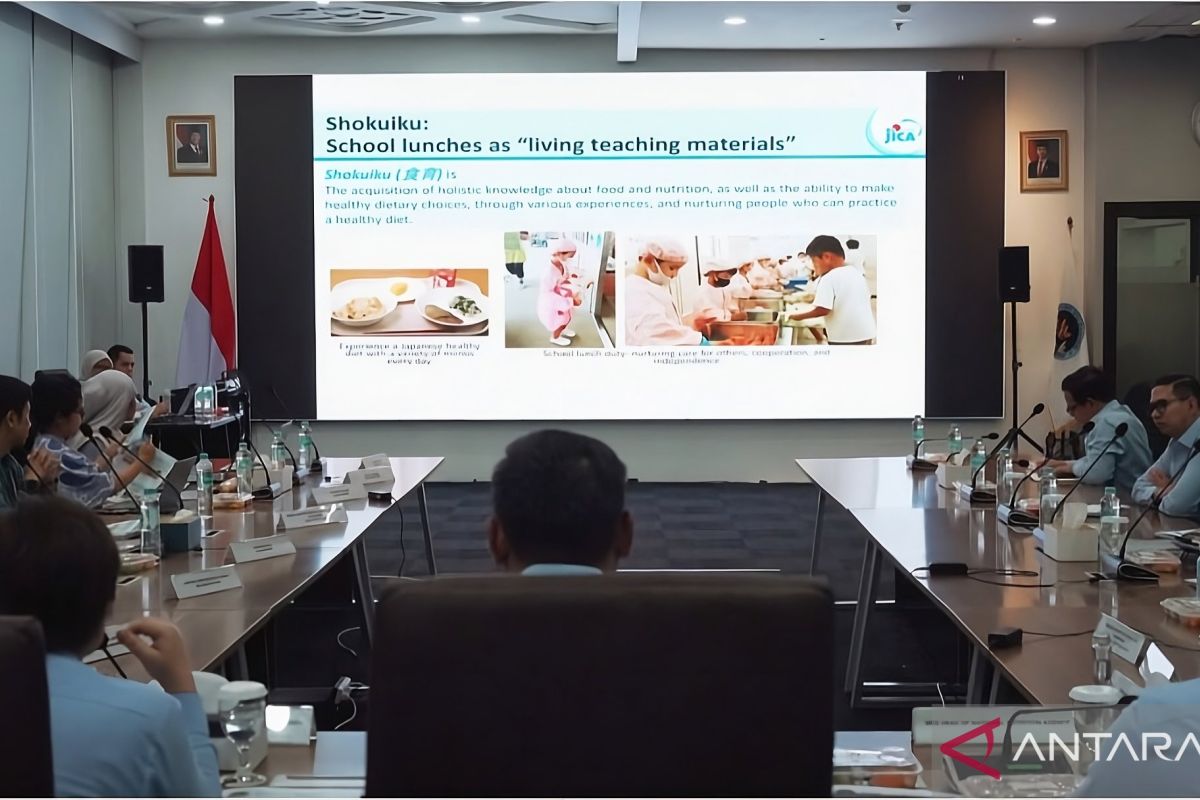
Jakarta (ANTARA) - The National Nutrition Agency (BGN), in collaboration with the Japan International Cooperation Agency (JICA), is developing the concept of ‘shokuiku’, or food education, to enrich the student experience within the Free Nutritious Meal (MBG) Programme.
This approach adapts Japan’s experience in integrating food and nutrition education with the provision of school meals. In Japan, shokuiku has been developed as food and nutrition education that is not only knowledge-oriented but also focuses on students’ practical experiences in understanding food and nutrition.
BGN Deputy for Systems and Governance, Prima Yosephine Berliana Tumiur Hutapea, stated in Jakarta on Friday that lessons from Japan could serve as a reference to enrich the student experience during the implementation of the MBG programme.
“Through this cooperation, we are observing how the shokuiku approach can enrich children’s experiences while participating in school meal programmes. Thus, food is not merely received and consumed, but can also become part of the learning process regarding food, nutrition, and the parties involved in its provision,” said Prima.
Within the MBG-JICA Pilot design, several areas are being studied, including the reduction of waste and food leftovers, the improvement of food delivery and presentation processes, the strengthening of student involvement in school meal activities, and food and nutrition education.
The pilot is designed through two complementary components: the ‘shokkan trial’ at the Nutrition Fulfillment Service Unit (SPPG) level and ‘shokuiku’ activities at the school level. Through the shokkan trial, learning is directed towards the experience of food service provision, while shokuiku activities in schools provide space to strengthen students’ understanding of food and nutrition.
According to Prima, both approaches can provide a more comprehensive perspective by connecting the food provision process with the experience of students as beneficiaries.
“We want to see the connection between what happens at the SPPG level and the children’s experience when receiving and consuming food at school. From there, we can study which aspects can support the improvement of service quality while simultaneously strengthening food and nutrition education,” said Prima.
The development of the MBG-JICA Pilot also provides an opportunity to examine how school meal implementation can encourage student engagement. This includes students’ experiences during mealtime, their understanding of the food consumed, and awareness of the processes and people behind the provision of school meals.
“The hope is that lessons from Japan can serve as a reference to continue developing the MBG programme according to the Indonesian context. We want to ensure that the experience students gain through the MBG programme also provides a better understanding of food and nutrition,” she added.