
BGN affirms MBG programme's role in absorbing rice and vegetable production from farmers
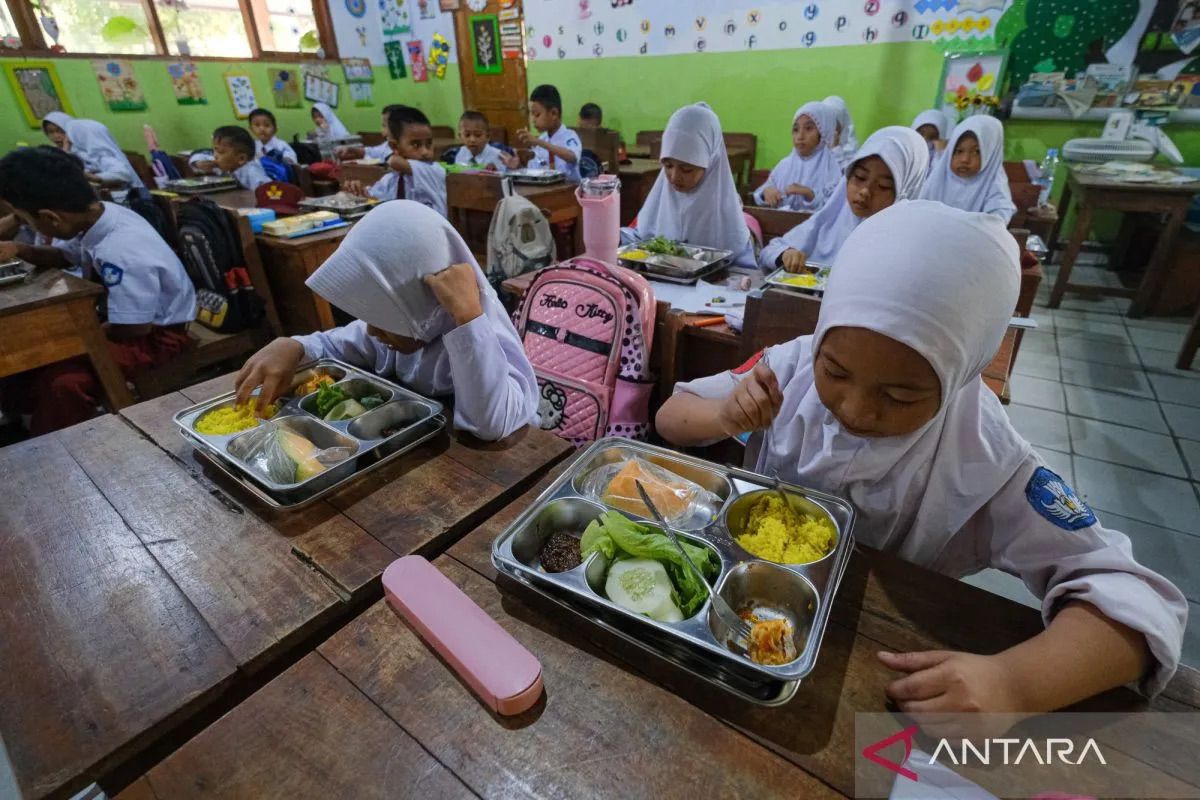
Jakarta (ANTARA) - The National Nutrition Agency (BGN) has affirmed that the Free Nutritious Meals (MBG) programme not only improves children’s nutrition but also plays a major role in absorbing rice and vegetable production from farmers across various regions.
Deputy for Systems and Governance at BGN, Tigor Pangaribuan, stated that the success of the MBG programme heavily depends on the sustainable availability of quality food ingredients in every region.
“To implement this programme effectively, there must indeed be a good availability of food ingredients,” said Tigor during the Food Summit 2026 in Jakarta on Monday.
He explained that each Nutritious Fulfilment Service Unit (SPPG) requires a large supply of rice to meet the daily meal needs of beneficiaries consistently.
In one year, one SPPG is estimated to require around 40 tonnes of rice to fulfil the operational needs of the Free Nutritious Meals programme running continuously in various regions.
He noted that if the number of SPPGs reaches 30,000 units nationally, the rice requirement will increase significantly, thereby encouraging widespread absorption of farmers’ production across Indonesia.
For example, in West Java, the need is estimated at around 6,000 SPPGs, resulting in a total rice requirement of hundreds of thousands of tonnes to optimally meet the programme’s needs.
BGN also stipulates that the rice used must be of premium quality to ensure that the food served to children meets good nutritional and quality standards.
In addition to rice, the need for vegetables is also substantial, estimated at 45 to 50 tonnes per SPPG annually to support balanced nutritious meal menus.
He mentioned that if a region has 1,000 SPPGs, the vegetable requirement could reach around 50,000 tonnes per year, thereby opening up significant opportunities for local farmers to increase their production.
Tigor emphasised that this large demand presents an economic opportunity, as the state budget allocated will flow directly into the food and agriculture sectors of the community.
He stated that approximately 70 percent of the budget per SPPG, or around Rp7 billion, is used for purchasing food raw materials sourced from local farmers and businesses.
Thus, if there are 1,000 SPPGs in a province, the potential economic turnover for food ingredient purchases could reach around Rp7 trillion annually.
To ensure supply availability, BGN is collaborating with local governments, the Ministry of Agriculture, and various stakeholders to strengthen sustainable food production and distribution.
“The availability of food ingredients must certainly be promoted. We are coordinating with the Ministry of Agriculture, the National Food Agency (Bapanas), and agricultural services in all provinces,” he said.
“And I have just returned from Padang and Lombok, where we discussed how to stock food ingredients in those provinces (for MBG supply),” Tigor explained.