
Beyond the harvest: Indonesia's quest for lasting food security
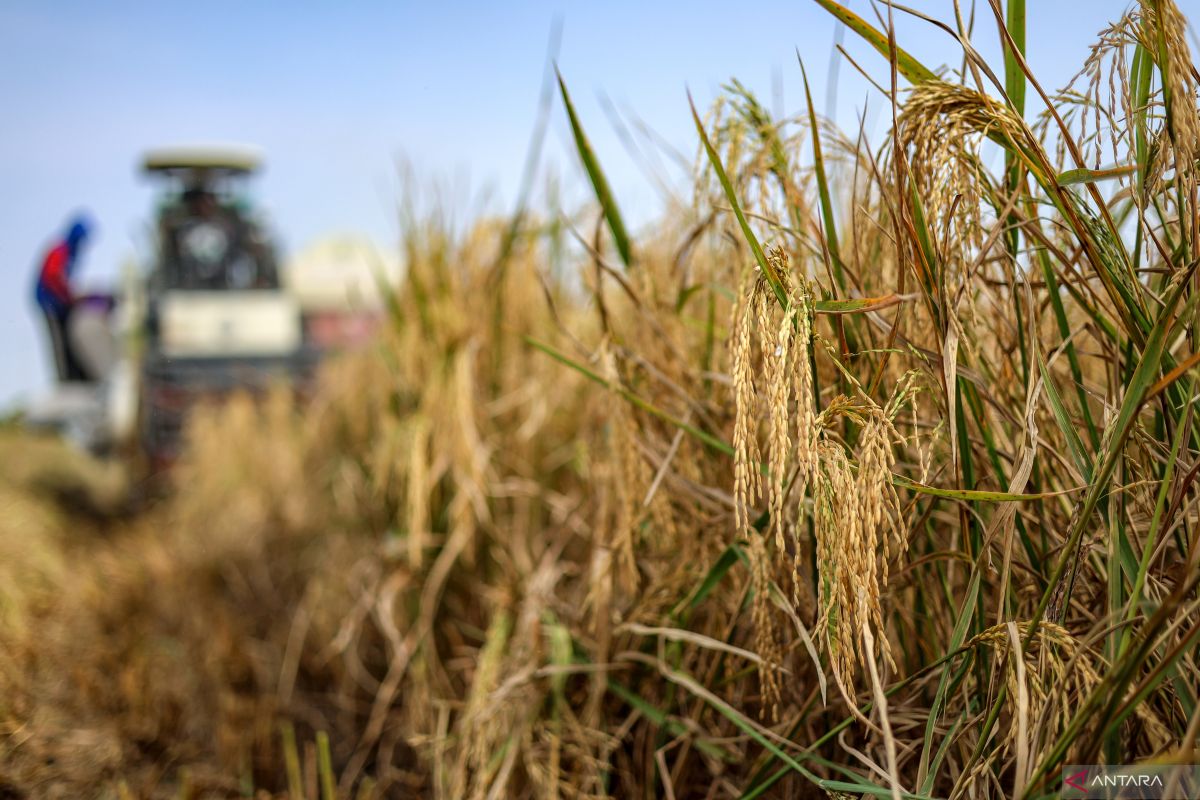
That day, farmland in Kertamukti Village, Karawang, West Java, bore witness to his declaration that Indonesia had regained food self-sufficiency before millions attending a bumper rice harvest festival both in person and online.
Records from the Ministry of Agriculture show that Indonesia’s food self-sufficiency ratio (SSR) ranged between 91.04 and 98.88 percent during 2020-2023 before slipping to 87.14 percent in 2024. Any figure below 100 percent means the country has not achieved self-sufficiency.
The following year, however, the ratio surged to 110.25 percent, according to the ASEAN Food Security Information System. The figure signifies nothing less than Indonesia achieving food self-sufficiency in 2025.
That landmark development was primarily driven by robust rice stocks. In 2024, Indonesia’s rice output stood at a staggering 30.62 million tonnes and climbed further to 34.69 million tonnes in 2025, thanks in part to an expansion of cultivated land from 10.05 million hectares to 11.32 million hectares.
Also worth noting are record-high government rice reserves of around 4 million tonnes, allowing the country to avoid imports throughout 2025.
Under Prabowo’s leadership, the government is deploying multiple measures to achieve food self-sufficiency, from distributing superior seeds and installing water pumps to optimizing land use, upgrading irrigation systems, modernizing farming practices, and rejuvenating agricultural equipment.
These initiatives are advancing in tandem with farmland expansion and a regulatory overhaul.
The president and the agriculture minister each issued regulations on fertilizer subsidies in 2025, consolidating 145 rules and lowering the retail ceiling for subsidized fertilizer by 20 percent. The move eased farmers’ access to fertilizer.
Bulog, the state-run logistics agency, plays an equally crucial role in the food security journey. The government tasked it with purchasing unhusked rice from local farmers at Rp6,500 (around US$0.36) per kilogram regardless of quality.
Related news: Indonesia leads ASEAN rice production, ranks fourth globally: Govt
The procurement accounted for all of Bulog’s rice stocks in 2025, eliminating the need for imports.
A strong budgetary commitment paved the way for this progress. In the 2025 fiscal year, Rp139.4 trillion was allocated for food security programs, rising by 45.5 percent to Rp210.4 trillion (nearly US$12 billion) this year.
Most of the funding is directed toward boosting agricultural production and stabilizing consumer prices.
From surplus to strategy
Rice is among the eight commodities in which Indonesia has achieved self-sufficiency. According to National Food Agency (Bapanas) data as of June 4, the country can now rely on domestic production for red chili peppers, bird’s eye chili, feed corn, chicken meat, chicken eggs, shallots, and table sugar.
This development is supported by a strong harvest outlook for 2026. Farmers are expected to produce 31.3 million tonnes of rice.
With consumption needs estimated at 15.4 million tonnes, the figures point to a surplus of 15.8 million tonnes.
Corn production is projected to reach 13.2 million tonnes, comfortably exceeding the required 8.4 million tonnes.
Sugar mills are also expected to produce 2.2 million tonnes, more than sufficient to meet domestic demand of 1.4 million tonnes.
For President Prabowo, self-sufficiency is never the finish line. He has framed it as a springboard, urging Indonesia to pursue gains from rice and corn exports.
Related news: Indonesia meets FAO benchmark for food self sufficiency: Minister
Long known as a loyal buyer in global corn markets, Indonesia now speaks of opening its own business, shifting from importer to competitor.
Still, these achievements represent only part of the food security puzzle. Indonesia is projected to import 26.4 million tonnes of soybeans, 679,895 tonnes of garlic, and 321,660 tonnes of beef to offset deficits this year.
Downplaying the importance of these commodities would be a mistake. Millions of Indonesians rely on tempeh and tofu — both derived from soybeans — while garlic flavored daily meals and beef remain central to many festive occasions.
The same applies to milk. Indonesia is on a path toward self-sufficiency by 2029, gradually reducing its reliance on imports that have long supplied more than 80 percent of national demand.
To achieve that goal, the Agriculture Ministry has mapped out an ambitious plan: the import of 1 million dairy cows over the next five years to boost productivity.
The strategy carries added significance because milk is not merely a commodity. It is also a cornerstone of the Free Nutritious Meals program, which serves millions of schoolchildren every day.
History challenged
Food self-sufficiency is not a new concept for Indonesia. During the New Order era under President Soeharto, the nation briefly achieved rice self-sufficiency from 1984 to 1986.
Similar patterns reappeared in 2008, 2009, and 2022. Most other years were marked by imports.
That history may remind Indonesians of the old adage that history repeats itself. The question now is whether the country can break the cycle and transform temporary victories into lasting resilience.
Related news: Indonesia’s rice reserves sufficient for next 10 months: Minister
Indonesians can reasonably attribute part of the challenge to the impacts of climate change. Rainy seasons no longer arrive on schedule, forcing farmers to abandon planting calendars and increasing the risk of crop failures.
Yet the root of the problem runs deeper. Inadequate irrigation systems, dependence on imported fertilizer feedstock, and fragmented land ownership structures represent long-term vulnerabilities far greater than any success achieved in a single year.
Last month, at the Tangerang International Development Seminar 2026, former foreign minister Noer Hassan Wirajuda reminded the audience that Indonesia was not immune to tensions surrounding the Strait of Hormuz, w