
Beyond Reason: The Profits the Netherlands Made from Colonising Indonesia
After the Proclamation of Indonesian Independence on 17 August 1945, the Dutch government and public viewed the loss of Indonesia, previously a Dutch colony known as the Dutch East Indies, with great concern. This anxiety was inseparable from economic interests. For many years, the Dutch economy was not only supported by domestic economic activity but also depended heavily on its colonies. Losing Indonesian territory was therefore a disaster for the Netherlands. If Indonesia broke away, they could imagine how devastated life would be. The scale of this dependence on Indonesia raised a question for many: How great were the Netherlands’ profits during its colonisation of Indonesia?
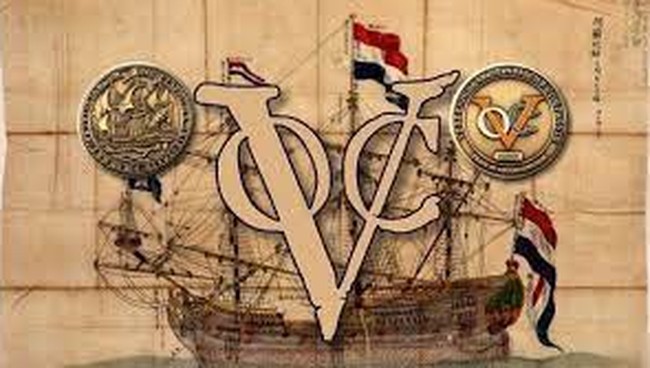
The traces of Dutch colonialism in Indonesia began with the establishment of the Dutch East India Company, or VOC, in 1602. History records that the VOC eventually operated not only as a trading company but also like a government. The VOC could start wars, make agreements with local kingdoms, and even mint its own currency. The immense power that subsequently impacted its economic strength made the VOC the company with the largest valuation of its era. The website Visual Capitalist notes that the VOC’s value reached 78 million guilders in 1637. That nominal amount is equivalent to US$7.9 trillion, or around Rp140,000 trillion. It is also said that the VOC’s valuation exceeded the combined value of today’s largest companies, such as Apple, Microsoft, and Google. On the other hand, historian Lodewijk Petram in The World’s First Stock Exchange (2014) records the VOC’s valuation as ‘only’ US$1 trillion in today’s terms, or around Rp17,800 trillion.
Clearly, after the VOC was dissolved in 1799, the profit figures grew even larger. The Dutch East Indies government increasingly strengthened its control over the economy. One piece of evidence was the implementation of the Cultivation System, or tanam paksa. Through this policy, the government obtained incalculable profits. Historian Angus Maddison in Dutch Income in and from Indonesia 1700-1938 (1989) states that the Cultivation System succeeded in increasing the flow of income from Indonesia to the Netherlands’ GDP. In fact, half of the Cultivation System’s profits went directly into the Dutch government’s coffers.
Maddison also explains that the percentage of funds flowing from Indonesia to the Netherlands’ GDP increased in every period. In 1700, funds from Indonesia contributed 1% of the Netherlands’ GDP. Meanwhile, after the Cultivation System, or in the period 1840-1870, it jumped to 8% of GDP. ‘By calculation, the flow of funds from Indonesia to the Netherlands reached 234 million guilders in 1831-1850. Then, 491 million guilders from 1851-1870. This figure is equivalent to 31.5% of the Netherlands’ GDP in that period,’ Maddison revealed.
Maddison also calculated that the Netherlands’ income from Indonesia during 1878-1941 touched 23.5 billion guilders, equivalent to US$398 billion in today’s terms. However, that figure does not yet include the profits of private companies, which could also be taxed by the Dutch government. Certainly, if calculated, it is extraordinarily large.
All of these funds from Indonesia were then used for the development of the Netherlands. They successfully built many dams, roads, and other infrastructure. Nevertheless, the economic progress and development of the land of windmills was inversely proportional to conditions in Indonesia. History records that during the Dutch occupation, Indonesians lived in misery as second-class citizens in their own homeland. It was not uncommon for Indonesians to become slaves as a result of colonial policies or to be enslaved in various companies.
On this basis, when Indonesia became independent in 1945, the Netherlands was extremely anxious. However, the Netherlands’ fears did not materialise. After Indonesian independence, the Netherlands did not go bankrupt because it received financial support from the United States through the Marshall Plan.