
Beyond Price: Key Factors in Indonesia's Commodity Competitiveness
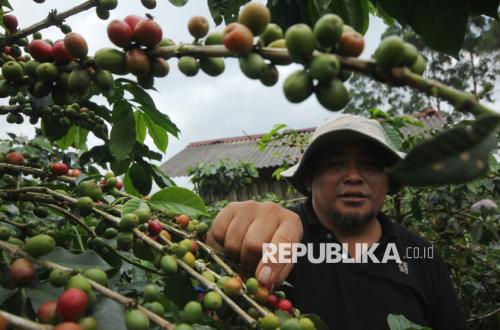
The Ministry of National Development Planning/National Development Planning Agency (PPN/Bappenas) has identified sustainability as a key factor in enhancing Indonesia’s commodity competitiveness in global markets. Consequently, the government is pushing for strengthened sustainable commodity governance at regional levels through the Sustainable Jurisdictional Indicator (IYB) Platform.
Leonardo A.A. Teguh Sambodo, Deputy for Food, Natural Resources, and Environment at PPN/Bappenas, stated that international demand for sustainable products is rising. This has made environmental considerations, transparency, and supply chain traceability crucial in global trade.
“Sustainability is now a key factor in national development, including boosting Indonesia’s commodity competitiveness in global markets,” Teguh said at the National Socialisation and Dissemination of the Sustainable Jurisdictional Indicator (IYB) Platform.
The IYB is a national instrument designed to support sustainable development governance at district and provincial levels. The government aims to demonstrate that economic growth can proceed alongside environmental protection through this platform.
According to Teguh, implementing the IYB requires cross-sector data integration, strengthened collaboration between central and local governments, and involvement from farmers, associations, and the private sector.
“Implementing the IYB can strengthen collaboration, support transparency, enhance competitiveness, promote sustainable production systems, and contribute to achieving the Golden Indonesia 2045 vision,” he said.
Jarot Indarto, Director of Food and Agriculture at PPN/Bappenas, said the IYB is expected to serve as a synchronisation instrument for sustainable governance while strengthening jurisdiction-based monitoring systems.
“The IYB is anticipated to act as a synchronisation tool for sustainable governance, bolster jurisdiction-based monitoring systems, enhance data transparency, and support environmentally friendly production systems,” Jarot said.
The development of the IYB has also received support from the European Union. European Union Ambassador to Indonesia and Brunei Darussalam, Denis Chaibi, said the platform aligns with evolving global sustainability standards that increasingly influence international market access.
Similarly, GIZ’s Country Director for Indonesia, Karin Allgoewer, stated that sustainability is no longer a choice but a necessity for countries and businesses aiming to remain competitive in global trade.
During discussions involving various stakeholders, key issues highlighted included cross-sector data integration, strengthening regional and plantation capacity, harmonising sustainability policies, and enhancing inter-agency collaboration.
Through IYB implementation, the government hopes to strengthen sustainable plantation governance while improving market access and commodity competitiveness amid global demands for more transparent and eco-friendly products.