
Beyond Nickel: Indonesia Targets Battery Industry and $618 Billion Investment
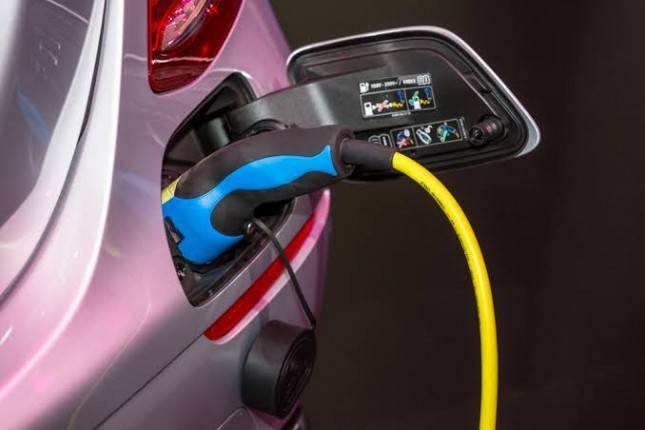
Indonesia is entering a new era of critical mineral downstreaming. Following significant investment in smelters and refining facilities, the government is now pushing for the development of the electric vehicle battery industry and high-value manufacturing to strengthen Indonesia’s position in the global supply chain.
The Deputy for Strategic Investment Downstreaming at the Ministry of Investment and Downstreaming/BKPM, Heldy Satrya Putera, stated that the government has formulated a roadmap for downstream industry development covering 28 strategic commodities, with an estimated investment requirement reaching $618.1 billion until 2040.
“Up to this point, we have built the foundation for mineral processing through smelters and refining facilities. Our current priority is entering Phase Two, which involves expanding development into the electric vehicle battery industry, Battery Energy Storage Systems (BESS), and other high-value manufacturing,” Heldy said during the International Critical Minerals and Metals Summit (ICMMS) Indonesia 2026 in Bali, held from 27–30 September 2026.
This acceleration of downstreaming is supported by steadily increasing investment realisations. In the first semester of 2026, downstream investment reached Rp300.1 trillion, accounting for 29.7 per cent of total national investment. This figure represents a 6.9 per cent growth compared to the same period in the previous year.
Of the total investment, Foreign Direct Investment (FDI) reached Rp212.8 trillion or 70.9 per cent, while Domestic Direct Investment (DDI) stood at Rp87.3 trillion or 29.1 per cent.
However, the challenges of downstreaming are no longer limited to building processing facilities. Project economics, raw material supply certainty, commodity prices, financing, and product quality have become decisive factors in the competitiveness of Indonesia’s mineral industry.
These issues were discussed at the ICMMS 2026, organised by Fastmarkets in collaboration with the Ministry of Investment and Downstreaming/BKPM. The forum brought together the government, investors, industry players, financial institutions, and battery material producers from various countries.
Agenda items included the cost structure of High Pressure Acid Leach (HPAL) technology, the competitiveness of sulphuric acid, the development of battery precursors and cathodes, and nickel trade policies.
Furthermore, Environmental, Social, and Governance (ESG) standards, supply chain traceability, the Carbon Border Adjustment Mechanism (CBAM), and Human Rights Due Diligence (HRDD) were highlighted as critical concerns regarding the access of Indonesian products to international markets.
Managing Director of Fastmarkets, Catherine Oates, stated that collaboration between the government, industry, and investors is necessary to optimise Indonesia’s potential within the global critical mineral value chain.
“Solid collaboration between the government, industry, and the investor community will be vital to realising this potential,” said Catherine.
Through the development of the battery industry and high-value manufacturing, Indonesia aims to advance its downstreaming efforts from mere raw material processing towards competitive production that meets global market demands.
Source: jawawa.id (https://jawawa.id/newsitem/beyond-nickel-indonesia-targets-battery-industry-and-618-billion-investment-1790754668)
Originally published by industry.co.id (https://www.industry.co.id/read/156778/bukan-cuma-nikel-indonesia-bidik-industri-baterai-dan-investasi-rp618-miliar), translated from Indonesian