
Beyond Nickel, Indonesia Plans Critical Mineral Downstreaming for Future Industries
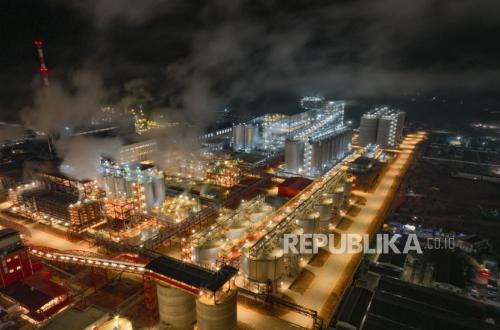
BALI — The Ministry of Energy and Mineral Resources (ESDM) is preparing to develop downstream processing of critical minerals to support the needs of future industries. The government is encouraging the processing of bauxite, copper and tin so that development of the national mineral industry does not rely solely on nickel.
The government’s strategy has the backing of mining industry holding company MIND ID. Novi Muharam, Department Head of Downstream & Mineral Ecosystem Energy at MIND ID, said critical mineral development should be directed towards strengthening the processing industry and producing higher value-added goods.
“MIND ID continues to promote the development of the national mineral industry, not only through managing resources upstream, but also by strengthening downstream processing and developing value-added products,” Novi said at the 16th Indonesia-Korea Energy Forum in Bali on Wednesday (28 October 2026), as quoted on Friday (6 November 2026).
Yan Abrar, the ESDM Ministry’s co-ordinator for mineral and coal co-operation and investment, said Indonesia had diverse mineral resources to meet the needs of future industries. He said mineral commodities should be developed through to processing, advanced materials and manufacturing.
According to data from the ESDM Ministry’s Directorate General of Mineral and Coal, Indonesia produced 23.43 million tonnes of bauxite ore, 114.9 million tonnes of copper ore and 57,240 tonnes of tin ore up to September 2026. Nickel ore production over the same period reached 225.3 million tonnes.
This range of commodities provides a basis for strengthening supplies of raw materials for future industries. Bauxite can be processed into alumina and aluminium, while copper is needed for electricity networks, energy infrastructure and electronic devices. Tin also plays an important role in electronics and a range of manufactured products.
“Success is measured not only by the volume of minerals a country possesses, but also by its ability to process those resources into value-added products,” Novi said.
Demand for critical minerals is expected to keep rising towards 2030 amid the development of electric vehicles, energy storage systems, renewable energy, data centres and the electronics industry. The government is seeking to seize this opportunity by developing an integrated industrial chain, from mining through to advanced materials production and manufacturing.
Yan said strengthening the competitiveness of the mineral industry required more than simply increasing mining output. The government also needed to consider reserve quality, technological readiness, energy availability, infrastructure development and logistics efficiency. The development of each commodity should take account of market demand and economic viability.
The government is also seeking opportunities to co-operate with South Korea to accelerate the development of critical mineral industries. Indonesia has an advantage in mineral resources, while South Korea has expertise in processing technology, manufacturing and recycling. The collaboration is expected to strengthen the national industry’s capacity to produce value-added goods.
Downstream development is also being directed towards using mining waste as a source of secondary raw materials. Mineral recovery technologies can be used to reclaim materials that retain economic value, increasing industrial supplies while improving resource-use efficiency.
MIND ID’s strategic commodity portfolio includes nickel, copper, bauxite, tin, gold and aluminium. The company continues to promote integration across the industry, from upstream to downstream, including the development of a battery ecosystem and mineral derivative products. Efforts to strengthen the industry are also focused on using more efficient technology, managing waste and reducing emissions to improve Indonesia’s competitiveness in global supply chains.
Source: jawawa.id (https://jawawa.id/newsitem/beyond-nickel-indonesia-plans-critical-mineral-downstreaming-for-future-industries-1793955090)
Originally published by Republika (https://ekonomi.republika.co.id/berita/to2nbw522/tak-hanya-nikel-indonesia-siapkan-hilirisasi-mineral-kritis-untuk-industri-masa-depan), translated from Indonesian