
Beyond Mount Rinjani: Discover the hidden charm of Sembalun
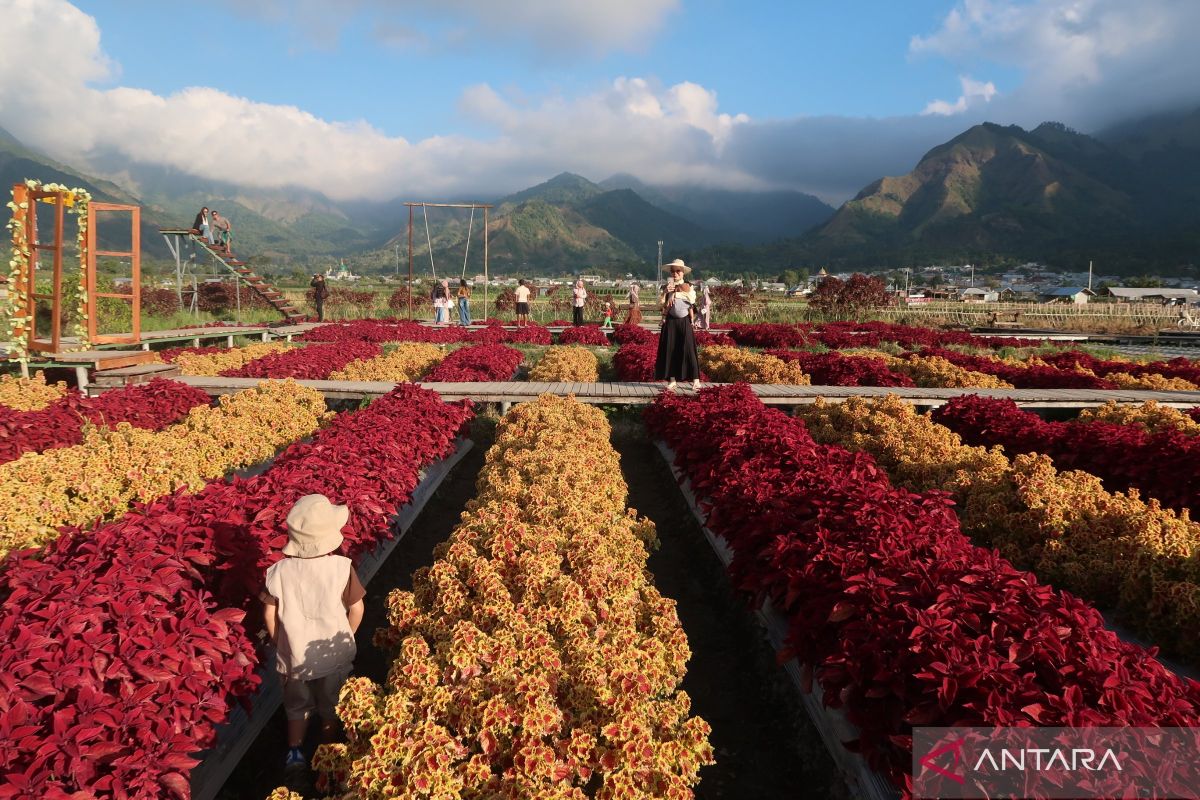
The umbaran tradition serves as a reminder, amid the rapid growth of tourism, that the appeal of a tourist attraction doesn’t always come from artificial attractions.Lombok Timur (ANTARA) - Junaidi slowly walked through the clusters of orange chrysanthemums glowing in the afternoon sun in the agricultural fields of Sembalun Bumbung Village, Sembalun, East Lombok District, West Nusa Tenggara (NTB).
The 33-year-old man stopped occasionally. His fingers reached for the wilting flowers, carefully plucking them to allow newly blooming chrysanthemums to flourish.
Amidst the expanse of verdant horticultural land as far as the eye can see, the 16-plot flower garden, covering approximately half a hectare, is an oasis that has become an alternative tourist destination for travelers visiting Sembalun.
From behind the colorful flower beds, they can capture the distinctive panorama of Sembalun with the hills and towering Mount Rinjani in the background.
“We planted flowers little by little and sometimes bought flowers from people’s homes, buying and planting. It turned out well, attracting many visitors,” Junaidi said while reminiscing about the process of establishing the Sembalun Flower Garden, which took place five years ago.
Thousands of people from various regions and countries flock to Sembalun every day, especially during the holiday season. The dry season leaves the village roads covered in dust, often obstructing visibility.
The flower garden symbolizes the transformation of an area once known primarily as the gateway to Mount Rinjani.
Situated at an altitude of 1,100 to 1,300 meters above sea level, the area is offering a variety of attractions without requiring a three-day, two-night trek.
Sembalun has great potential to develop as an exotic highland tourist destination in eastern Indonesia, offering a complete experience enriched by its rich natural, agricultural, and cultural heritage.
Nature is the enchanting center stage. Sembalun is not just a story about the mountain, but also the story of each blooming petal and the loving hands that nurture them.
Related news: Mount Rinjani cracks down on hiker waste with local community help
Experience-based agrotourism
Morning always comes slowly at the foot of Mount Rinjani. Cold, dry seasonal winds carried from Australia bites at the skin.
Dew still clings to the young leaves, while the black, dusty volcanic soil, a result of the drought, retains the lingering scent of the long night.
Two middle-aged female farmers squat silently in one of the dry fields amidst more than 1,000 hectares of agricultural land in Sembalun.
Their woven bamboo hats, worn over headscarves, provide extra protection from the sun’s rays slowly leaving the horizon.
Rough fingers move slowly, inspecting each lettuce seedling ready to be transplanted into the seedbed.
Planting vegetables is never rushed. Each planting hole is precisely made to the size of the seedling, the roots are adjusted to prevent bending, and each handful of soil is gently pressed to ensure the seedlings stand upright.
Patience is key in cultivating agricultural land, because a good and abundant harvest always begins with attention to the small details.
West Nusa Tenggara Provincial Government Spokesperson Ahsanul Khalik stated that the current challenge is limited clean water. Agricultural land requires a good irrigation system to maximize yields.
To date, the community has utilized drilled wells and rain-fed farming systems to address the clean water crisis.
Clean water sources are abundant in the surrounding hills and the caldera., but the process of channeling it downstream requires central government intervention, given that the Sembalun area falls within the Mount Rinjani National Park working area.
Agricultural activities are more than just a livelihood for villagers. They are a legacy of knowledge passed down from generation to generation, as well as the fruit of perseverance born of a long relationship between humans and nature.
The physical, emotional, and natural connection should be introduced to travelers through the concept of experiential agrotourism.
Tourists no longer simply come to take photos amidst vast expanses of farmland with the hills and Mount Rinjani in the background.
They are invited to experience the daily lives of farmers, who form the backbone of food production—producing more than 70 percent of the world’s food supply.
The visitor experience begins with walking along the field embankments still damp with morning dew. Visitors are taught how to select superior vegetable seeds, plant them, and care for them.
Quality experiential tourism activities can leave a lasting impression on tourists when visiting a destination.
After experiencing the process of cultivating the farmland, visitors are invited to pick vegetables directly from the garden, helping them understand that each harvest doesn’t emerge overnight, but rather requires a long process that depends on soil fertility, weather, and the farmer’s perseverance.
The experience doesn’t end when the harvest is placed in baskets. The fresh vegetables are then taken to the kitchen to be prepared into a variety of lunch dishes.
Through experiential agrotourism, tourists take home more than just beautiful photos.
They also gain an understanding of how each dish served on their plate undergoes a long journey from the soil, through the farmer’s hard work, through distribution, and finally into a meal.
This tourism model can provide additional income for farmers, while tourists gain valuable insights into authentic rural life that can never be acquired in the city.
Related news: Rinjani-Lombok Geopark retains UNESCO Global Geopark Green Card
Cultural authenticity
Although Sembalun is more popular as a horticultural center and the gateway for hiking to Mount Rinjani, many families also raise cattle as a form of savings and as a source of supplemental income to support their agricultural livelihoods.
The culture of cattle farming c