
Beyond Mobile Phones: Nokia Finds Highly Profitable New Revenue Stream
The technology industry could build data centres twice as fast if it were not facing supply constraints. This situation serves as a signal that demand for Artificial Intelligence (AI) infrastructure remains incredibly strong.
This was stated by Nokia CEO Justin Hotard. According to him, current supply conditions are actually one of the factors limiting the speed of data centre construction.
“I do not think you can say in any way that we are overbuilding at the moment, because the reality is that if we could build twice as fast, our customers would build twice as fast if they could,” said Hotard, as quoted from CNBC International on Tuesday.
“So, that makes me confident that we are still in the early stages of AI development,” he continued.
Hotard noted that supply limitations, including shortages in memory chips and energy, remain obstacles for the industry in accelerating the construction of AI infrastructure.
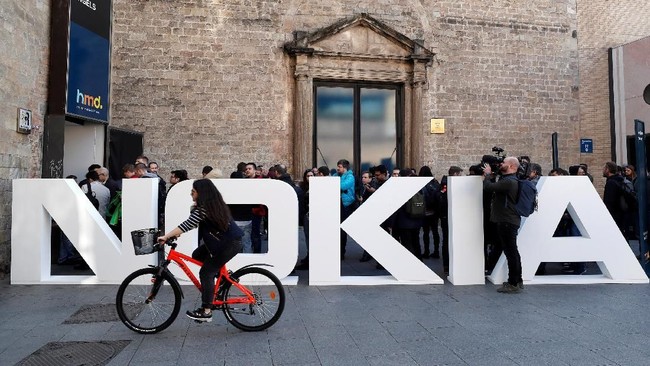
Nokia itself has shifted its business focus and is now a key player in AI infrastructure. The company sells technology used to connect chip racks within data centres, as well as technology that connects data centres across various locations.
Nokia’s role as a provider of tools and materials for the AI boom has also attracted investor attention. Nokia’s shares have risen by approximately 130% over the past year.
Amidst this expansion, debates have emerged regarding whether the industry is building data centres too quickly and whether AI demand will be strong enough to sustain long-term investment.
According to research presented in the Brookings Papers on Economic Activity, investment in AI development—ranging from data centres and chips to supporting infrastructure—is estimated to reach US$10.3 trillion throughout 2025-2032. This value is equivalent to an average of 3.63% of the United States’ Gross Domestic Product (GDP) annually.
Companies are also relying on debt, joint ventures, and various complex financing schemes to deploy capital into these projects. This investment model depends on the sustainability of demand for AI services in the long term.
Concerns regarding the pace of AI development have grown following warnings from researchers at Anthropic regarding the existential risks of the technology. Anthropic CEO Dario Amodei subsequently called for the need to slow down the development of the most advanced AI models.
This statement triggered a sell-off of AI-related stocks last month.
However, Hotard believes that AI demand does not solely depend on companies like Anthropic and OpenAI, which continue to release the latest generation of AI models.
“In my opinion, the reality is that our current position is still very early in the implementation of the technology, and the power of these models is so immense that there is significant demand just to run and deploy existing technology,” he said.
“Even if we do not have new frontier models released in the next three years, we could still make great progress simply by deploying the technology that is available today,” said Hotard.
Source: jawawa.id (https://jawawa.id/newsitem/beyond-mobile-phones-nokia-finds-highly-profitable-new-revenue-stream-1791348870)
Originally published by CNBC Indonesia (https://www.cnbcindonesia.com/tech/20261007105507-37-774013/bukan-hp-nokia-punya-sumber-duit-baru-yang-laku-keras), translated from Indonesian