
Beyond Humans: The Impact of Forest Fire Smoke on Orangutans
Jakarta (ANTARA) - The death of a Bornean orangutan named Sempurna has drawn significant attention amidst the forest and land fires (karhutla) currently affecting several regions in Kalimantan. The adult male orangutan was found in a very weak condition, suffering from respiratory distress, in a palm oil plantation area in Ketapang Regency, West Kalimantan, on Sunday (30/8).
Teams from the West Kalimantan Natural Resources Conservation Agency (BKSDA) and the Indonesian Nature Rehabilitation Initiative Foundation (YIARI) subsequently carried out an evacuation. Sempurna initially received oxygen therapy and intravenous fluids before being transported to a rehabilitation centre for medical treatment.
However, Sempurna’s condition continued to decline, and he was eventually declared dead on the same day. A necropsy performed on 1 September showed pathological changes in several vital organs, particularly the lungs, heart, and kidneys. The lungs exhibited congestion and partial atelectasis which, based on clinical history and examinations, is suspected to be related to smoke exposure, causing acute hypoxia, or oxygen deficiency, in the body.
Sempurna’s story demonstrates that the impact of forest fires does not stop with humans. Wildlife living around burnt areas must also face deteriorating air quality, habitat loss, food shortages, and the risk of health disturbances.
Forest fire smoke can disrupt orangutan respiration
Bornean orangutages (Pongo pygmaeus) spend most of their lives in forest areas. They rely on these environments for food, shelter, and space to move.
When forest fires occur, the trees and vegetation that form part of their habitat can burn. However, there is another threat that is not always directly visible: smoke.
Fire smoke carries various particles and gases that can disrupt the respiratory system. For orangutans residing in areas with thick smoke for several days, such conditions can cause respiratory disturbances and reduce the body’s ability to obtain oxygen normally.
Sempurna’s case serves as an illustration of this issue. Before his death, he was found unable to stand and experiencing difficulty breathing. Medical teams even provided oxygen assistance as part of the initial first aid.
In other words, orangutans do not necessarily need to be directly hit by flames to suffer the impacts of forest fires.
Eyes and respiratory tracts are also affected
High exposure to smoke can also cause irritation to the respiratory tract. In wildlife, this condition can be observed through changes in behaviour or physical condition, such as difficulty breathing, lethargy, or the inability to perform usual activities.
Thick smoke can also reduce visibility within the habitat. For orangutans accustomed to moving from tree to tree to find food or shelter, an environment filled with smoke certainly makes activities more difficult.
If the condition persists for a long time, animals must also expend greater energy to find relatively safe locations.
Therefore, the impact of smoke should not be viewed solely by how wide an area is covered by haze. The duration of exposure and the density of the smoke are also important factors in assessing the risk to wildlife.
Forest fires can also force orangutans to leave forest areas.
When habitats burn or smoke makes the environment uninhabitable, orangutans may move to other areas in search of food and shelter. It is not uncommon for this movement to bring them into community plantations.
Sempurna himself was found in a local community’s palm oil plantation after allegedly moving from his habitat due to the forest fire conditions. Residents then reported his presence to officials so that the evacuation process could be carried out.
This phenomenon shows that forest fires can alter the behaviour and movement patterns of wildlife. Forests that should be home instead turn into areas that must be abandoned.
It is not just about smoke; food is also lost
The impact of forest fires on orangutans does not end when the smoke begins to clear.
Fires can destroy trees, undergrowth, and various vegetation that serve as food sources. If the burnt area is large enough, orangutans may struggle to find adequate amounts of food.
The situation becomes even more complex for mothers carrying infants. They must not only find a safe location but also ensure that nutritional needs are met.
Therefore, habitat recovery after a fire is a vital part of orangutan protection. Forests require time to return to a state that supports wildlife life.
When habitats are damaged and food sources decrease, the likelihood of orangutans entering plantations or settlements also increases.
For the community, the appearance of orangutans in plantations can certainly cause concern. However, from the animal’s perspective, this movement occurs because they are seeking safer places and food sources after their habitat has been disturbed.
Such situations require handling by those with expertise. The community also plays an important role by reporting the presence of wildlife to conservation officers, rather than attempting to capture or handle them personally.
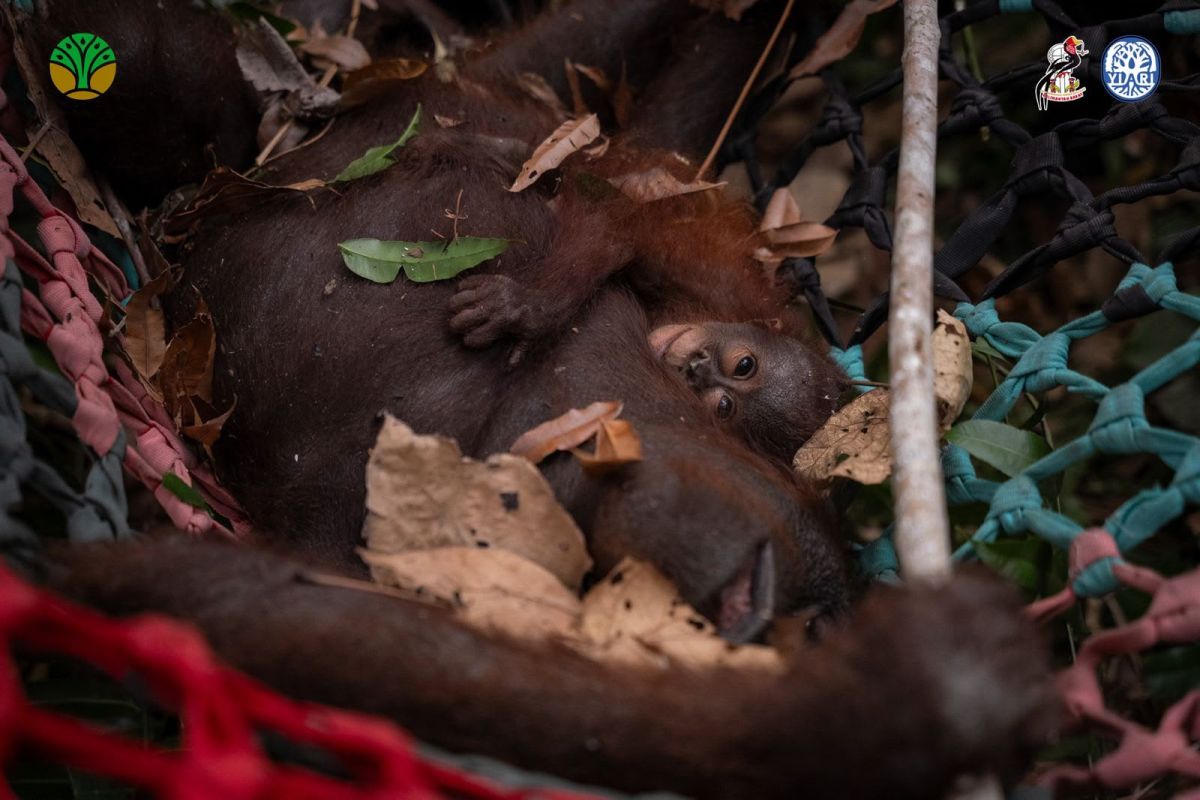
Before Sempurna’s case, the impact of forest fires in Ketapang also forced several orangutans to be evacuated. On 21 August 2024, for example, a joint team from BKSDA West Kalimantan, Gunung Palung National Park, YIARI, and the community evacuated a mother orangutan named Mama Yuni and her two infants after fires threatened their habitat and severed their movement paths.
Sempurna serves as a reminder that haze is not merely an issue of visibility or daily activity disruption. For wildlife, smoke can be a part of a much larger threat.
Source: jawawa.id (https://jawawa.id/newsitem/beyond-humans-the-impact-of-forest-fire-smoke-on-orangutans-1788674281)
Originally published by Antara (Indonesian) (https://www.antaranews.com/berita/5728139/bukan-hanya-manusia-ini-dampak-asap-kebakaran-hutan-bagi-orangutan), translated from Indonesian