
Beyond Firefighting, Forest and Land Fire Response Must Address Affected Residents
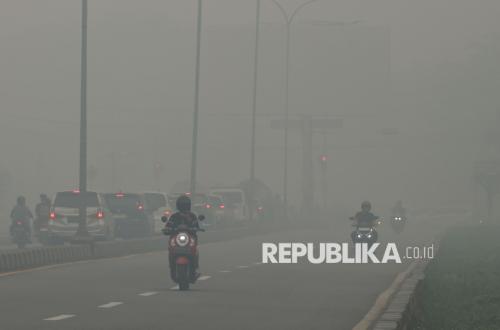
JAKARTA — Responses to forest and land fires must be accompanied by protection for communities affected by haze, including the provision of healthcare, education and social assistance. Coordination between central and local governments is vital to ensure that firefighting operations proceed alongside efforts to meet residents’ needs in affected areas.
Umi Ma’rufah, a forest and plantations campaigner at the Indonesian Forum for the Environment (Walhi), said tackling forest and land fires required the involvement of various parties in line with their respective duties and authority. The central and local governments, law enforcement agencies and companies holding concessions all have responsibilities in fire prevention and response.
“The President needs to ensure that ministries and agencies work in an integrated way, follow up reports seriously and set measurable prevention targets,” Umi said on Saturday (17 October 2026).
Integrated forest and land fire management is governed by Presidential Instruction No. 3/2020 on Forest and Land Fire Management. The regulation allocates duties to ministries and agencies, the Indonesian Military (TNI), the National Police (Polri) and local governments, including responsibility for protecting communities from the effects of fires.
Under the instruction, the Health Minister is responsible for ensuring that healthcare services are provided promptly to people in affected areas. The Social Affairs Minister must ensure the provision of social welfare services to residents facing the effects of fires.
Community protection also includes maintaining education in affected areas. Relevant ministries are tasked with ensuring that teaching and learning continue despite disruption caused by forest and land fires.
In addition to meeting community needs, fire response operations require personnel, equipment and information about conditions on the ground. The National Disaster Mitigation Agency (BNPB) is responsible for command and coordination, including providing funding support and placing land- and air-based equipment on standby for affected areas.
The BNPB also works with the TNI, Polri and communities to support social and economic recovery after a disaster. The TNI and Polri are tasked with assisting firefighting operations and patrolling areas affected by fires.
The Meteorology, Climatology and Geophysics Agency (BMKG) provides information on hotspots, the spread of haze, and weather and seasonal developments. It shares this information with relevant ministries and the BNPB to support firefighting operations on the ground.
At the local level, governors serve as commanders of provincial forest and land fire task forces. Regents and mayors lead the response in their respective areas and ensure budgetary support through regional revenue and expenditure budgets (APBD).
Umi said monitoring of fire-prone areas also needed to be carried out consistently, particularly in plantations and company concessions. Permit holders must ensure that firefighting facilities and equipment are available so that fires can be dealt with swiftly.
“Monitoring should be carried out regularly, especially in concessions with a high level of fire risk or a history of fires,” Umi said.
According to Umi, responsibility for tackling forest and land fires cannot be assigned to a single agency. Each party must fulfil its obligations to ensure an effective response while reducing the impact on communities.
Presidential Instruction No. 3/2020 also sets out the role of the ministry responsible for the environment and forestry in conducting patrols, monitoring companies’ obligations and enforcing the law against violations. This oversight covers the readiness of prevention and firefighting equipment, as well as land restoration after fires.
The Agriculture Ministry is responsible for overseeing agricultural businesses and facilitating the use of land-clearing technology that does not involve burning. Its oversight also covers businesses’ obligation to provide firefighting equipment.
Cross-sector support also includes planning and budgeting for fire management by the Finance Ministry and the National Development Planning Agency (Bappenas). The ministry responsible for public works and housing is also tasked with deploying personnel and equipment to help tackle fires.
With these responsibilities allocated, forest and land fire management is not limited to extinguishing flames: it also covers healthcare, continuity of education, social services and community recovery. Cross-sector coordination is crucial to ensuring residents’ needs are met throughout the response.