
Beyond EVs: DBS Reveals Three Major Trends Transforming the Automotive Industry
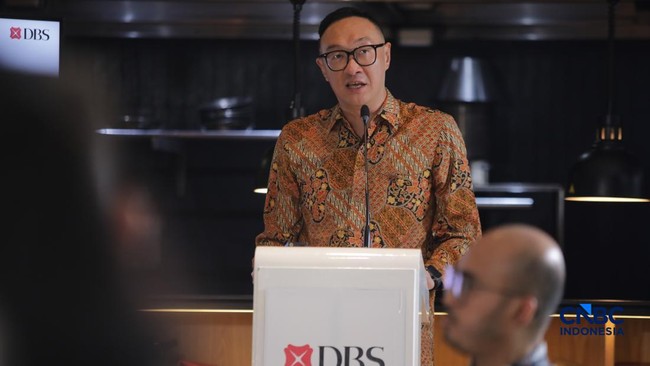
DBS Indonesia has shared its insights regarding current trends in the automotive industry and their implications for business players. Antonius Sehonamin, Director of the Institutional Banking Group at DBS Indonesia, stated that these trends are highly relevant to the current state of the domestic automotive industry, which is facing various shifts in both technology and global supply chains.
“We are seeing a transition in the automotive industry at all levels, with factors influencing electrification, affordability, economic productivity, utilisation, and operational efficiency,” said Antonius during an event titled “Building a Resilient Automotive Ecosystem Beyond EV Amid Global Supply Chain Shift,” organised by CNBC Indonesia in collaboration with DBS.
Explaining the aspect of competitiveness, DBS noted at least three major trends shaping the future direction of the automotive industry: first, vehicle electrification; second, supply chain localisation; and third, the utilisation of artificial intelligence (AI), data, and technology.
According to him, production capacity is no longer the sole determinant of an automotive company’s competitiveness. Other factors, such as technological adaptation and operational efficiency, are increasingly decisive in determining a player’s position in the industry moving forward.
“From the players we observe, there must be adaptability and adjustment towards the factors that will determine competitiveness in the future,” he explained.
Antonius highlighted Indonesia’s advantage in terms of its rich upstream resources, such as nickel and copper, which serve as essential capital for the national automotive industry’s downstreaming process. However, he emphasised the importance of building an ecosystem that covers the entire end-to-end value chain, ranging from advanced manufacturing to the battery sector, including energy storage, battery production, and recycling.
“For all of this, we see that there must be investment, capability, and ecosystem development,” he stated.
On the other hand, DBS also observes a shift in supply chain management approaches within the automotive industry, moving from the “just-in-time” concept towards what Antonius calls “just-in-scale.” This approach is described as more anticipatory and optimisation-oriented, aimed at building resilience in inventory management, supply chains, and local manufacturing capacity.
This shift, according to Antonius, also drives the importance of mature capital allocation for both short-term and long-term needs, to support the investment and working capital requirements of companies in the automotive sector.
DBS Aims to be an End-to-End Automotive Ecosystem Banking Partner
Concluding his presentation, Antonius asserted that the automotive industry must be viewed as a single, unified ecosystem rather than separate segments. In this context, he noted that banking institutions, including DBS, play a vital role in supporting the entire industry value chain.
“For DBS, we want to be the banking partner for these players,” he said.
He added that DBS views the entire automotive business chain, from the upstream sector and Original Equipment Manufacturers (OEMs) to distributors and dealers. In addition to offering comprehensive banking solutions, Antonius mentioned that DBS possesses regional connectivity advantages that can support cross-border transactions for automotive industry players in Indonesia.