
Beyond Civet Coffee: Animal-Dropping Coffees from Elephants to Monkeys
Jakarta, CNBC Indonesia — Civet coffee has long been an emblem of “poop coffee”, or “naturally refined coffee”: coffee produced from animal droppings.
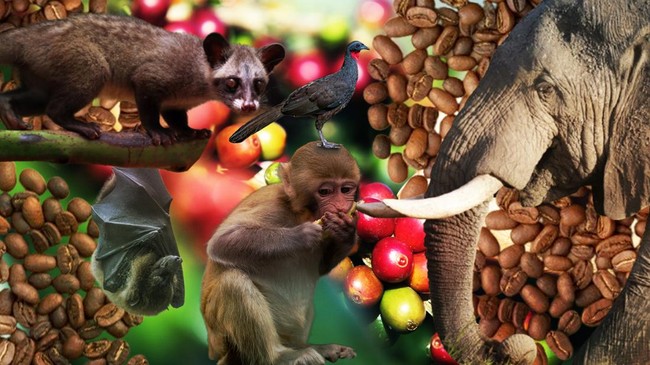
But civets are not the only animals involved. Elephants, birds and bats can also produce such coffee. Each offers a different biological process, resulting in a wide range of flavour profiles, production complexity and prices.
Poop coffee is, in essence, coffee beans eaten by animals, passed through digestion — involving stomach fermentation, enzymes or other chemical interactions — and excreted. The beans are then cleaned, dried and processed.
This biological process is believed to break down proteins responsible for bitterness, creating a smoother profile. Publications including NPR and National Geographic have highlighted enzymatic refinement as the key distinction: an animal’s body acts as a “natural processor”, modifying the flavour without human intervention.
Civet coffee
Civet coffee is the best-known and longest-established variety. Civets eat the ripest coffee cherries, and their digestive enzymes break down certain proteins, producing a smoother, earthy flavour with slight chocolate notes.
Its hallmark is low bitterness. However, National Geographic and GEVI have raised animal-welfare concerns, as many producers still keep civets in cages and feed them unbalanced diets, reducing coffee quality and creating ethical risks. Wild-sourced coffee can cost up to US$600 per pound.
Elephant coffee / Black Ivory Coffee
Black Ivory Coffee from Thailand is now described as the world’s most expensive poop coffee. As herbivores, elephants have a lengthy digestive fermentation process that significantly reduces bitterness.
NPR explains that fermentation in elephants has effects akin to brewing beer or wine: the digestion of cellulose brings the flavours of the fruit and coffee pulp back together in the beans.
The resulting flavour is said to be “floral, chocolate, chocolate-malt, with a hint of cherry — like a blend of coffee and tea”. It costs US$1,500 per pound. Production in 2023 was just 500 pounds, making it the rarest variety.
Bat coffee
Bat coffee comes from Latin America, particularly Costa Rica and Peru. Bats eat coffee cherries to drink the nectar and consume the fruit’s flesh.
Some beans are bitten, while others are lightly digested and excreted. The flavour is described as fruitier, more floral and lighter than civet coffee. Production is extremely small and unstandardised, making it naturally rare. GEVI notes that the coffee is appealing because its profile is much brighter than that of other poop coffees.
Jacu bird coffee
The Jacu is a bird native to Brazil. Unlike civets or elephants, Jacus select only the best coffee fruit as part of their natural diet. The bird’s digestive system does not involve complex fermentation, but it produces clean, bright acidity with citrus notes. Jacu coffee is sold in premium shops such as Harrods in London, although it is often out of stock. Prices for some batches can exceed US$300–US$350 per pound.
Monkey parchment coffee
Unlike other poop coffees, this variety does not pass through the animal’s faeces: monkeys chew the coffee fruit and spit out the beans.
Although it is not technically a poop coffee, the industry often groups it with “naturally refined” varieties. Chewing and enzymes in the mouth give it a sweeter, more fermentative flavour. Production is very limited because it depends entirely on the behaviour of wild monkeys. National Geographic includes it among the world’s rarest coffees.
Across these animal-derived coffees, certain flavour patterns emerge. Bitterness tends to be lower because proteins are broken down. Civet coffee offers nutty, earthy notes; Black Ivory has a floral, chocolate profile and a tea-like texture; Jacu coffee has bright acidity; and bat coffee tends to be fruity and floral. In an informal tasting cited by NPR, consumers described Black Ivory as “gentle, fruity, with no muddy aftertaste”.
Digestion times vary between animals. Elephants take one to three days to pass the beans (NPR). Civets digest them more quickly, but collecting beans from the faeces of wild animals can take longer. The beans are then washed, sun-dried, milled and sorted. Black Ivory requires about 33 pounds of raw beans to produce one pound of coffee, as many beans are damaged or lost in the wild. This helps explain its scarcity and premium price.
According to National Geographic, the civet coffee sector has major problems with counterfeiting, production involving caged animals and potential health risks to animals from unbalanced diets.
By contrast, Black Ivory’s producers say they document every feeding and work only with elephant-owning families they consider to follow good practices. However, the animals remain in a captive system, which continues to draw criticism. Consumers should look for the “wild-sourced” label as an indicator of ethical sourcing.
Despite the hype, experts’ assessments vary. A researcher from World Animal Protection says coffee genuinely sourced from wild civets is indeed smoother, but not necessarily worth its extremely high price.
In many cases, novelty matters more than absolute sensory quality, particularly given the high risk of fraud in the poop coffee industry.
Source: jawawa.id (https://jawawa.id/newsitem/beyond-civet-coffee-animal-dropping-coffees-from-elephants-to-monkeys-1792299020)
Originally published by CNBC Indonesia (https://www.cnbcindonesia.com/research/20261018083013-128-777166/selain-luwak-ini-deretan-kopi-dari-kotoran-hewan-gajah-hingga-monyet), translated from Indonesian