
Beware September! NTT Faces Threat of Land Movement and Landslides
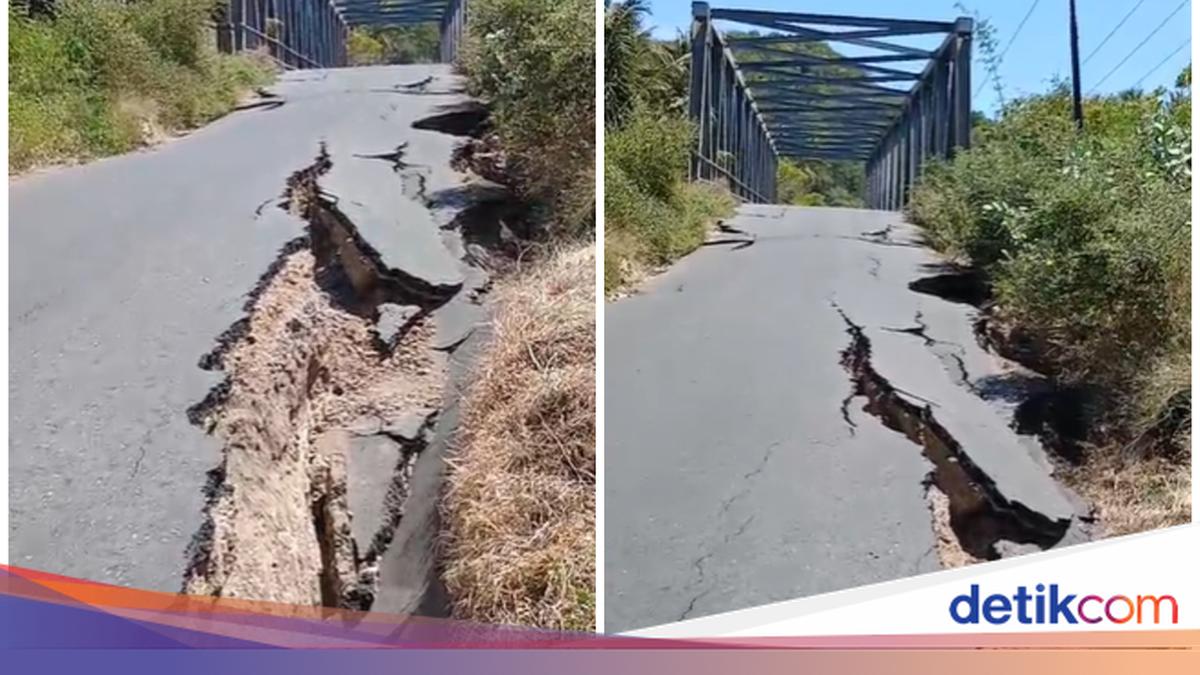
The Geological Agency has issued a warning about potential land movement in several regions of Indonesia in September 2026, including East Nusa Tenggara (NTT).
Siti Sumilah Rita Susilawati, Head of the Centre for Volcanology and Geological Hazard Mitigation (PVMBG), said the mapping of land movement potential was carried out based on an overlay between the Geological Agency’s land movement vulnerability map and the monthly rainfall forecast from the Meteorology, Climatology and Geophysics Agency (BMKG).
“This map of potential land movement is still regional in nature, and the information table on potential land movement is still limited to sub-district level. However, this potential map can be used as an initial step in mitigating land movement disasters to improve public preparedness,” Siti said in an official statement received by detikBali on Friday (21/8/2026).
According to Siti, the land movement potential map can change every month because it is highly dependent on rainfall forecasts. NTT is one of the provinces included in the list of areas with high land movement potential in September 2026. This condition needs attention, especially in areas with steep slopes and landslide-prone terrain.
In East Flores Regency, a number of sub-districts are categorised as having medium land movement potential. These areas include Adonara, West Adonara, East Adonara, Kelubagolit, West Solor, South Solor, East Solor, Tanjung Bunga, Titehena, Witihama, and Wotan Ulumado sub-districts.
Meanwhile, two sub-districts are categorised as having medium-high land movement potential, namely Ile Buran and Wulanggitang sub-districts.
Residents in these areas are urged to be more vigilant when heavy rain falls, especially if it lasts for a long time. Land movement potential can also trigger landslides and flash floods or debris flows.
In addition to East Flores, several areas in Lembata Regency are also included in the land movement potential mapping. Atadei, Buyasari, Ile Ape, Naga Wutung, Nubatukan, Omesuri, and Wulandoni sub-districts are categorised as having medium land movement potential.
Residents are asked not to ignore environmental conditions when heavy rain occurs. One step that can be taken is to avoid activities below or on steep slopes.
Siti reminded the public to recognise early signs of land movement. These include the emergence of new springs or water suddenly becoming turbid, the formation of natural river blockages due to landslides, and the appearance of cracks in the ground.
Other signs include electricity poles or trees beginning to tilt towards the slope. “If these signs of land movement are found, immediately coordinate with the relevant agencies,” Siti stressed.
Residents are also asked not to cut slopes too steeply and to avoid activities in areas below or on steep slopes as a precautionary measure.
Besides NTT, other regions with high land movement potential include Aceh, Bengkulu, Jambi, Lampung, Riau, West Sumatra, South Sumatra, North Sumatra, Banten, DKI Jakarta, West Java, Central Java, D.I. Yogyakarta, East Java, Bali, and West Kalimantan.
“South Kalimantan, Central Kalimantan, North Kalimantan, East Kalimantan, Gorontalo, West Sulawesi, South Sulawesi, Central Sulawesi, Southeast Sulawesi, North Sulawesi, West Nusa Tenggara, East Nusa Tenggara, Maluku, North Maluku, West Papua, Southwest Papua, Papua, Central Papua, Highland Papua and South Papua,” she added.
Siti urged these regions to increase preparedness against potential land movement and flash floods or debris flows, especially during heavy or prolonged rainfall.
“Several things that must be done in the context of this preparedness are not cutting slopes too steeply and avoiding activities below or on steep slopes,” she concluded.
Source: jawawa.id (https://jawawa.id/newsitem/beware-september-ntt-faces-threat-of-land-movement-and-landslides-1787298670)
Originally published by detikBali (https://www.detik.com/bali/nusra/d-8628647/waspada-september-ntt-diwarnai-ancaman-tanah-bergerak-hingga-longsor), translated from Indonesian